This article is taken from the April 2026 issue of The Critic. To get the full magazine why not subscribe? Get five issues for just £5.
“Nature writing is dead,” a senior publishing executive told me recently, “and about time too,” he added dryly. The “nature writing” referred to is a genre that has very little to do with actual nature. Booksellers’ shelves groan under works ranging from politically-inspired whimsy, such as Guy Shrubsole’s The Lost Rainforests of Britain, to full-blown fantasies such as The Salt Path by Raynor Winn. Publishers would have us believe that each formulaic book is “urgent”.
The authors themselves seem perpetually “on a journey”. Like Victorian missionaries racing for Africa, nature writers migrate from their suburban habitats to “discover” some rural corner of the British Isles and unilaterally claim moral ownership of it. The formula then follows that the writer “meets” — in the manner of a Mills and Boon romance — a mammal, bird or tree.
This they beatify and fawn over, writing sentence after metaphor-laden sentence on how this unwitting specimen has healed their soul. Everything in the nature writers’ new-found world is lovely, bar of course the local human population. According to these literary misanthropes, all hominids are repugnant barbarians, with the important exception of the author and a batty, bearded bloke who lives in a stone cottage nearby, breeding beavers in his outdoor khazi.
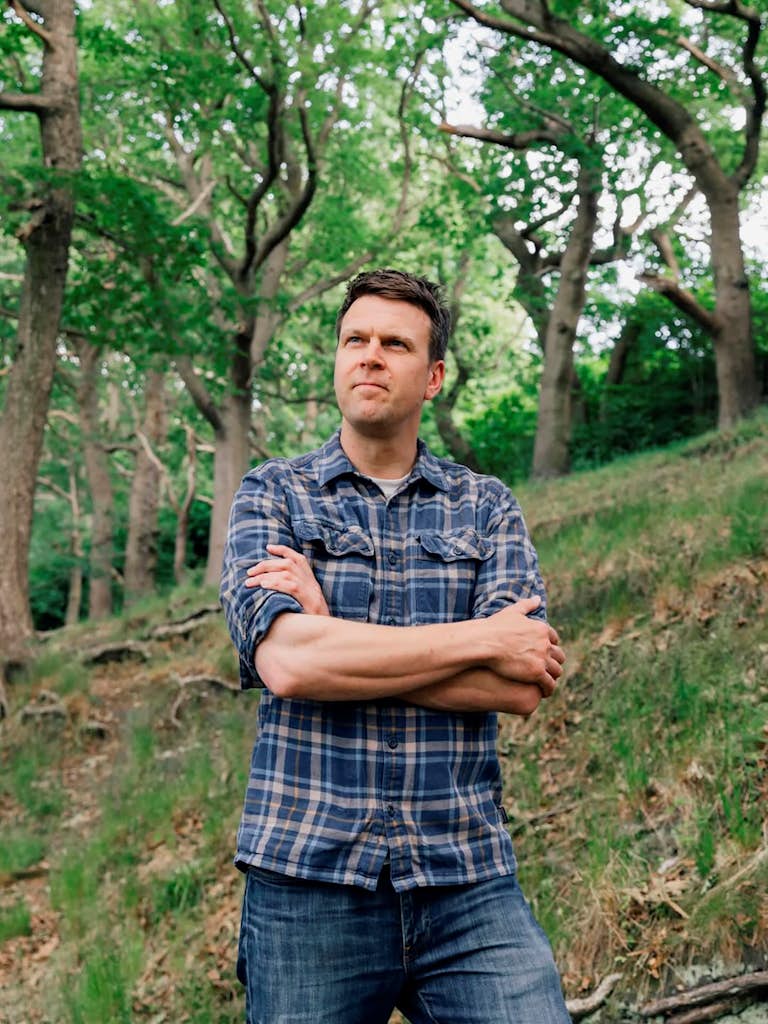
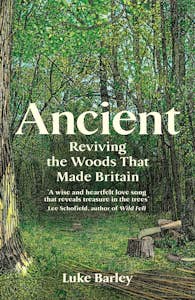
Good thing, then, for readers (and nature for that matter), that Luke Barley is here with his debut book — Ancient: Reviving the Woods That Made Britain — and he’s armed with a chainsaw and a lifetime of hands-on forestry experience. Barley joins a subset of authors, known loosely as “countryside writers”.
These folk are far removed from the “nature healed me” fraternity. Notably, the likes of John Lewis-Stempel, Patrick Galbraith, Rebecca Smith and James Rebanks all revel in nature that is red in tooth and claw. They are practitioners, shunning anthropomorphism and refreshingly treating humans not as faceless destroyers of nature but as a tangible part of it.
Reading this author’s offering, I swiftly gained confidence in his practical expertise: you can almost smell the woodchip, two-stroke and bar oil emanating from the pages. Barley works in woods owned by the National Trust — admittedly an organisation not much loved by many of us who work on the land. He explains how he started out as a volunteer, fumbling with unfamiliar tools, learning the ways of felling, coppicing and pollarding.
Additionally, he discovers just how complex these ecosystems are. His promotion to full-time ranger and then to senior advisor on trees and woodlands, he narrates with a slightly self-deprecating manner. Alongside the personal story, he provides an enlightening drip, drip, drip of facts, figures and close observations. Throughout, Barley quotes Oliver Rackham and George Peterken, acknowledged champions of Britain’s ancient woodlands.
He takes us to wonderful woods, from South London to the Lakes and the Peak District, where he “was responsible for every aspect of their care and spent my working life protecting them and improving their condition — both for the wildlife that makes a home amongst the trees and for all the things woodland does for people”. In that last sentence, the true excellence of this work is revealed.
There have been countless books written recently about trees, their management, mythology, history and ecology. There have been all too few honest explorations, by forestry professionals, into the intrinsic link between woods and humans.
That has been roundly rectified here. Barley treats us to neat and forensic descriptions of the wildlife that lives within the hazel coppice, oak stands or sprawl of small-leaved lime — this last his favourite tree. Yet, vitally, he also highlights that historical and contemporary human management is so essential to maintain these remarkable and rare habitats.
We see traced within Barley’s woods the course of our British history. Whilst he notes that man is not always a friend to woods — “Between the end of the Second World War and the 1980s nearly half of Britain’s ancient woodland was cleared or replanted with commercial crops of trees” — he simultaneously rues the absence of humans there too: “The area of woodland under coppice management plummeted from over 230,000 hectares in 1905 to less than 25,000 hectares in the 1990s.”
Barley, you see, is not a tree-hugging preservationist; he is a practical conservationist. He wants our woods to be worked and their timber products used. In Ancient, the author makes a convincing case that without management, our woods — be they ancient or modern — really will die, as will the wildlife that calls them home.