Nothing quite compares to stretching out in a lie-flat seat at 35,000 feet, enjoying the added space, service and upgraded meals that come with first class, business class or even premium economy.
That is – until you’re told you won’t be sitting there after all.
While uncommon, involuntary downgrading can happen to anyone, and occurs primarily due to overbooking or last-minute aircraft changes, though this is rare for major airlines.
For passengers who have paid hundreds – or even thousands – for premium cabins, the loss isn’t just financial. It also means missing out on comfort, rest and, in some cases, essential accessibility.
Below are eight of the reasons downgrades happen – and what you can do if it happens to you.
Overbooking
According to AirAdvisor CEO Anton Radchenko, who was downgraded twice in 2023, the most common reason for an involuntary downgrade is overbooking.
Airlines often sell more tickets than there are seats on planes as a strategy to make more money, relying on passengers who either miss their flight or cancel at the last minute in order to keep the plane full.
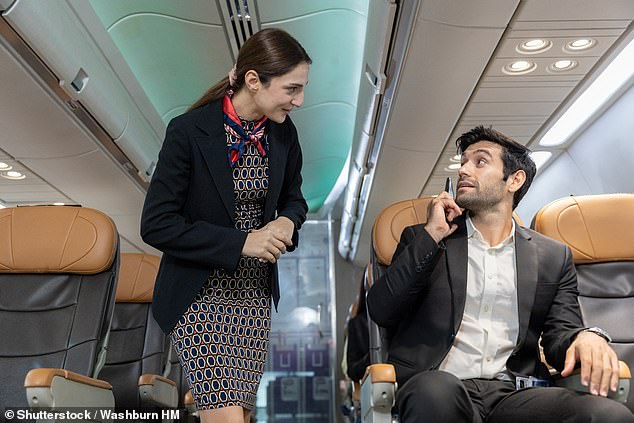
Being asked to downgrade from a first or business class seat can be a nightmare scenario – but why does it happen and what steps can you take if it happens to you?
However, if too many passengers arrive, some may either be denied boarding and bumped to other flights, or may be required to downgrade their seat.
Aircraft change
Last-minute changes to aircraft can also result in passengers being asked to downgrade.
Airlines occasionally have to swap aircraft at short notice due to maintenance and operational issues, or lack of staff.
Industry analysts also note that ongoing fleet and engine issues – such as those affecting the availability of long-haul aircraft – have forced airlines to reshuffle routes and equipment, sometimes at the last minute.
The replacement aircraft may have fewer premium seats or an entirely different cabin design, forcing airlines to downgrade passengers even if they booked months in advance.
The replacement aircraft may have fewer premium seats or an entirely different cabin design, forcing airlines to downgrade passengers even if they booked months in advance.
In March 2026, I was asked to downgrade from Premium Economy on a Virgin Atlantic flight to London Heathrow from VC Bird International Airport in Antigua, after the aircraft was changed.
I accepted in return for a Select voucher, which can be exchanged for either a Premium return ticket on any flight operated by Virgin Atlantic, or 75,000 Virgin Points.
Lack of disabled access
Unfortunately, some airlines have downgraded disabled passengers due to lack of space.
In one recent case involving British Airways, a passenger with paralysis was forced to endure an ‘uncomfortable, painful and undignified’ journey after being downgraded from business class on a long-haul flight from Cape Town to Spain.
Speaking to The Times, the plane passenger’s daughter said he was informed the aircraft could not accommodate disabled passengers in business class and was subsequently reassigned to premium economy – where the seating lacked the space, recline and accessibility he required.
He later received a refund from British Airways, who said: ‘We’re very sorry that the level of service our customer received on this occasion fell short of expectations.
‘We’ve investigated and shared learnings with our third-party handlers to prevent this from happening again and we are in touch with our customer to help put things right.’
Operational requirements
Airlines sometimes need to reallocate seats for operational or safety reasons.
This can include accommodating crew rest areas on long-haul flights, repositioning staff, or ensuring compliance with safety regulations.
In the recent case concerning the disabled passenger flying from Cape Town, the downgrade came as a result of aircraft restrictions and handling decisions at the airport, rather than a booking error.
Broken seat
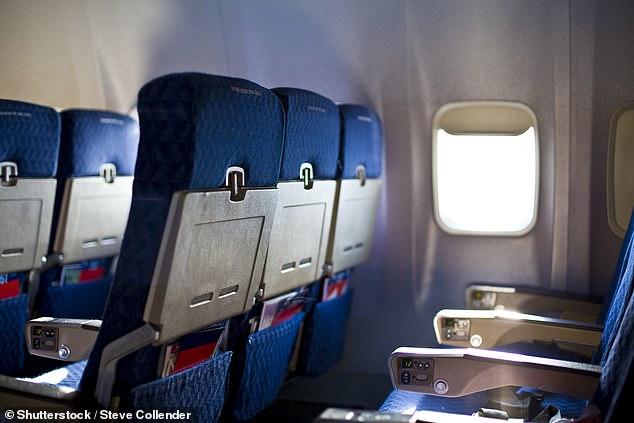
Broken seats that are considered unsafe or unsuitable can also result in passengers being downgraded to economy
Seats in premium cabins are complex pieces of equipment, particularly lie-flat business class pods with electronic controls.
When one breaks – whether it’s the recline mechanism, seatbelt system or in-flight entertainment – it may be considered unsafe or unsuitable for use.
When cabin crew are unable to fix these issues before or during a flight, airlines are left with limited options. If no equivalent seat is available, the passenger may be asked to sit in a lower cabin.
An Air India passenger flying from Delhi to Melbourne told Traveller of how he was downgraded from business to economy due to a broken seat in December 2025.
Anthony Harvey, from Victoria, Australia, said he and his wife had scanned their boarding passes at the gate when they were informed one of the two seats they had booked could not be used.
As there were no other business class seats available on the flight, Anthony was forced to sit in economy, and waited more than seven weeks for a refund from the airline.
Missed connections and late check-in
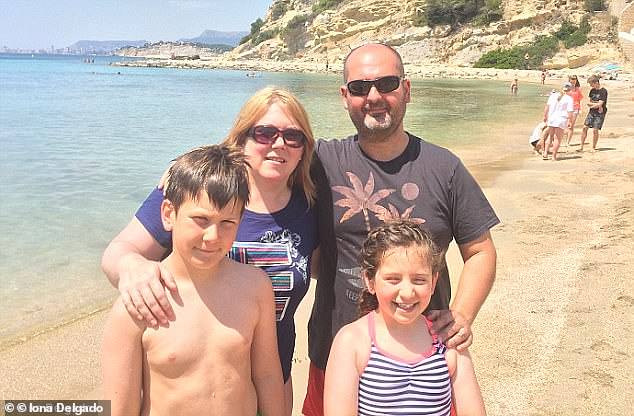
Teacher Iona Delgado, now 53, pictured with her husband Andres, 53, and their two children, Luis and Cristina. Iona was bumped off an overbooked flight to Alicante at the last minute in 2017
When passengers miss a connecting flight – often due to delays beyond their control – they are typically rebooked onto the next available service.
However, availability in the same cabin class is not always guaranteed.
This can be particularly problematic during peak travel periods, when premium cabins are already full. Passengers may potentially be downgraded simply because there are no equivalent seats left on alternative flights.
Passengers who check in late may also be asked to downgrade if a flight is oversold.
In many cases, airlines sell more tickets than seats to cover no-shows. However, if all passengers show up, the airline may apply a ‘last-come, first-served’ policy, where those who check in last are prioritised for downgrading or denied boarding altogether.
A mother-of-two revealed how her long-awaited family holiday was ruined in 2017 when she was bumped off an overbooked flight at the last minute.
Teacher Iona Delgado, now 53, had been due to fly from Cardiff to Alicante with her husband Andres, 53, and their two children, Luis and Cristina, for the half-term break on 28 May.
But when the family arrived to check-in with Spanish no-frills airline Vueling, they were told one of them would not be able to travel as there were not enough seats.
After being placed on stand-by, Mrs Delgado was eventually told at the gate that she could not board, leaving her husband and children to fly on to Spain without her.
At the time, a representative for Vueling said: ‘We always want to ensure that customers travelling with Vueling have an enjoyable experience.
‘We take customer complaints very seriously and our customer services team is currently looking into the matter at hand.’
Weight and balance
Though less frequent, aircraft weight and balance considerations can also play a role in passengers being asked to downgrade.
For safe take-off and landing, pilots must ensure passengers and cargo are distributed correctly.
On smaller aircraft or heavily loaded flights, airlines may need to move passengers between cabins to maintain balance.
In rare cases, this can result in downgrades – particularly if certain sections of the aircraft become restricted.
Under UK and EU passenger rights rules – referred to as UK261 – passengers who are involuntarily downgraded are entitled to a partial refund for the affected part of their journey.
The refund ranges from 30 per cent to 75 per cent of the ticket price, depending on the flight distance, and applies regardless of why the downgrade occurred.
What are your rights if you’ve been asked to downgrade?
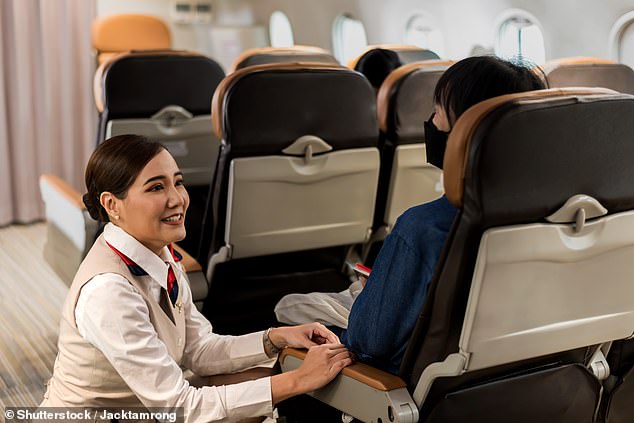
Operational requirements, like accommodating crew rest areas or ensuring compliance with safety regulations, can also result in a passenger being asked to downgraded
According to AirAdvisor CEO Radchenko, the most crucial thing to do, if you’re asked to downgrade on a flight, is to document everything.
He recommends being proactive in seeking as much information as possible, and to be aware of your rights.
In order to secure the compensation they’re legally entitled to, passengers should retain evidence to back up a claim – such as photos of the new seat, boarding passes and all records of communication.
Some airlines may push back or deny compensation to passengers who cannot physically prove the downgrade occurred, and refunds for involuntary downgrades can be tricky as airline pricing continuously fluctuates.
Acting quickly not only creates a paper trail, but increases the chances of a successful claim under passenger protection regulations, like UK261 or EU261, and avoids being stranded if alternative travel is required.
Tom Vaughan, Confused.com travel insurance expert, comments: ‘Flights are costing more than ever before, and for those who are paying extra for premium seats, it can be even more frustrating when something out of your control happens and your seat is downgraded.
‘Not only is the cost an issue, but this could also be a big problem for those with specific accessibility requirements.
‘Fortunately, under UK law (UK261), passengers do have clear rights. If you’re moved to a lower class than booked, the airline must refund part of your ticket price for that leg of the journey, ranging from 30 per cent to 75 per cent depending on the flight distance.
‘This refund applies regardless of why the downgrade happened. Unlike delays or cancellations, airlines cannot refuse this payment by pointing to circumstances outside their control like weather issues.
‘To claim, all you need to do is contact the airline directly and provide details, such as your booking confirmation and boarding pass.
‘If you don’t get a response or your claim is rejected, you can take it further through an independent dispute resolution service. Knowing your rights and what you’re entitled will make it easier to challenge the situation and avoid losing out financially.’