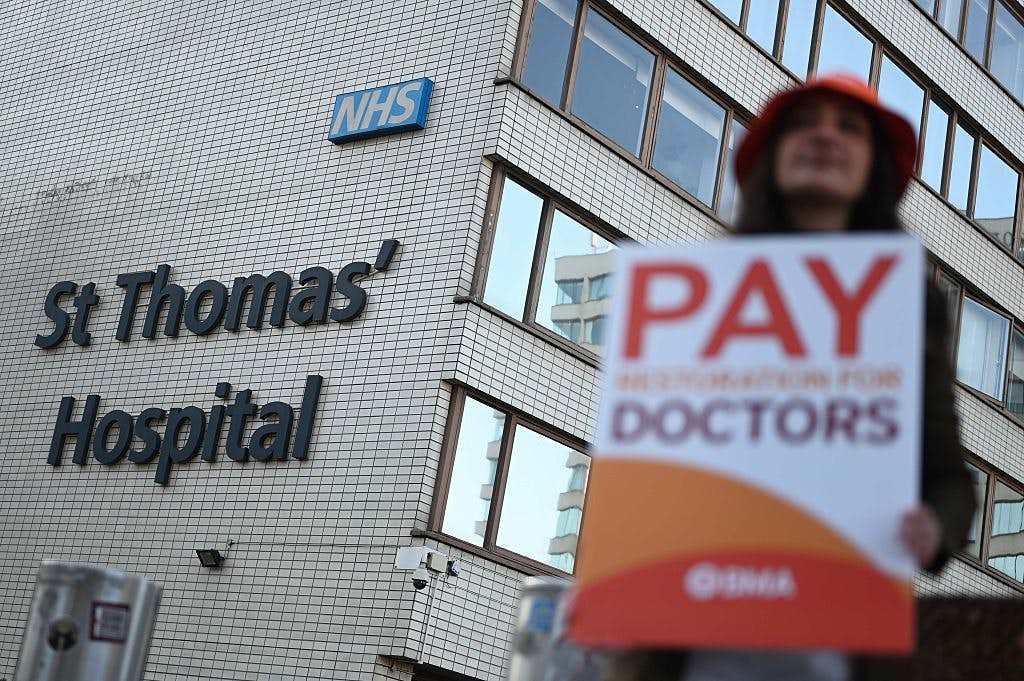
Britain these days is a crucible of permacrises. No issues ever seem to be resolved; the goalposts for complaints are being constantly moved. One such problem which has reared its ugly head, despite previous assurances that the issue was finished, is that of pay strikes by junior doctors.
They are back. This is the fifteenth round of industrial action by doctors since March 2023. The problem is becoming so severe that the Health Secretary, Wes Streeting, is considering taking a page from the playbook of that classic Labour heroine, Margaret Thatcher, and banning strikes.
The Government’s last offer, which the British Medical Association (BMA) rejected as being wholly inadequate, would have left the average resident doctor 35.2 per cent better off than they were four years ago, according to Streeting. Their pay has already risen by over 30 per cent since 2023, with the majority of this coming under the Labour Government. I would wager that this is a significantly larger pay rise than you, dear reader, or I have experienced in the same period. Why, then, are medics so implacably unhappy?
The BMA’s central claim is that, when adjusted for inflation using the Retail Price Index, resident doctors are earning 21 per cent less in real terms than they were in 2008. This is true. It is also true, however, of almost everyone in Britain.
Real wage growth across the British economy over the last 25 years has averaged roughly 0.5 per cent per year. The effects of covid wiped out much of the modest real-terms recovery that the economy saw beforehand, while inflation peaked at over 11 per cent in October 2022. Adjusted for inflation, the median real wages of the British worker only grew by 1.7 per cent over the two years to April 2025.
Doctors have simply been better placed than most people to make their frustrations heard
The erosion of purchasing power since 2008 is not a problem solely, or even chiefly, experienced by medical professionals. It has been the defining economic experience of this country for the better part of two decades. Doctors have simply been better placed than most people to make their frustrations heard and make someone answer for it.
They are, it should be said, much better placed than many in society. The median full-time salary in Britain is approximately £39,000. The BMA’s current proposal would see foundation year doctors earn between £47,308 and £54,274, rising to a maximum of £90,989 for resident doctors in specialist training. This is meaningfully more than the median salary, for people at the very beginning of their careers. The people making these demands are not, by any reasonable measure, poor, compared to their compatriots, yet they are making their demands with all the cries of a people truly in crisis.
This is not to say that they shouldn’t be paid more. Ideally, they should — we all should. But the more embarrassing question that this raises is about what this contrast reveals about the rest of the British labour market. A worker who turns up every day, does their job with the bare minimum of complaints, and lacks the institutional backing of a powerful professional body has seen their real wages stagnate for two decades, during which time the Government’s chosen remedies have been directed almost entirely elsewhere.
The National Living Wage has risen from £7.83 in 2018 to £12.71 as of the beginning of this month. This rise may sound generous, but it does nothing to resolve the basic indignity of being a low-paid worker in Britain. It has simply narrowed the gap between low pay and minimum legal pay, resulting in a feeling of utter worthlessness for those who have been earning a stagnant wage and have seen the remuneration for low-skilled jobs quickly catch up.
In addition, the gap between what someone earns for a hard day’s work and what someone earns for not working at all has also been narrowing for years, with very little political appetite to discuss it until recently. A single person aged 25 or over on Universal Credit receives £425 per month, before housing support, council tax reduction, free prescriptions, drastically reduced fees for tourist attractions, and the seemingly endless other supplements that being on out-of-work benefits allows one to avail of. An individual on the National Living Wage earns around this amount for a week of full-time work, before tax, national insurance, and student finance repayments are calculated, let alone rental costs, transport to work costs, and other costs which those not working don’t have to fork out for. The trade-off barely seems worth it.
The arithmetic of this injustice is not the BMA’s problem. They do not have to think about this at all when considering how much, or how little, resident doctors are paid. It is, however, the country’s problem, and yet it does not feature in the national conversation anywhere near as much as the plights of those who are irrefutably better off.
What Britain has managed to construct over a generation is a system that rewards non-participation generously, raises the minimum wage just enough to forestall serious discontent, and allows the organised, credentialed, union-represented higher-earners to extract further concessions through industrial strong-arming, while the merely hardworking absorb the cost of it all through stagnant real wages and an ever-increasing tax burden. Rachel Reeves’ recent National Insurance hikes also land heaviest on the employers of low and middle-income workers; the benefits of that revenue, such as they are, do not flow to them.
The doctors should be paid more. So should the warehouse workers, the small business owners, the weary 30-year-olds who are considering opting out of their pensions in order to add an extra £75 a month into their Lifetime ISAs in the hopes of buying a house. The difference is that none of these people are in a position to shut down an NHS trust for the best part of a week and generate a month of consistent media coverage in order to be given yet more money from the taxpayer.
The question of whether resident doctors are sufficiently compensated is a legitimate one. It is, however, a great deal less urgent than the question of why no other workers seem to matter.