This article is taken from the April 2026 issue of The Critic. To get the full magazine why not subscribe? Get five issues for just £5.
The fourth edition of the New Columbia Encyclopedia, published in 1975, contains an entry for the American photographer Lillian V. Mountweazel. Born in 1942 in Bangs, Ohio, she was known for her photographic essays on topics from Parisian cemeteries to the letterboxes of rural America, but her career was cut short in 1973 when she died in a fire whilst working for Combustibles magazine.
The entry is notable not for its details, but for the fact that it’s entirely untrue. Mountweazel never existed, and the fake biography was inserted purely to catch anyone who tried to infringe the encyclopedia’s copyright.
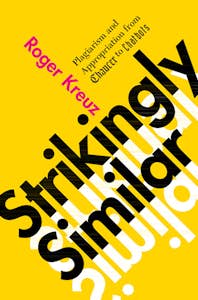
Roger Kreuz (Cambridge University Press, £25)
The American academic Roger Kreuz, on the other hand, definitely does exist, and has written this informative and entertaining history of plagiarism in its many forms. The sheer amount of copying that has gone on throughout history came as a surprise to him — and “dented my faith in human nature” — though the story is rarely straightforward.
Even defining “plagiarism” is tricky: yes, the word comes from plagiarius, the Latin name for a kidnapper of slaves or children. But how do you define the act? The World Association of Medical Editors says it means copying six or more consecutive words, but other bodies use different numbers, sometimes as few as two. And such definitions can be evaded by keeping the same sentence structure and replacing some words with synonyms, a technique known as “Rogeting”.
Then there’s the wider question of whether anyone can ever really escape previous influences. “A man can no more be completely original in that sense,” said George Bernard Shaw, “than a tree can grow out of air.” Ed Sheeran has observed that 60,000 new songs are released on Spotify every day, making 22 million a year, “and there’s only 12 notes that are available”.
Even when a specific act of copying occurs, the motive behind it can vary. At the most basic level there is simple error, as when a 17-year-old schoolboy won a 1936 essay competition in Missouri by submitting a recent magazine article: he had simply misunderstood the rules, and thought “you just were to send in the best essay you could find. If I had known, I would have written one myself”.
Then there are the cases of coincidence. Auberon Waugh pointed out that Lord of the Flies bears several similarities to W.L. George’s 1926 novel Children of the Morning. Both stories feature children marooned on a desert island, who split into groups and fight, with a red-headed bully emerging as leader. There is a fire in each story, and both books end with the appearance of a navy cruiser.
Waugh wasn’t accusing William Golding of deliberately cheating, merely of having subconsciously copied details. But Golding denied ever having heard of the earlier story, much less read it. This seems believable — coincidences do happen, especially if you start looking for them. Consider that famous list of the “spooky” similarities between Abraham Lincoln and John F. Kennedy (they each had secretaries with the other’s surname, and so on).
This isn’t to say that subconscious plagiarism doesn’t take place. Mark Twain once dedicated a book to his mother using very similar wording to that employed by Oliver Wendell Holmes in doing the same (his own mother, that is, rather than Twain’s). Realising the resemblance, Twain wrote a letter of apology. Holmes replied that he didn’t mind, believing that “we all unconsciously worked over ideas gathered in reading and hearing, imagining they were original with ourselves”.
There’s also the deliberate nod. Brahms purposefully included motifs from Beethoven’s ninth symphony in his own dirst. When critics pointed this out, Brahms growled, “Das sieht jeder Narr” — “Any fool can see that.”
But occasionally plagiarism is what we commonly understand by the term: a determined, pre-planned attempt to deceive people into believing that someone else’s work is your own. In 1925, for example, an unemployed welder named Alfred J. Carter tried to make money by selling previously published material to American magazines. He was caught when he tried to sell a poem by William Wordsworth to Good Housekeeping.
Some of the most entertaining cases come from the world of politics. In the contest for the 1988 Democratic presidential nomination, Joe Biden made a speech containing numerous phrases copied from Neil Kinnock’s 1987 UK general election broadcast, including the one about him being the first person from his family in a thousand generations to go to university. Biden pretended it was off-the-cuff: “I started thinking as I was coming over here … ” He could have saved himself the embarrassment, and indeed improved his chances, by considering the result of the 1987 UK general election.
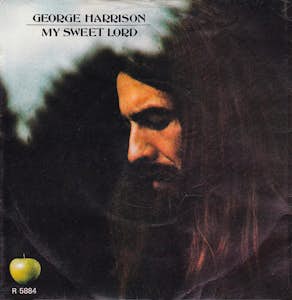
Once in a while an accusation ends up in court. In the case of George Harrison’s “My Sweet Lord”, said to be copied from the Chiffons’ song “He’s So Fine”, it ended up in court for 27 years (Harrison had to pay, but not as much as he was originally ordered to). Several members of the Gap Band now own 17 per cent of Mark Ronson’s “Uptown Funk” — sing the chorus to “Oops Upside Your Head” and you’ll realise why.
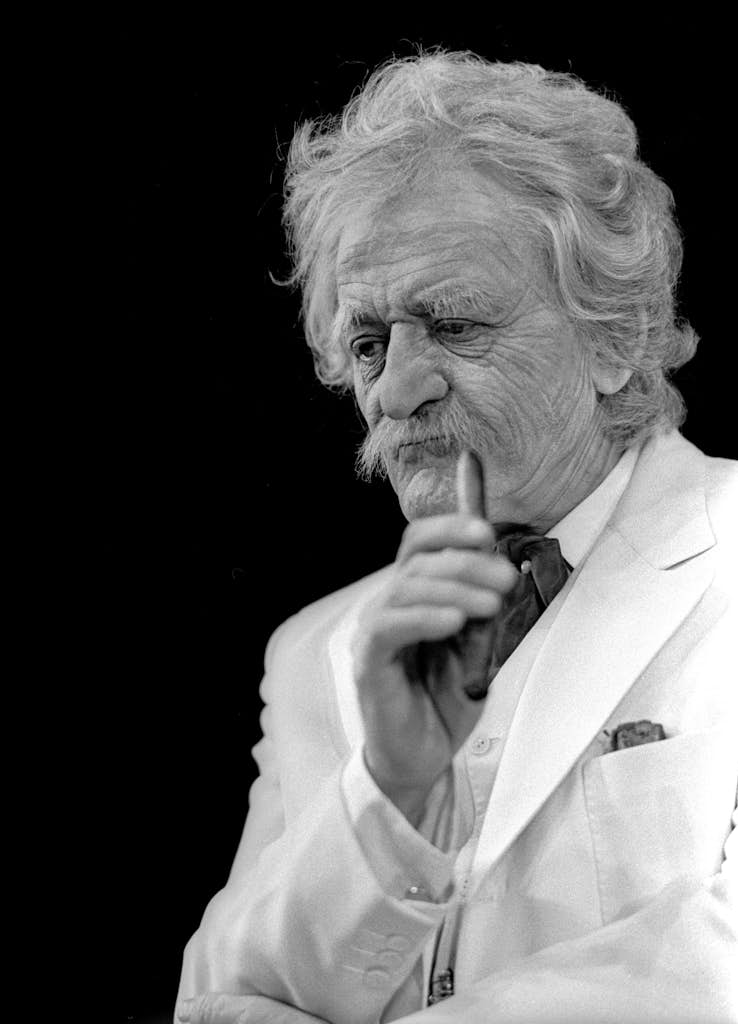
As ever when lawyers get involved, things can become complicated. In the 1950s, the actor Hal Holbrook started performing a one-man show dressed as Mark Twain, using Twain’s own words. In 1975, another actor, Mark Randall, began doing the same. Holbrook sued. The pair reached a settlement in which Randall was allowed to continue, as long as he didn’t do an impersonation of Holbrook’s impersonation.
But even these levels of absurdity might pale compared to the possibilities under artificial intelligence. Open AI has been criticised for using existing material without its creators’ permission, purely to learn what’s already there. Academics have long had to contend with students copying their work from other people: now, as Kreuz puts it, “Why even search for a good opening paragraph for your essay when ChatGPT is happy to construct one — or a dozen or more — for you?”
However, when Kreuz tried to get ChatGPT to give him the entire text of a particular book, it replied that it couldn’t do that, “as it is a [sic] copyrighted material”. Perhaps our AI fears are exaggerated.