A majority of Americans – two-thirds – feel that the nation’s corrections system does well on maintaining prison security, thus contributing to a sense of overall public safety. But only 16% believe that the system does a good job of rehabilitating incarcerated individuals.
With 95% of these individuals rejoining society after serving an average of about three years, the likelihood of reoffending is concerning for families of those convicted, the communities to which they return, and local law enforcement and justice systems.
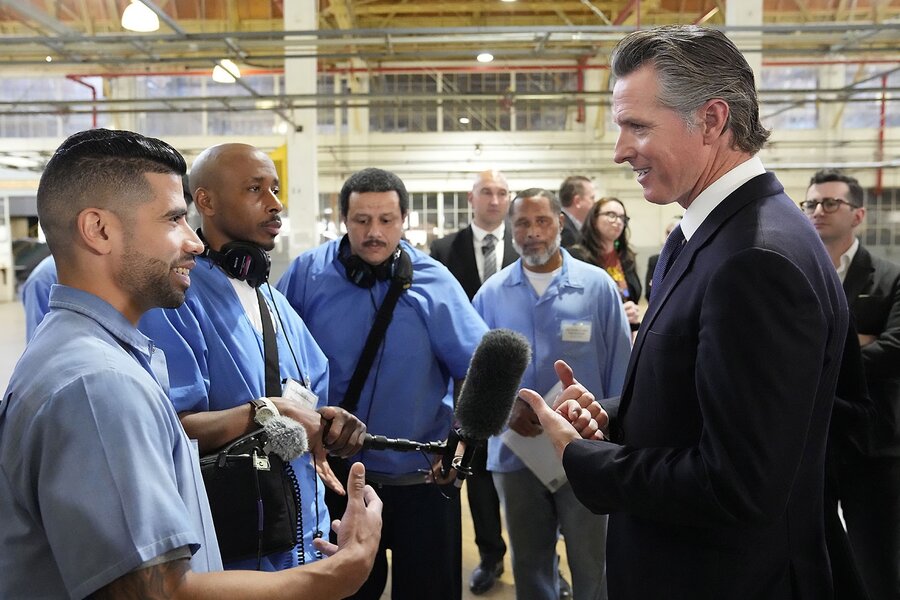
In response, more than a dozen states have intensified efforts to reorient their correctional systems toward reformation and rehabilitation. Reforms range from providing more mentorship and educational access to the ambitious reconstruction of San Quentin State Prison in California and – on the East Coast – a statewide shift away from what the National Institute of Justice has described as a “command-and-control culture.”
The emerging approaches recognize and build on individuals’ humanity and capacity to reflect, reform, and respond positively to respectful treatment.
“These innovations reflect a focus on human dignity for both those who work and those who live in our nation’s prisons,” said the Brennan Center for Justice in a study published in early April. The changes are occurring across “politically and geographically diverse” states, the study found, and are helping to reduce violence, improve working conditions, and equip incarcerated people to “successfully reenter society.”
The Chester State Correctional Institution near Philadelphia was one of the early adopters, piloting a residential unit known as Little Scandinavia after study visits to Norway and Sweden. Since the pilot began in 2022, “We’re seeing fewer incidents of disorder, a near absence of violence, less use of isolation,” Jordan Hyatt, Drexel University professor of criminology and justice studies, told WBUR’s “On Point” program last week.
An even more striking example of change is in Maine, where the state’s Department of Corrections emphasizes “rehabilitation, mutual respect, human dignity, and community reintegration.”
“Our job as law enforcement and correctional professionals is to release people healthier than when they arrived in our setting,” Randall Liberty, the commissioner of corrections, told “On Point.” He promotes a “redemptive environment” and “non adversarial approach” that supports opportunities for self-government, enrollment in college programs, and remunerative online jobs while still in prison.
Some critics, he said, ask, “Where’s the punishment in that?” His response: These activities give incarcerated persons “the opportunity to be responsible … to feel like an adult and care for their families” by paying mortgages, child support, restitution, and taxes. In addition, the Brennan Center report said, state data between 2017 and 2024 has shown dramatic reductions in assaults among prison residents (by 40%) and in staff use of force (by 69%).
“I believe in redemption,” said Mr. Liberty, who has served in law enforcement and corrections for more than 44 years and saw his father cycle in and out of prison during his childhood. “That’s how you make our community safer and stronger.”