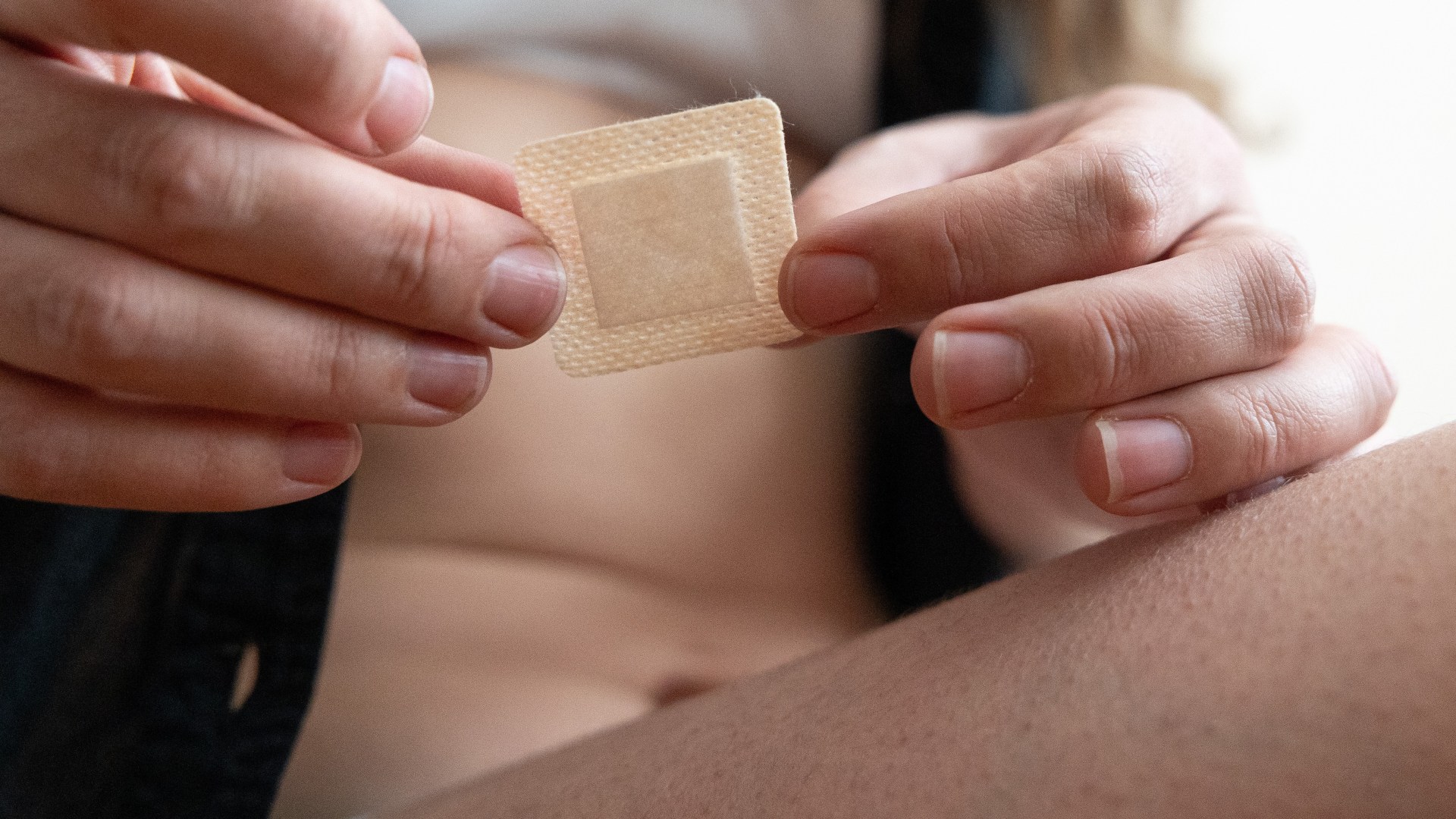
GIVING prostate cancer patients HRT patches could be just as effective at stopping the disease spreading, a groundbreaking study shows.
Roughly 2.6 million women in the UK are now prescribed the medication, which replenishes the female sex hormones oestrogen and progesterone that are lost during the menopause.
HRT, which can be taken in the form of gels, patches or pills, has long been shown to be a safe and cheap way to effectively combat the most debilitating menopause symptoms.
Now, researchers at University College London have discovered that the patches could be just as effective as injections – which are currently used to deliver hormone therapy for prostate cancer patients whose disease has spread just outside of the gland.
Men with this type of prostate cancer are given the therapy to suppress levels of testosterone which the cancer needs to grow.
The scientists also found the patches slashed the risk of side effects including hot flushes and high blood pressure, blood sugar and cholesterol.
READ MORE ON PROSTATE CANCER

But the patches were linked to a higher risk of breast tissue swelling.
Experts today said the findings should now “give men greater choice over their treatment”.
In the study, published in the New England Journal of Medicine, 1,360 men aged 72 on average, were given patches to wear or injections that block testosterone production.
The scientists also found that patients who are given injections of LHRH agonists – luteinising hormone-releasing hormone agonists – need multiple hospital or GP visits.
The patches, meanwhile, can be put on by patients at home.
Professor Ruth Langley, a professor of oncology at UCL and study lead author, said: “We believe our findings should lead to men with locally advanced prostate cancer being able to choose which hormone therapy suits them best.
“For some men, for instance, hot flushes can be very debilitating, and so the patches could greatly increase their quality of life.”
Commenting on the study, Caroline Geraghty, senior specialist nurse manager at Cancer Research UK, also said: “Thanks to research, over eight in 10 men diagnosed with prostate cancer will now survive for 10 years or more, as well as finding more effective treatments, we need to find ways to make them kinder too.
“This trial has done exactly that – it shows that hormone patches are just as effective as traditional injections at controlling locally advanced prostate cancer, while being much easier and gentler to administer.
“This should give men greater choice over their treatment in the future, allowing them to live not just longer lives, but better lives.”
Simon Grieveson, assistant director of research at Prostate Cancer UK, added: “Hormone therapy is an extremely common and effective treatment for prostate cancer, currently given through regular injections.
“But for many men it can cause quite significant side effects.
“Results from trials have shown that hormone patches like these, delivered through the skin, are just as effective at delaying cancer progression.
“The skin patches also resulted in fewer men experiencing hot flushes, however breast tissue swelling was more common.
“These skin patches are more convenient and less invasive and could give men greater choice in their treatment based on what’s important to them and how they live their lives.”
It comes as the UK national screening committee (UKNSC), which advises the Government, is set to meet to decide on the future of screening men for prostate cancer.
In a draft recommendation last year, the committee ruled that implementing a population wide screening test was “likely to cause more harm than good”.
Instead, it put forward only a recommendation to screen men with BRCA1 and BRCA2 genetic mutations, which puts them at far higher risk of prostate cancer, every two years, between the ages of 45 and 61.
At the time, health secretary Wes Streeting said he was surprised by the move but any final decision needs to be “based on science and evidence, not on politics”.
Many experts argue the PSA test is not very reliable because men with a high PSA level may not have cancer and some men with cancer have a normal PSA result.
A positive test result may lead to unnecessary treatment for slow-growing or harmless tumours, leaving men at risk of side-effects such as incontinence and erectile dysfunction.
However, others argue current evidence supports wider testing and urged experts to reconsider.
The UKNSC’s final decision is set be published a few weeks after its meeting on Thursday.
Official figures show HRT use has also exploded in England in recent years.
Latest NHS data recorded 13million HRT prescriptions in 2023/24, a 47 per cent increase from the previous year.
One in eight men will get prostate cancer
The risk of developing prostate cancer depends on many factors, here are some of the facts about the disease and how many men it affects.
- One in eight men will get prostate cancer in their lifetime
- It is the fourth most common cancer worldwide, and the most common in men
- There are 63,000 new cases every year in the UK, and 1.5million globally
- Around 12,000 people lose their lives to prostate cancer annually in the UK and almost 400,000 around the world
- Prostate cancer accounts for 28 per cent of all new cancer cases in men in the UK, and 14 per cent of all new cancer cases in men and women combined
- Prostate cancer survival has tripled in the last 50 years in the UK
- More than three-quarters (78 per cent) of patients survive for 10 or more years
- About 510,000 men are living with and after prostate cancer in the UK
- It is most common in men aged 75 to 79
- Since the early 1990s, cases have increased by 53 per cent in the UK
- Mortality rates are up 16 per cent since the early 1970s in the UK
- Incidence rates are projected to rise by 15 per cent in the UK between 2023 to 2025 and 2038 to 2040
- Mortality rates are expected to fall five per cent in the UK over the same years
BRCA genes and risk of prostate cancer
BRCA1 and BRCA2 are two genes that everyone has. They keep healthy cells growing normally and prevent the growth of cancer cells.
In a small number of people, these genes change and don’t work properly – this is called a gene variant. Your body can create these gene variants over time, or they can be inherited.
Men with a BRCA2 gene variant have a higher risk of developing prostate cancer during their lifetime.
If you have a BRCA1 variant, your lifetime risk of developing prostate cancer may only increase slightly.
Some research suggests that having a BRCA1 or BRCA2 gene variant may also increase your risk of being diagnosed with prostate cancer at a younger age or having aggressive prostate cancer.
In the general population, around 1 in 300 to 400 people have a BRCA gene variant.
But people from an Ashkenazi Jewish background have a higher risk – around 1 in 40 people may carry a BRCA gene variant.
NHS England is offering free BRCA gene testing for anyone living in England who is aged 18 or over and has one or more Jewish grandparent. For more info, visit jewishbrca.org or nhsjewishbrcaprogramme.org.uk.
Source: Prostate Cancer UK, World Cancer Research Fund International and Cancer Research UK