This time it’s personal. I suppose I should not be so shocked and surprised. You’d have to be living under a boulder not to know that there have been more than 120 closures of private schools in the UK since Labour decided to put VAT on school fees.
And, depending on your political point of view, you are either playing the world’s smallest violin at this news or, in the firm belief that, much like Jaffa Cakes, education should not be taxed, as livid as matron during a nits outbreak.
And reading last week that the latest school in the firing line is my alma mater Malvern Girls’ College – renamed Malvern St James in 2006 – really hit hard.
It has been described as ‘educational vandalism’ by the local MP and I couldn’t agree more.
Malvern Girls was such a good school. Its motto, ‘Empowering girls, empowering futures’, kind of says it all. It had a positive impact on its community and surroundings.
It was small but it had simply, quietly and without any fuss been educating girls since 1893 in the foothills of Malvern in Worcestershire.
And now it’s another one of Education Secretary Bridget Phillipson’s scalps (with a lot of help from her colleague, Chancellor Rachel Reeves). Another institution disposed of at the stroke of a capricious Whitehall pen, without any care for the damage it would do to the 270 pupils studying there.
In the middle of their studies to complete the A-level or GCSE syllabus, they will have to find somewhere else to go at less than a term’s notice.
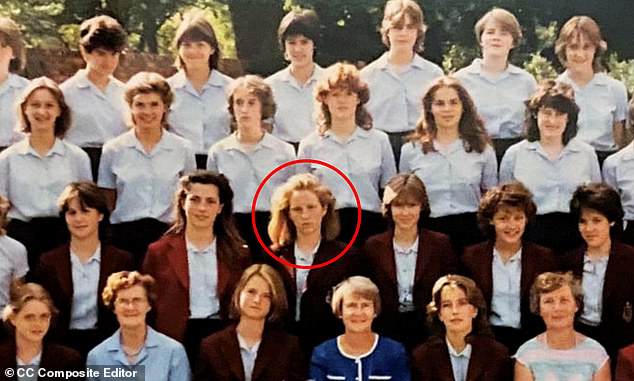
Imogen Edwards-Jones, circled, when she was at Malvern Girls’ College. It was small but it had simply, quietly and without any fuss been educating girls since 1893
Nor has there been even a passing regard for more than 200 people the school employs in the area – teachers, matrons, house mistresses, catering staff, cleaners, bassoon instructors, swimming teachers, librarians, groundsmen – all now redundant thanks to Phillipson and Reeves.
In terms of fruit, Malvern St James is pretty low-hanging fare. It’s got a long history but it’s short on sweeping grounds and games pitches. It’s not one of your swanky private schools with chic blazers, straw boaters and fleets of Rolls-Royces parked outside. Actually, if I remember correctly, the uniform was pretty hideous – lilac woollen coats, with pink or blue shirts and grey skirts from Marks & Spencer.
Not that any of the girls noticed particularly. It wasn’t that sort of school. It was one of those old-fashioned places where it was considered cool to be good at maths and play chess. Hockey skills were valued, so were athletics. It was an unashamedly blue-stocking place that produced young women who wanted to study the STEM subjects. I was a county shot-putter for my sins, and no one batted an eyelid.
There were all sorts of girls there from all sorts of backgrounds. Some were on full scholarships, others were on assisted places but, mostly, they did have parents who paid the fees out of their taxed income.
It was a privilege to be there, and the students knew that. The catchment area was vast. We had girls from Swansea who proudly wore leeks the size of trees attached to their jumpers on St David’s Day.
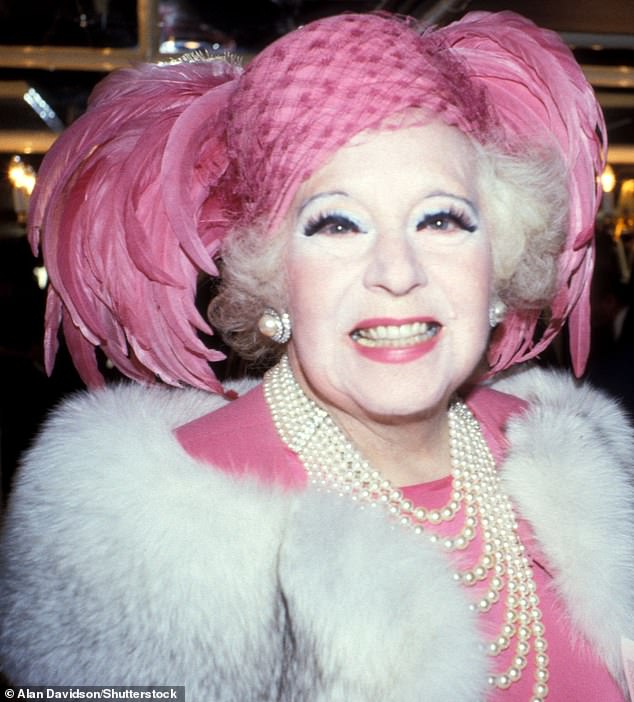
Dame Barbara Cartland, the bestselling romantic novelist who wrote books with titles such as A Virgin In Mayfair and Stolen Halo, also attended the school
There was a detachment of children from the Armed Forces whose parents were serving overseas. There was a Kenyan contingent and a cohort from Nigeria. There were even a couple of girls whose fathers were political prisoners.
Of my two great friends, one was a GP’s daughter from Birmingham and the other was the daughter of a plant pathologist who lived in Bhutan. My dad? He ran a precisions pressing factory in Birmingham. And we all worked hard, we all wanted to do well, give back – community service was compulsory, as was church on Sunday.
Mostly, we all went on to university. Some to Oxford, some to Cambridge, I went to Bristol where I read Russian. ‘Why not?’ I thought at the time. Well, nobody had told me I couldn’t.
Malvern was that can-do sort of a school, where young women were encouraged to reach their full potential. And the list of alumnae it produced in the course of its 133-year history is testament to what a good job it did.
Top of the list must be the brilliant Dame Barbara Cartland, the bestselling romantic novelist who wrote books with titles such as A Virgin In Mayfair and Stolen Halo, and once claimed to have turned down 49 proposals of marriage.
Then there was Dame Elizabeth Lane, the first female High Court judge, Call The Midwife actress Jennifer Kirby, the author Elizabeth Day and Caroline Lucas, former leader of the Green Party.
In my cohort alone (1980-86) we have the current head of Ofcom, the chief financial officer of one of the country’s leading high fashion brands, the head of HIV Paediatrics at a London hospital and a squillionaire who launched her own price comparison website and made millions after floating it on the Stock Exchange. When she attended the Old Girls’ Association reunion, she arrived in a helicopter that she piloted herself. Now that’s what I call Girl Power.
And there were lots of other women who went on to live good, interesting, valuable lives. Teachers, lawyers, authors (one of whom was shortlisted for the Orange Prize, now known as the Women’s Prize For Fiction), documentary filmmakers, even some politicians.
They were good women, useful members of society who pay their taxes. Helpful. One of them actually runs a company called the Really Helpful Club, which does just that. Help people.
At the end of it, what is all this for? Phillipson is never going to get her heart’s desire and bring down the big boys. The Harrows. The Wellingtons. The Etons. They’ve made it through two World Wars, the Great Depression, Suez… they’re going survive a bit of Labour class war.
It’s the smaller schools, like this one, the SEND schools and, let’s face it, the many all-girl schools who are most vulnerable and end up being collateral damage.
It seems to me that it’s always
the girls who end up taking it for the team. Malvern, which charged UK boarders fees of £50,000 per annum last year, did start admitting boys last September after it was taken over by Galaxy Global Education Group, a company backed by Chinese investors.
But it was the last throw of the dice before the cards came tumbling down and it appears to have attracted just 22 by the time it was closed.
In a statement addressing the underlying reasons for the closure, Nicholas Grenfell- Marten, chairman of Galaxy, said: ‘Nationally, the introduction of VAT on school fees and increased employment costs have placed considerable pressure on the independent sector.’ Galaxy also denied accusations that it was engaged in asset-stripping.
So, what’s going to happen to that school building, the former Imperial Hotel, which was built to cater for visitors to the spa town of Malvern?
I’m not sure there’s much of a market in people taking the waters any more and, frankly, it’s not the most stunning of buildings.
In fact, there’s a story about a Colditz veteran who was so reminded of his former prison when he stepped on to the platform at Great Malvern Station that he offered to give the Malvern girls a lecture about his daredevil escape.
So flats then? More housing. They can pave over those playing fields in a jiffy.
And what are we left with? A profound sadness. I suppose as an author of some 26 books (thank you, Malvern), I should probably come up with a better word than that. Gutted. Miserable. Bereft. Furious.
But mostly I am left pondering another word: why?