Is Sir Keir Starmer failing? That might strike you as a stupid question. Of course he is.
Everybody agrees that he is. Just look at the government! It certainly isn’t succeeding. The only people pretending otherwise, at this point, are those nobly undertaking to try and forestall a leadership contest and the elevation of Angela Rayner, Ed Miliband, or some other embodied reminder of the fact that it is always possible to fail harder.
And on one level it is a stupid question. He is failing. What follows is not an exercise in clickbait contrarianism. The statement “Starmer is failing” strikes me as just as intuitively correct as it does everyone else. But on another it is a very interesting question indeed. Because if Starmer is failing … at what?
Seriously, what is he trying to do? One could say “governing”, I suppose, but that is so broad as to be rather a cop-out and when you try to define governing, it isn’t obvious that he’s actually attempting it. The Government’s agenda has devolved into a Labour backbencher’s Christmas list, individual enthusiasms — hiking welfare, hiking the minimum wage, hiking taxes, hiking regulation on housing and employment — pursued without any apparent reference either to the national finances or to the Prime Minister’s stated intention to go “hell for leather” for economic growth.
Perhaps the Starmer project, whatever it was, has simply failed already, buried when mutinous backbenchers broke the back of his Chancellor and forced a u-turn on welfare cuts? But this confuses cause and effect. The Prime Minister lost control of his MPs so quickly because he hadn’t prepared them for unpleasant realities, nor furnished them with a plan which might justify pain today with glory tomorrow. Absent any programming, his historic majority simply reverted to factory settings.
Voters find themselves in the same position. A true-believing left-winger would probably have sufficient confidence in their vision of the state (however misguided) to try and make the case for tax rises to pay for it. Starmer did not; by the day of the election, and despite having been obviously on course for victory for over a year, Rachel Reeves had fallen into line with the Conservatives on every significant revenue tax. In place of serious spending plans were offered a handful of spiteful gestures, aimed at easy targets such as private schools and non-doms, the illusory revenues of which were pledged and re-pledged to whatever the Labour Party was promising that day.
One suspects that the closest Starmerism came to an animating principle is that which was reflected in the now-forgotten hagiographies which commentators offered up during the fleeting dawn of his premiership: that he was Serious (capital-S), and that this sober substitute for Tory chaos would be sufficient to get the country back on its feet.
It is easy now to dig up such coverage to embarrass its authors. But beyond illustrating the media’s herd instincts, it is striking how so much of even the most fawning coverage framed Starmer in terms of being, rather than doing. Consider this gem from Caitlin Moran (I told you it was easy):
It’s almost as if Keir Starmer has hired … the best people for the job, rather than just someone’s wife or a mate from school,” said my blow-dried friend, sounding palpably aroused.
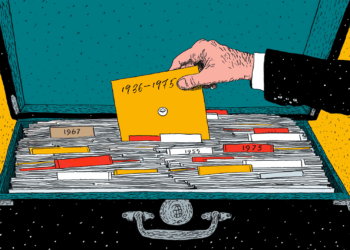
““I think he has a lot of really full box files with ‘DETAILED PLANS’ written on them,” said another, before excusing herself from the group chat. She didn’t say why she had to excuse herself — but we knew.
All that is, with hindsight, extremely funny, an exercise in missing the mark so precisely that one strikes the back of the target. The detailed plans never existed; his personnel decisions started falling to pieces almost immediately with the departure of Sue Gray. But more important is that there seems no basis, even at the time, for the assessment. If his people were the best, they had not yet had the chance to demonstrate it; if the detailed plans did exist, they were a well-kept secret.
Thus my slight unease at the consensus that Starmer is “failing”. Starmer undoubtedly has personal failings as a leader. On those few occasions when he has shown initiative — on assisted suicide, or the Chagos Islands — it would have been better for all concerned if he had not. They are prominently cited precisely because they do not implicate anyone else.
The Prime Minister is the picture in the centrist attic
But they are not the reason his government is “failing”. It is failing because Starmer avoids all the tough decisions everyone else wants to avoid, refuses to confront the trade-offs nobody wants to confront. The Prime Minister is the picture in the centrist attic. He has not failed the politics of those who cheered him into office — he instantiates it.
However embarrassing present circumstances must be for those who took him seriously, inside government and out, framing him as a “failure” flatters them by implying the existence of something worthwhile at which he has failed; that doubling down on the status quo could have worked — and could yet work — if only another, perhaps more Northern man were in charge.
And in so doing they, somewhat ironically, bestow upon Starmer a laurel he doesn’t deserve, if only as a means of placing it on their own heads. For there is dignity in failure. But only those who try can fail.