Experts have warned against a popular social media trend where people prepare meals with no oil or butter, opting instead to rely on water and natural ‘juices’ – and said it may ‘be doing more harm than good’.
TikTok is awash with influencers across the world making ‘nature’s cereal’ by placing raw meat and vegetables into a pan filled with no fats; only a little bit of water to ensure a brothy ‘clean meal’.
The practice was popularised by American social media star Rabeya Khatun, who shares weight loss tips with her 963,000 followers. By far her most popular ‘hack’ is sticking to just boiling ingredients, which include everything from carrots to uncooked fish and chicken breast.
Devout supporters call Rabeya ‘mother’ and have been filming their soup-like experiments, many also hoping to shed some pounds.
British influencer Ishan took to his own TikTok to review a plateful and, to his surprise, was delighted by the results.
‘It’s almost got like a stockiness to it,’ he said. ‘You can taste the carrot, you can taste the onion, you can taste the garlic.’
And despite his hesitation, the chicken ‘had a glisten to it’ and was tasty. Fresh herbs and spices – especially turmeric powder – are allowed.
He’s not the only one who’s been won over. Social media creator Giulia Beatrice said she ‘loves’ the meal, and Norway-based T. Björk Gudmundsson is trying to ‘eat clean food’ to help with her fibromyalgia, as well as weight loss.
‘It was super weird at first but now I’m trying it,’ she admitted. ‘It could be super good for my health.’
But nutrition specialists are not convinced.
‘If only it were that simple, just cut oil and butter and suddenly you are on a healthy diet,’ said Destini Moody, expert in Sports Dietetics at Flex Therapist CEUs in the US.
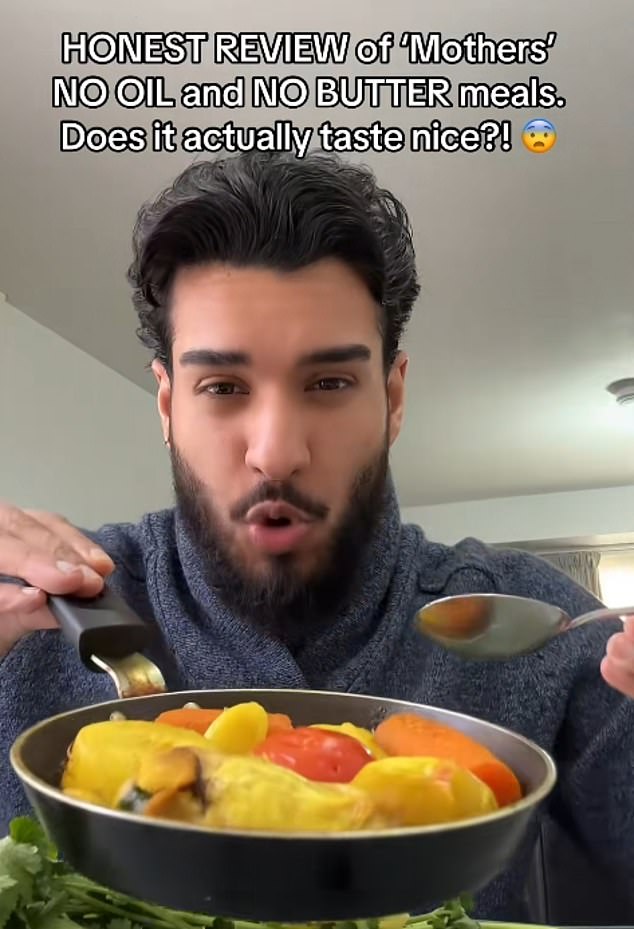
British influencer Ishan took to his TikTok to review a plateful and was delighted by the results
‘I do agree that cooking without butter and oil can reduce calories. That helps if you are trying to lose weight. It can also reduce saturated fats, especially if you were adding a lot of them to your meals.
‘That can make a real difference for heart health. But if you replace those fats with sugar or heavily processed food, then you have probably done more harm than good.
‘Fats are not our enemy because they play a very important role in absorbing certain vitamins. The body needs to have at least some fat present to be able to use fat-soluble vitamins like A, D, E, and K.
‘For example, a salad without any fat looks like a healthy meal, but in reality, we are not giving the body the tools it needs to absorb those nutrients. So it actually makes more sense to add a bit of olive oil, and then you have a much more complete and truly healthy meal.’
She also explained that food without any fats gets ‘digested very quickly’.
‘We end up feeling hungry again not long after the meal. What happens then is simple: we reach for snacks or fast food just to deal with that hunger,’ Destini added.
‘So even in this case, eating completely fat-free is not a good idea. When fats are included in the right amounts, they actually help us stay full longer, and we are less likely to reach for snacks or other food just to get through until the next meal.
‘I would not advise cutting out fat completely since they are important for us. A much better option is to include controlled amounts of good fats. That will keep you fuller, support your body better, and make eating much more enjoyable.’
Elsewhere, Registered Nutritionist Belle Amatt, of W-Wellness, said it’s also more beneficial if you’re cooking with the right oils at the right temperatures.
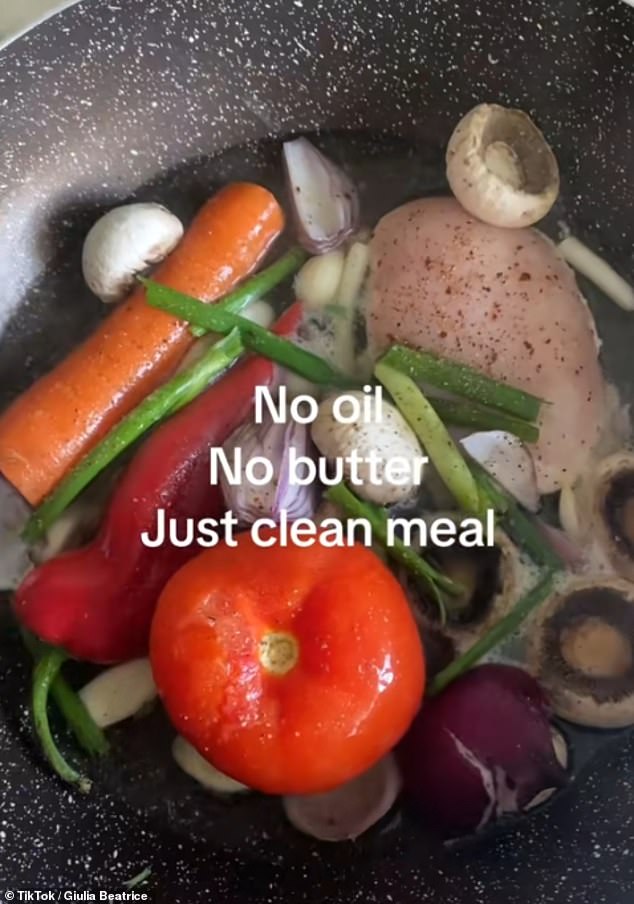
Social media creator Giulia Beatrice said she ‘loves’ the meals she makes with no oil or butter
‘In relation to cooking practices, the question is less about avoiding fats altogether and more about using them appropriately,’ she explained. ‘Different oils have different smoke points, which is the temperature at which they begin to break down and produce undesirable compounds.
‘Repeatedly overheating fats or cooking beyond their smoke point can lead to the formation of oxidation products and trans fats. This is particularly relevant in high-temperature cooking methods such as frying.
‘In practical terms, a balanced approach is more beneficial for the general population. Rather than eliminating oils and butter entirely, it is wise to focus on the type and quantity of fat used, alongside cooking methods and temperature control.’
She admitted there are certain advantages to cutting out oils and butters – but the answer is not clear cut.
‘Reducing added fats reduces overall energy density, which can support weight management for individuals aiming to lower calorie intake,’ Belle continued.
‘It may also be helpful for those with specific medical needs, such as individuals advised to follow a low-fat diet due to gallbladder conditions or certain cardiovascular concerns.
‘In terms of cooking methods, techniques such as steaming, poaching, or dry sautéing can preserve the natural flavours and nutrients of foods, particularly vegetables, and may appeal to those who prefer a lighter taste profile.’
However, she said there are also important limitations and potential risks to consider when eliminating fats – and some of that is linked to our emotions.
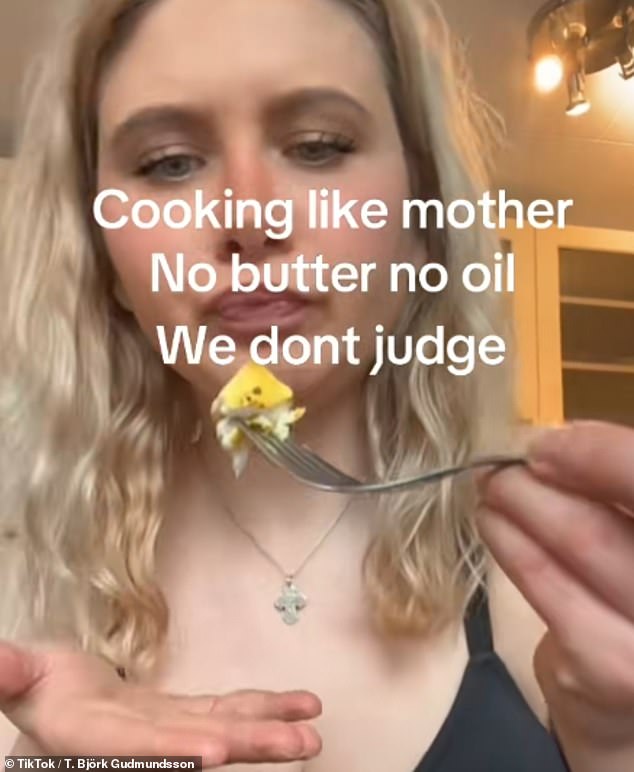
Norway-based T. Björk Gudmundsson is trying to ‘eat clean food’ to help with her fibromyalgia, as well as weight loss
‘There is also the issue of appetite regulation and satiety. Fat contributes to feelings of fullness and palatability,’ Belle shared. ‘Very low-fat meals can be less satisfying, which may lead to increased snacking or overconsumption later in the day. From a behavioural perspective, this can undermine the intended benefits of reducing fat intake.’
And fine dining chef Dean Harper said it’s important to consider what ingredients are being used.
‘Cooking without oil or butter can work, but it really depends on what you’re cooking and what you do instead,’ he said.
‘Taste-wise, methods like steaming, poaching or grilling can make flavours feel cleaner and more precise. Vegetables can come across brighter, fish more delicate, and meals can feel lighter because you don’t get that greasy coating.’
However, ‘a little unsaturated oil does help food taste finished and satisfying, so you’re less tempted to “fix” it by piling on salt or sugar’.
‘The other bit people forget is nutrition: you absorb some vitamins and plant nutrients better with a bit of fat, so totally oil-free can actually blunt the goodness in things like salads and greens.
‘The main downside is that it changes how food cooks. Fat’s basically your heat-transfer tool, which is why it helps you get an even sear and that deep, savoury browning.
‘Take oil or butter away and food sticks more easily, especially in stainless steel, and that even golden crust is harder to achieve.
‘This is where people say oil-free tastes bland, not because oil tastes of much, but because fat carries aroma and makes flavours feel rounded.
‘My rule of thumb is to treat fat like seasoning: use it on purpose, not by default. If you use a brush or spray and measure it even a teaspoon or two instead of free-pouring you keep control without sacrificing flavour.’