Fast-growing prediction markets, where people bet on everything from elections to sports, are facing a regulatory reckoning.
This form of gambling can be valuable, studies suggest, because it offers real-time, crowd-sourced insights that can help policymakers, central bankers, CEOs, and others make more informed decisions.
But recent events are highlighting the prediction markets’ inherent risks, not least of which are public corruption, insider trading, and the loss of trust if government officials stand to profit by placing bets on, say, the passage of certain legislation. Congress is already moving in bipartisan fashion on efforts to reduce those risks.
Why We Wrote This
As major prediction platforms exceed $6 billion in weekly trading volume, Congress is advancing legislation to curb insider trading by government officials and market professionals. The goal is to protect market integrity and public trust.
“The prediction markets are new,” says Jill Fisch, a business law professor at the University of Pennsylvania Carey Law School. “I think the public is going to be paying careful attention to how activities in the prediction markets can be abused or misused.”
The evidence of abuse is building quickly:
- In March, Beast Industries fired a staffer for using inside knowledge of its MrBeast YouTube contests to place successful bets on their outcomes in a prediction market called Kalshi. Kalshi had fined him $20,000 (five times his initial winnings) and referred him to the Commodities Futures Trading Commission (CFTC).
- Two weeks ago, Kalshi said it had fined and placed a five-year ban on three congressional candidates for betting on their own campaigns.
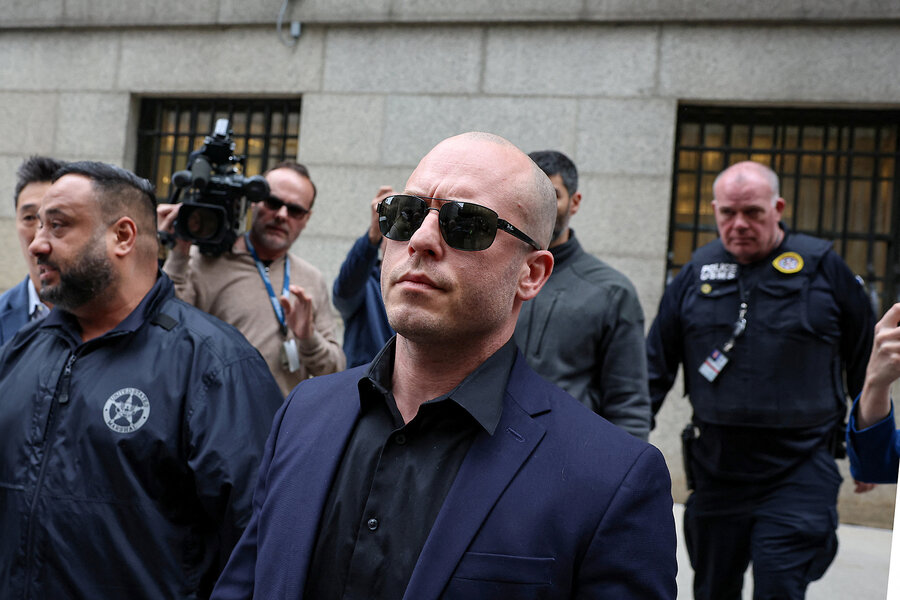
- Last week, in perhaps the most serious case to date, U.S. Army Special Forces Master Sgt. Gannon Ken Van Dyke pleaded not guilty to charges that he made $400,000 on Polymarket, another prediction market, by using classified information about a mission he was involved in. He’s alleged to have wagered that the U.S. would remove Venezuelan President Nicolás Maduro from office just hours before the event happened. His trial is scheduled to begin in June.
Bipartisan congressional reaction has been swift. On Thursday, the U.S. Senate voted unanimously to bar its members and staffers from placing bets with prediction markets. The same day, a group of Democratic senators and congressmen sent a letter to the CFTC, urging it to reverse “the rapid erosion of integrity” in those betting markets.

And Sens. Kirsten Gillibrand, a New York Democrat, and Dave McCormick, a Republican from Pennsylvania, introduced a bill on May 1 that would extend the prohibition to members of the House, the president, vice president, and senior executive branch officials.
A friendly White House
The Trump administration has meanwhile taken a friendly stance toward the betting markets. President Donald Trump has long touted a deregulatory philosophy and pushed for more aggressive economic competition, particularly in energy, financial services, and technology. Donald Trump Jr. is a strategic adviser to Kalshi and an investor in Polymarket. Trump Media has entered into partnerships to integrate prediction-market features into its Truth Social platform.
The CFTC has sued several states that have tried to use their own illegal-gambling measures to shut down prediction markets. (The commission just wrapped up a public comment period in its own process to tighten prediction-market rules.)
A previous iteration of prediction markets, known as Intrade, shut down after the CFTC, under President Barack Obama, sued it for allowing Americans to trade unregulated commodity options. (An option is a contract that gives someone the opportunity, but not the obligation, to buy or sell something.) The market shut down a year later.
That’s unlikely to happen under President Trump, says Robin Hanson, an economics professor at George Mason University and an early and prominent champion of prediction markets. “At the moment, I think the Trump administration is pretty supportive.”
Nevertheless, the CFTC head, Michael Selig, has not minced words when it comes to combating insider trading.
“We have a zero tolerance policy when it comes to fraud, manipulation, and insider trading,” he told the House Agriculture Committee last month. “We cannot, for the sake of the American people, slow down in our rulemaking.”
Regulations and limits
Policymakers have proposed various solutions to prevent insider trading and influence peddling, short of shutting down markets entirely. These include everything from capping trades to barring certain types of trades, such as bets on election or war outcomes. Kalshi and Polymarket have made moves on their own to discourage questionable activity.
Existing laws can address much of the egregious insider trading, as seen in the case against Sergeant Van Dyke. That case is novel because it marks the first time the Department of Justice has filed insider trading charges involving a prediction market.
But existing law is clear, says Professor Fisch of the University of Pennsylvania. “Non-public information belongs to the government,’’ she says. “And if you take it for your personal use to make money, you’ve violated the law.”

Wyatte Grantham-Philips/AP
Many policymakers are hesitant to ban prediction markets entirely because they can provide useful signals to the public, including companies and policymakers. Research shows that markets can be more accurate than polls at times and respond more quickly to shifts in events. In some cases, such as the direction of inflation or the growth of the economy, prediction markets are unmatched, says Jonathan Wright, an economics professor at Johns Hopkins University and coauthor of a recent study on prediction markets.
By having voters put their money, or prediction bets, where their mouths are, some companies say they can get a better sense of whether they should release a product, for example, or make a CEO change. The premise is that people make more careful predictions when the accuracy of their prediction means winning or losing money.
Differing views on the promise, risks
Professor Hanson believes that in the future, prediction markets will help voters choose candidates by betting on what will happen if that candidate wins. Similarly, presidents might act differently if, for example, a prediction market gauged the economic consequences of an attack on Iran or big tariffs on other countries.
“There’s a huge potential in the future for these markets just doing a lot more in society,” says Professor Hanson. “So that’s the main reason to have a light touch” in regulating them.
Others are more skeptical, given the risk of manipulation and insider bets.
“There’s no getting around the fact that any prediction market where somebody knows or controls the outcome of a bet is ripe for corruption,” said Democratic Sen. Chris Murphy of Connecticut, in a statement introducing the BETS OFF Act in March. The act would ban all betting on government actions, terrorism, war, assassination, and on any events where a person knows or controls the outcome.
“Prediction markets are also an avenue by which government decisions get influenced by who’s making money off them, and that should be unforgivable to the American public.”
Research shows that the accuracy and responsiveness of the markets’ predictions come from a small minority of traders, on the order of 3%, according to a new study by researchers at London Business School and Yale University.
Who profits?
It’s those in-the-know traders who make the bulk of the profits, according to a new analysis published Sunday by The Wall Street Journal. A tiny sliver of accounts, 0.1%, takes home two-thirds of the profits.
Still, prediction markets on economic subjects provide useful information, says Professor Wright of Johns Hopkins. It’s the geopolitical bets that give him pause: “That is just so fraught with questions of insider trading and potentially, manipulation, as well.”