Just in the last few months, we have started to feel the ground beginning to shift in Britain’s national debate about energy. Centrist and centre-right commentators have started to break ranks on critical elements of the energy transition in a way that would have been very unlikely until recently. To pick just two examples in the media, Ed Conway at Sky has been very robust on the relationship between North Sea energy and international market pricing, and Iain Martin has been dismissive of the idea that low marginal costs associated with intermittent renewables are indicative of their overall economy.
These are positions that would have cost journalists like them friends and access in establishment circles until not long ago. I think it’s reasonable to make a comparison between Net Zero, and the debate around immigration policy last year. In both cases, progressives suddenly lost their power to gate-keep the terms of reference of the discussion, resulting in an opening up which favours voices who are more sceptical about the prevailing establishment consensus.
In April’s edition of The Critic, I wrote a long analysis of the state of the country’s energy debate, in which I tried to summarise some of the technical work that has been done on the challenges of energy transition. I opened that article with a statement that the national debate about energy in Britain had become dysfunctional, and I think it’s worth taking a step back to consider why it became so divorced from reality, and where it might go next.
I think it’s remarkable that such a reckless position has become the default option
We have ended up with a situation in which the preponderance of well-educated opinion, among the policy forming and trend-setting classes, favours an electricity system dominated by intermittent renewable generation. That is to say, generation that can stop producing at any time. I think it’s remarkable that such a reckless position has become the default option among those who regard themselves as the sensible people, and I don’t believe that many of them would have accepted it had they been presented with the idea individually at the get-go. But collectively, not only have they come to embrace the idea, for a time they regarded scepticism of it as little more credible than theories about 5G masts causing diseases, or the contrails behind aircraft being laced with poisonous chemicals. How did so many clever people end up in this position?
By way of illustration, some years ago while I was still a civil servant, on a temporary overseas posting, I had a conversation with my superior, which got onto the subject of the energy transition. I began trying to explain the intermittency problem, and the challenges that arose from it. My colleague simply wouldn’t have it. It wasn’t that he objected to anything in particular that I said — he had no technical background himself and certainly no special interest in electricity grids — but he wouldn’t accept the possibility that there might be such a basic fault with a system, when the entire apparatus of state seemed to be convinced that it was a good idea.
The way he explained it to me was that there were intelligent people working on every aspect of policy and in every academic specialism, and that meant that he didn’t have to think about those things. The idea that I was right, and all those people were wrong, was flatly impossible. I gently prodded as to whether there might be any epistemological flaws with this approach, and quickly decided to change the subject to cricket.
To put it mildly, this was never the traditional approach we used to take in Britain to public policy or to areas of practical specialism. Whilst we might have respected that some people had expertise on a given subject, we did not simply assign them their own domains and accept everything they said about them uncritically. People were alive to the possibility that those operating in different areas of specialism could either become captured by particular interests, or could go down rabbit holes that the rest of society might be uncomfortable with if they were aware of them. Specialists might be consulted, but they were also expected to be accountable, at least to some extent — questions and criticism from outside were not considered impertinent or illegitimate.
Partially, the change might be explained by the fact that as the expanse of human knowledge and the complexity of the economy has grown, the increasing share of the population who make their living by what they know have been forced into deeper and deeper specialism in order to compete. As the educated population burrowed into their own specific areas, it left a lack of shared comprehension of more general principles, meaning that few now feel well placed to critique technical issues from a more general position. As such, it has come to seem almost disrespectful to challenge specialists on their own subjects. But I think there is also a deeper sociological phenomenon at play.
Back in earlier times, elite classes were formed by birth; their offices may not have been directly hereditary, but their having been born into a narrow strata of families gave them their eligibility. Nowadays, we have a society that fancies itself a meritocracy, and in which people occupy their position by virtue of ability, rather than lineage. Their personal status comes from having been accepted into the ranks of a cognitive elite, whether that is in one of the metropolitan professions, the central civil service, the wholesale financial services industry, academia or the media. Collectively, this elite is selected for its competence, its knowledge and its ability to parse complicated issues in a manner supposedly beyond that of the general public. It is that which justifies its existence.
The idea that they could collectively have got something so fundamental quite as spectacularly wrong as they have with intermittent renewables is therefore a personal threat to each individual member of our cognitive elite. It diminishes their own claim to competence. This is the psychological battle that we are up against when making the technical case against Net Zero. And this is particularly the case given that so much of our policy making class is dominated by people with limited technical backgrounds.
Some time back I posed the question of exactly how much of the elite class understood the fundamental problem about intermittent generation — the fact that generation and load have to be balanced in real time, and that fluctuations in frequency can cause the whole thing to trip off. Without that understanding it’s obviously very difficult to perceive the problems with intermittency at all, let alone anything to do with the rest of running a power grid.
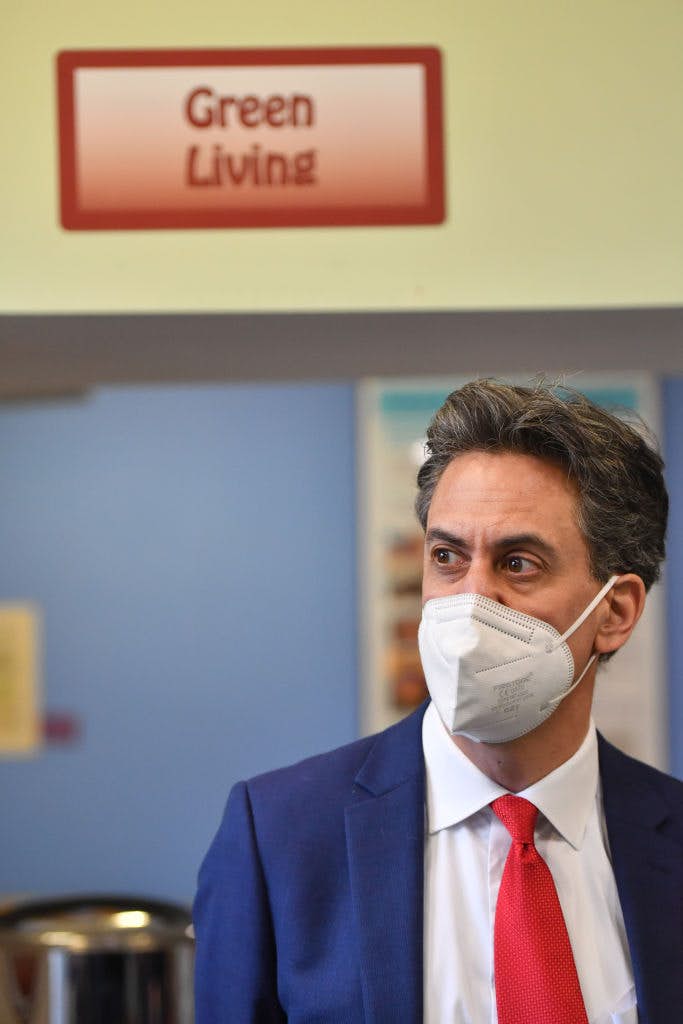
I suspect that there are some of these people who are aware of it, and who are concerned about it, and who are becoming impatient with the lack of official acknowledgement of the problem. There are other people, among whom I would include people like Ed Miliband, who are aware of the problem but who regard the urgency of climate change — either moral or physical — as being so overwhelming that they just want to push it through and deal with the consequences later. Others — and I don’t think this includes Miliband but it may as well in practice — are people who are aware of the issue, but who are happy to do away with industrial civilisation for political or aesthetic reasons. Finally, you have another group who understand the issue but who think that a technical fix is going to come along and sort it all out for us — and this group is just as likely to include techno-optimists with engineering backgrounds as it is the genuinely clueless.
Collectively I think these types of people who one way or another do understand the problem might make up about a third of our policy-making or discourse setting class. Then, on the other end of the spectrum, there are people who really have not been exposed to it at all, and have either never heard of it, or whose eyes just gloss over whenever anybody starts talking about anything technical, or who just simply do not care. I suspect these people probably make up another third of our national elite. Yet the people I find most interesting are those in the middle who have heard of it, and who are aware of the debate and the controversy, but who have just decided not to worry about it.
These people say to themselves, “Well, all of the other intelligent people seem to be fine with it, so who am I to question all of them?” And thus our humble Times columnist or Department for Business & Trade deputy director, or private equity analyst, reconciles themselves with the risks and carries on with their day, satisfied that there are engineers and specialists whose job it is to worry about it. But this of course leaves out that the engineers and specialists will do what they are told by the institutions they work for, and that is set by policy, and policy is informed by the preponderance of elite consensus.
As such, an elite may collectively behave as if it is not aware of the issue, even if plenty of its members are aware at an individual level. Non-technical people discount their own technical concerns, and instead place their trust in the collective wisdom of their peers. Particularly, they are going to do this over something with the political and moral momentum that the energy transition currently has behind it.
The entire debate about energy is really a proxy for positioning on climate change
This is why it is important to remember that among the class of people who dominate Britain’s institutions, the entire debate about energy is really a proxy for positioning on climate change. While the general public are far more likely to be influenced by economic arguments, our elites are more likely to revert to climate change as a defensive strategy as the consensus around the energy transition begins to unravel. It is this that sceptical voices are going to have to be prepared for.
Over the last decade, a decision was made across the sceptical side of the debate to drop their campaigning and writing on the science of climate change, and instead to concentrate on the economics and practicalities of the energy transition. From the perspective of political strategy, this has undoubtedly been the right call, and has done much to bolster the scepticism of the non-elite majority of the public toward Net Zero. At the same time however, it has meant that extreme climate alarmism has gone unchallenged in the public sphere, and establishment figures have been able to indulge in unscientific hyperbole without social consequence.
Whilst winning over the general public will be critical to securing a change in the political direction of Britain’s energy policy, the people responsible for putting change into effect — and this means people in financial services and even energy companies themselves as well as civil servants and the media — come from social classes that are still marinated in climate hysteria. This will become an even bigger issue as younger cohorts take over. Whilst greenery currently seems to have an unmoveable hold over younger graduates, it is not impossible to change elite consensus; in fact it can change very quickly. Its herdlike quality means that it can be spun around a relatively small number of individuals changing their minds. But at the moment, even though there are now credible, “sensible” voices finally questioning the most outlandish claims of the renewables enthusiasts, there is still work yet to do before those people are comfortable standing up to climate hysteria.