This article is taken from the April 2026 issue of The Critic. To get the full magazine why not subscribe? Get five issues for just £5.
What’s the sporting hill on which you would die? Before you answer that: please be nice to me, and don’t say anything too cruel about Spurs.
This season has, surely, already given those of us unfortunate enough to be Tottenham fans more pain and suffering than even the most ardent Gooner could hope we would have to endure. Having Critic readers pile in with something bad — believe me, I’ve said it all myself — would probably push me over the edge.
For myself, there are many hills on which I would die. For starters: The Hundred has no redeeming features; Franz Klammer is the greatest downhill skier the world has ever known; Manchester United lucked out with Alex Ferguson, and all that’s happened since he left is that they’ve reverted to the mean. Opinions, I have many. That’s the great thing about loving sport. We all have our own views of pretty much everything. Like how can F1 call itself the pinnacle of motorsport now, when the key to success is how you manage a battery.
But the real hill on which I am willing to die — the one that really gets me going and, I am well aware, drives some people mad — goes to the heart of all these other opinions, because it’s about sport itself.
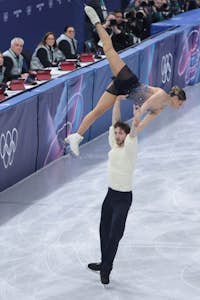
So here we go: much of what is passed off as sport is no such thing. Any “sport” that requires a judge to decide who has won — figure skating, gymnastics, dressage, synchronised swimming, for example — isn’t actually a sport. They’re all competitive, obviously. People train to an astonishingly high level of athleticism in order to compete with each other. But they’re not sports; they’re competitions.
Would you describe Sheku Kanneh-Mason, the cellist who won the BBC Young Musician title in 2016, as one of Britain’s leading sports stars? Of course not. He’s a musician, not a sportsman. But the winner of the BBC Young Musician competition — as with Masterchef and Portrait Artist of the Year, for example — is determined in the same way as those so-called sports: by expert judges awarding marks in line with their interpretation against a set of criteria. Two people watching can have different views of who should be the winner. To be a sport — football, rugby, golf and suchlike — there needs to be a score which stands on its own, without being decided by a judge.
Indeed, in some of these “sports” — skating and gymnastics are the most ridiculous examples — the comparison with music and cooking competitions is even more watertight, because a key element in their scoring system is avowedly artistic: points are awarded on the basis of artistic excellence, a criterion which is entirely subjective. Synchronised swimming isn’t even called that any longer, precisely because it’s been rebranded as artistic swimming to reflect what it actually is. It’s a competition, not a sport. Put it this way: unless you think Strictly Come Dancing is a sporting contest, then you agree with me.
Those “sports” which have judges awarding marks for artistic merit only buttress my wider argument; they’re not necessary to it. Because the real issue is the role of judges more generally. Obviously real, genuine sports also have judges — let’s call them referees, or umpires, as it sets them apart from those who preside over competitions.
But their role is to enforce the rules, not to award the points that determine the result. The referees have to use their judgement to decide how or whether the rules have been broken — should a foul lead to a yellow or red card? — but they don’t award goals or runs on their own terms because they decide that’s what they think should have happened.
A judge in a diving competition, on the other hand, awards the marks that determine the result on the basis of what he or she thinks they saw — and in high diving, the artistic quality of the dive (the beauty of movement in the air and the precision of entry into the water) is a key factor to be determined by the judge.
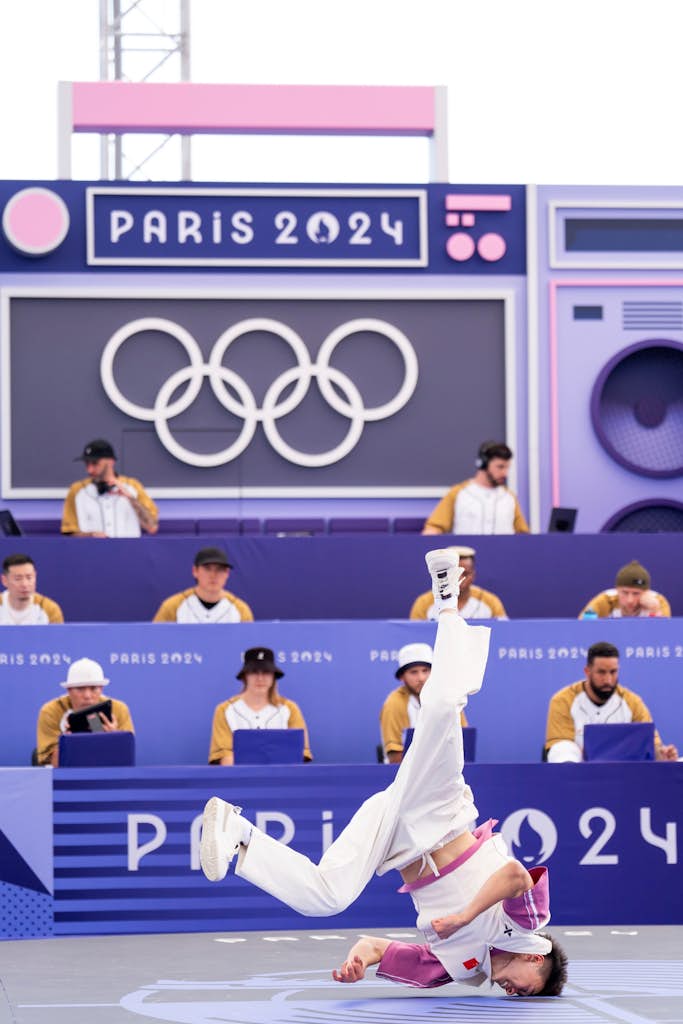
Similarly, breakdancing (which, preposterously, was introduced at the 2024 Paris Olympics) is judged on creativity, personality and technical skill. Like some of the disciplines at the recent Winter Olympics, such as freestyle skiing, in which competitors are judged on the difficulty of their tricks and also on their style, flow and execution in the air, breakdancing is not a sport. I’m not disputing the physical and athletic excellence of those taking part in these “sports”, nor the validity of the results. The winners deserve to be lauded for their success. But they have won a competition, not pulled off a sporting triumph.