
This article is taken from the April 2026 issue of The Critic. To get the full magazine why not subscribe? Get five issues for just £5.
The elusive eatery
Salt and sin; port towns are sexy and none more so than Piraeus. Athens’ ugly sister has always been one of my favourite places in the world and presently it’s having a downtown moment. Galleries like Intermission and Sylvia Kouvali and attendant hip restaurants in post-industrial spaces are remaking the harbour as more than a springboard for Aegean adventures.
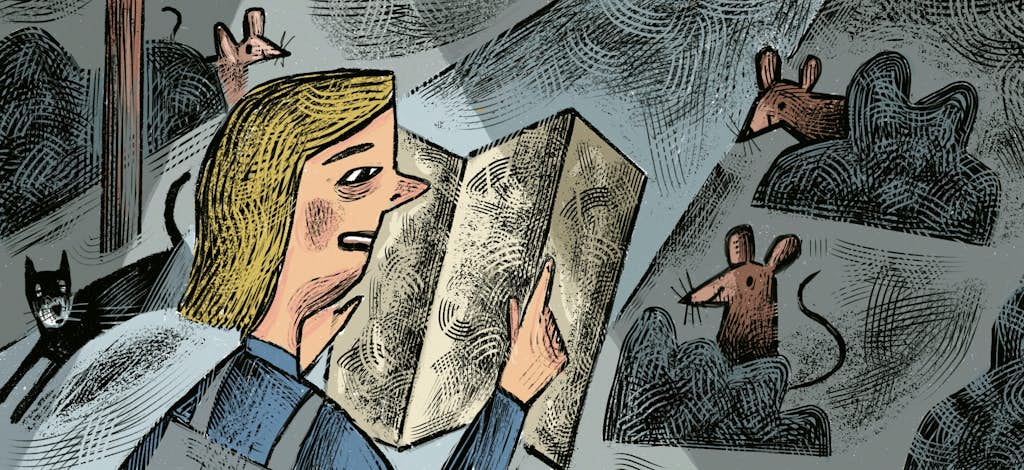
Before my own early boat for Syros, I set out to find a restaurant called Páno, so cool that it doesn’t even have a website. One of the very few advantages of being old is that I can read a map, but after a 40-minute walk the pavements disappeared, followed by the street lighting. Then it was just me and the giant rats. You know you’re in trouble in Greece when the neighbourhood is too skanky even for felines. Total failure, redeemed by souvlaki and chips at the kebab stand by ferry gate E9.
† † †
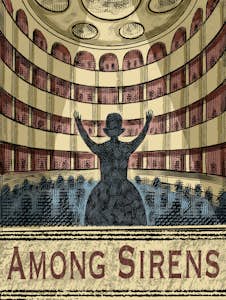
The Apollon theatre in Ermopouli has to be one of the most enchanting opera houses in the world, a miniature cross between La Scala and Naples’ San Carlo, built by Italian architect Pietro Sampò in 1864. I was lucky enough to catch Matilde Wallevik’s art song cycle Amongst Sirens, a luminous evocation in music, words and images of her childhood in Greece.
Now a mezzo soprano for the Danish Royal Opera, Matilde moved to Hydra and Crete as a baby with her mother Bibi, a painter whose works, interspersed with personal photographs, form the background to the piece. Extracts from Bibi’s diaries read by actress Vera Efthimiou and Greek-inspired pieces by composers including Elgar, Poulenc and Handel, performed by Matilde and pianist Michael Brownlee layered into a hauntingly vivid and poignant reflection on lost worlds.
Psychodrama in orange
More theatrical delight in London, with Alba Arikha’s Spanish Oranges at the Playground Theatre, starring Maryam d’Abo and Jay Villiers as Fiona and Ivo, a troubled married couple, with a sharply-observed performance by newcomer Arianna Branca as their daughter Lydia. Fiona’s career as a novelist is about to go stellar, whilst Ivo, an actor, has been cancelled.
Twisty, fresh, dynamic and very clever, the play is a masterclass in language, brilliantly capturing the dynamics of a long marriage in the weight of the unsaid. Livi Carpenter’s artfully minimal set piled the stage with secrets, intensifying the atmosphere of emotional incarceration.
At once a painfully intimate psychodrama and a quickfire examination of themes including cultural appropriation, identity politics and sexual coercion, Spanish Oranges is both compellingly sinister and very funny, like early Pinter with better jokes. Branca’s Lydia, shocked from student solipsism into the acknowledgement of her parents’ benignly intended duplicities, is particularly arresting, crackling with both empathy and disgust.
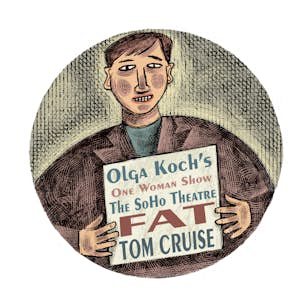
“For any Americans in the audience, an abortion is something your grandmother used to be able to get.” Olga Koch’s one-woman show Fat Tom Cruise at the Soho Theatre was an hilarious, madly energetic feminist romp with another disquieting twist in the tail. Koch’s raw, challenging style injects a flinch into every laugh; like Spanish Oranges, the piece flipped its gaze on the assumptions of the audience, confronting us with the laziness of our own prejudices.
What I particularly loved about both plays as compared, say, to the sentimental bilge of Hamnet (admit it, you laughed too), was their startling ability to make us squirm at our own compromises, the type of art that leaves nowhere to hide.
A fugitive in the Veneto
Venice’s Teatro Goldoni, known in the nineteenth century as the Apollo, is the oldest existing theatre in the city and one of its oddest buildings. Stuck in what has become the no-go tourist zone near Rialto, the exterior was remodelled in 1979 in a hideous coupling of Bauhaus and Liberty styles. Luckily either the will or the money ran out and the interior is shabbily intact.
It was a perfect venue for a staging of Antonio Sartorio’s L’Adelaide, unperformed since 1679. Venice had lost Crete to the Ottomans in 1669, and the opera transposes the true story of the Holy Roman Empress Adelaide into an allegory of decline followed by redemption. Set in the Frankish Veneto in 951, the widowed queen is forced into marriage with the dastardly Adalberto by his father, the usurping king Berengario. After escaping in a small boat across Lake Garda, the real Adelaide hid out in the Veneto marshes for four months before being rescued by marriage to Otho the Great.
The opera adds plenty more trials to her virtue, including near-drowning, poisoning and being shot with an arrow, but order and harmony are eventually restored. Exquisitely sung by performers from the Conservatorio Benedetto Marcello, the production conveyed all the gleeful gaiety of the Baroque without taking itself too seriously, helped along by interjections from the supertitles: “Don’t worry, no one stays injured for long. Happy ending. Curtain. Spritz.”
† † †
Artists Emilia and the late Ilya Kabokov made work together in Venice from 1977. After 50 years and nine Biennale exhibits, in May Emilia will open Diario Veneziano at the sixteenth-century palazzo Ca’Tron, an installation created in collaboration with 500 Venetian residents which attempts to centralise the inhabitants of the city themselves as artworks rather than human scenery. Participants are invited to present an object to what will become a museum of Venetian lives, of those who have moved to the city and those who have lived here for generations.
At the first call for contributions, Emilia gave a moving speech on Venice as a beacon of hope “for what can happen when neighbours support each other and share the responsibility of caring for their home for future generations”. I took a small blue flask from the Venetian glass foundry on Syros. Bottled time.