Thousands of miles from the Persian Gulf, economic and political shrapnel from the Iran war has left longtime American allies nervous about the staying power and stability of their partnerships with the United States.
The most recent spillover from the war has come in Europe: last week’s sudden decision by U.S. President Donald Trump to withdraw 5,000 American troops from Germany.
But it’s also been buffeting allies in the Asia Pacific, an area of the world Mr. Trump has made a primary foreign policy priority, ahead of his scheduled visit to Beijing later this month for talks with Chinese leader Xi Jinping.
Why We Wrote This
Ahead of President Donald Trump’s expected visit in Beijing with Chinese leader Xi Jinping, longtime American allies in Europe and Asia remain on edge about the strength of their partnership with the United States.
Even before the war, Mr. Trump’s use of tariffs to secure U.S. economic interests and his insistence that partners in both Europe and Asia significantly increase defense spending had made it clear the terms of engagement with the White House were changing.
But allied leaders were hopeful of being able to deliver the kind of loosened American commitment Mr. Trump wanted. And they were assuming U.S. officials would recognize that this transition would inevitably take time.
The Iran war – launched alongside Israel without consulting other U.S. partners, and hitting their economies far harder than America’s – delivered a jolt of an entirely different order.
The war, and Mr. Trump’s unconcealed anger at their refusal to join it, have led many allies to question whether their previous expectation of a gradual, mutually managed move to a less taxing U.S. commitment remains doable.
They will still hope so.
European allies, especially Germany, have been ramping up military spending in anticipation of taking on the main responsibility for securing the continent against Russian aggression. But, for now, the U.S. remains critical to making that deterrent credible.
Japan, South Korea, and other partners in Asia face a similar challenge: Even as they devote more resources to defense, they still need American support to deal with the threat from North Korea, as well as the growing ambition and assertiveness of China.

However, especially since the launch of the Iran war, they’ve sensed that President Trump views them less as valued partners than as mere afterthoughts – or mere annoyances.
Last Friday’s announcement of the American troop drawdown was not, in itself, concerning. Germany and other European members of the NATO alliance have already accepted that U.S. troop numbers will be reduced as Europe assumes a larger military role.
But the nature and timing of the decision were unsettling.
It followed German Chancellor Friedrich Merz’s unguarded criticism of the Iran war in remarks to a group of high school students, and his suggestion that Iran had “humiliated” the U.S. The troop withdrawal announcement, officials told The New York Times, was meant as a punitive strike.
And far from suggesting the kind of coordination European allies hope to see in a stable realignment of security obligations, it came out of the blue. A NATO spokesman was reduced to telling reporters that alliance leaders were trying to find out exactly what it meant.

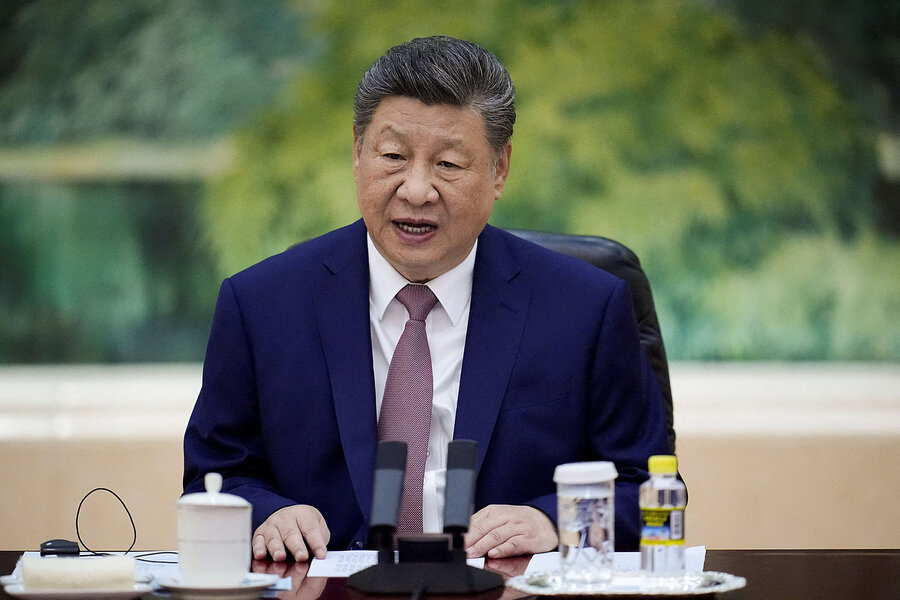
Allies in Asia have been on the receiving end of what they feel is similarly casual treatment, a particular concern ahead of a Trump-Xi summit, whose outcome will affect not just U.S. interests, but theirs as well.
The Quadrilateral Security Dialogue, known as the Quad, brings together the U.S., Japan, India, and Australia – a democratic counterweight to China’s expanding influence that seemed an important part of Mr. Trump’s heightened focus on Asia in the early months of his second term.
But the president opted out of a meeting with alliance leaders last year amid a falling out with Indian Prime Minister Narendra Modi. Ties with Japan and Australia have more recently been strained over trade, defense spending, and now the Iran war, dashing hopes that he might stop on the way to the Beijing summit to meet Quad leaders.
Japan and America’s other main Asian military allies – South Korea and the Philippines – are hugely dependent on energy imports passing through the war-choked Strait of Hormuz.
They’ve been careful to avoid public criticism of the war.
But like the European allies, they’ve been left unsettled by Mr. Trump’s public criticism of U.S. partners’ refusal to help open the strait by force.
A measure of the depth of allied concern over future ties with America has been a recent expansion of regional defense and security cooperation.

Julia Demaree Nikhinson/AP
Western Europe’s political heavyweights – Germany, France, and Britain – have increasingly joined Poland, Scandinavia, and the Baltic states in coordinating moves to support Ukraine and restrain Russia from further military aggression.
In Asia, Japan is expanding its weapons production. It also recently ended a restriction on arms exports, a move which has already led to an agreement to transfer several Japanese warships to the Philippines.
Especially if this week’s reports of a possible U.S.-Iran peace deal are borne out, there might well be efforts on all sides to repair the economic and diplomatic fallout from the war.
In 2018, during his first term, Mr. Trump told the annual World Economic Forum in Davos, Switzerland, that “America first does not mean America alone.”
But the war has left allied leaders less confident that their voices, or their concerns, matter.