The strain of meningitis behind the outbreak in Kent which has killed two students and left 11 gravely ill is group B – known as MenB, the Government revealed today.
The UK Health Security Agency (UKHSA) said some cases of meningitis have been confirmed as MenB, and it will confirm the other cases ‘when we have the full results’.
MenB is the UK’s most common cause of meningococcal meningitis, but routine vaccination against the strain for babies and young children only began in 2015.
This means the current generation of teenagers and students were not covered – and instead offered vaccinations against other meningitis strains when aged 13 or 14.
Experts believe the spread of the disease through schools and the University of Kent in Canterbury may have been hastened by youngsters sharing vapes at a nightclub.
Two girls who were said to have attended Club Chemistry and were sharing vapes with each other were reported to have developed suspected cases of meningitis.
It comes as health officials race to curb the deadly meningitis outbreak, tracing and treating thousands of potential contacts as reports of suspected cases spread.
The emergency response has seen 2,000 students receive preventative antibiotics in Canterbury after the invasive strain of the disease swept through the city.
One victim was Juliette Kenny, an 18-year-old sixth form student at Queen Elizabeth’s Grammar School in Faversham who died on Saturday. Her father Michael told the BBC the family were ‘beyond devastated and they have no words to express their loss’.
Juliette died surrounded by her family, and her grandmother Linda Kenny told the Daily Mail: ‘I just can’t bring myself to say anything otherwise I will cry. We are all on antibiotics because we were with Juliette in hospital when she passed away.’

Juliette Kenny, 18, died on Saturday surrounded by her family after falling victim to meningitis
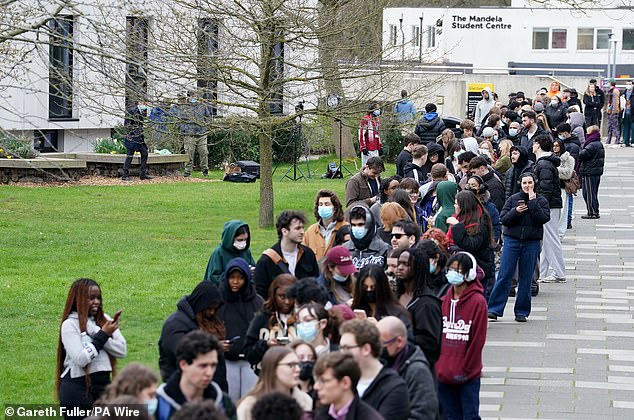
Students queuing for antibiotics outside the University of Kent in Canterbury yesterday

Club Chemistry in Canterbury yesterday, which has been linked to the meningitis outbreak
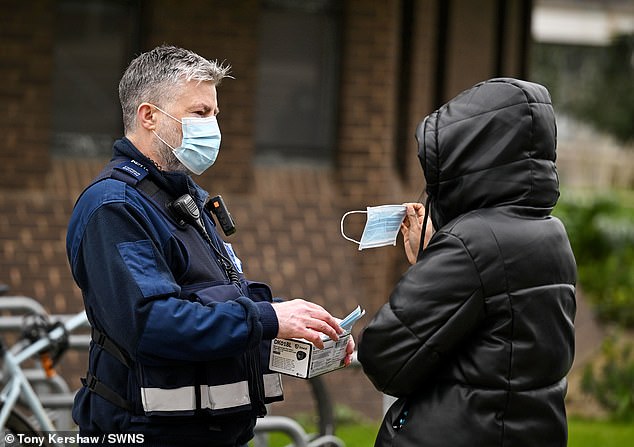
Masks are distributed as hundreds of people queue for antibiotics in Canterbury yesterday
Officials expanded the large-scale mass treatment as they appealed for potentially thousands of revellers to come forward after the source of the outbreak was tracked to the nightclub.
Health teams are still scrambling to identify and alert those who encountered the infected after tracing their whereabouts from club nights to house parties and university halls to secondary schools and sixth forms.
It is feared the spread of the disease, the specific strain of which is yet to be identified, may have been hastened by vape sharing among youngsters.
The operation was launched at the University of Kent on Sunday after the UK Health Security Agency (UKHSA) was alerted to a ‘cluster of cases’ in the area on Saturday night. The agency said it acted ‘immediately’ after questions were raised over why it took almost another 24 hours to inform the public.
The first fatality was a student who lived on campus, followed by Juliette, who attended the grammar school in Faversham ten miles away.
Reports of suspected cases – with at least one victim said to be in a coma – have spread as far as Whitstable on the coast and across the commuter town of Ashford.
Its origins have been traced to Club Chemistry, a venue popular with students which held indie nights between March 5 and March 7. The UKHSA urged anyone who visited the venue to attend one of four sites set up to provide preventive antibiotics.
It is believed registered nurses in the area have been called in to help with the large-scale operation amid fears medics will have to draw on national reserves of antibiotics if it is not contained soon.
In scenes reminiscent of the Covid pandemic, masked students joined long queues, some ranging from 400 to 500 strong at peak times, at Kent University’s Senate building yesterday to receive treatment.
Trish Mannes, UKHSA regional deputy director for the South East, said: ‘Our investigations have identified that some cases visited Club Chemistry in Canterbury and it is important that anyone who visited the club between March 5 and 7 now comes forward for preventive antibiotic treatment as a precaution, as well as those offered antibiotics at the university – these students are being contacted directly through the university.’
Louise Jones-Roberts, the club’s owner, said officials had contacted her in their efforts to trace anyone potentially exposed to the disease.
The 1,600-capacity venue hoped ticket sales and its ID scanner that takes pictures of driving licences could help identify those who were there.
Ms Jones-Roberts said: ‘I’ve been told they started showing symptoms on March 10. I wouldn’t have opened this weekend if I’d known, but I didn’t know. I’m worried about another potential outbreak from this weekend.’
There were also reports of a boy, thought to be aged around 17, being left in a coma after hosting a house party in Whitstable on Saturday.
Among those attending was Jude File, 15, who told the Daily Mail: ‘Everyone’s a bit freaked out. What’s worrying is how quickly this is spreading and it doesn’t seem to be isolated.’
Of the party, he added: ‘We got the bus to Whitstable from Canterbury and there were Kent University students on there, so I wonder if that was the source?’
Jude attended the university campus to receive preventive treatment yesterday, adding: ‘I had to say who I had been in contact with at the party. It’s just prevention but best be safe than sorry.’
His father Dan File, from Folkestone, added: ‘It’s very concerning. We went to the university to get the antibiotics after we learned a friend of a friend was in an induced coma.’
Two more schools were also put on alert yesterday, with a Year 13 pupil at Norton Knatchbull School in Ashford being admitted to hospital with a suspected case.
Simon Langton Grammar School in Canterbury was closed to all Year 13 pupils while several local events, including a St Patrick’s Day rave, were cancelled.
At Queen Elizabeth’s Grammar School, headmistress Amelia McIlroy fought back tears as she said: ‘Juliette was a student at our school for seven years. She was incredibly kind, thoughtful and intelligent.’
Students from the University of Kent’s Turing block described how medics in hazmat suits and paramedics descended on the campus on Sunday.
The university, which said it was ‘deeply saddened’ at the death of one of its students, has moved exams and classes online as a result of the outbreak.
Meningococcal bacteria can cause serious illness, including inflammation of the lining of the brain and blood poisoning, which can rapidly lead to sepsis.