Around 114 million pairs of trainers are sitting idle in wardrobes across the UK and could be given a second lease of life, new research has revealed.
But more than 80 per cent of Brits say they would be likely to hand them over if they knew it helped someone else get active.
According to a poll of 2,000 people, the average Brit owns five pairs, yet almost 30 per cent say they have pairs still in their original packaging that they’ll never wear.
The fear of not knowing if the trainers are good enough to be re-used is the top reason they aren’t given a second chance, while 21 per cent say they’ve never even thought about donating their trainers.
One in nine also say they don’t know how or where to donate them.
The research by Vitality Health and Life Insurance has shown that the average household owns 10 pairs of trainers, spending around £66 on each pair.
With 31 per cent of Brits saying they have enough pairs they could wear a different one every day.
Despite so many pairs gathering dust, half of Brits say they have struggled to afford trainers, with 35 per cent admitting the cost has impacted their ability to exercise or stay active.
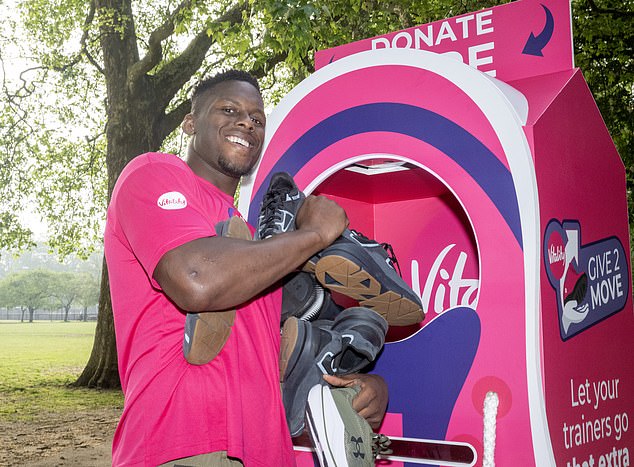
England rugby captain Maro Itoje is leading a campaign to urge Brits to part with trainers which they don’t use (He is pictured in Battersea on Saturday)
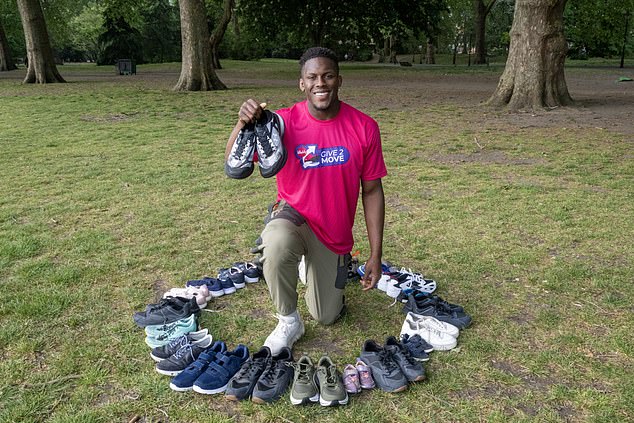
Around 114 million pairs of trainers are sitting idle in wardrobes across the UK and could be given a second lease of life, new research has revealed
In response to this, England rugby captain Maro Itoje and Vitality have launched Give2Move, a new initiative focused on improving access to trainers enabling more people to be more active – helping remove a key barrier to exercise and the health benefits that come with it.
Even when no longer used, many trainers are kept. Over half say they hold onto pairs that are still in good condition, while nearly half keep them ‘just in case’, leaving millions unused in homes across the country.
Sheffield and Belfast are the unused sneaker capitals of the UK, with more than three pairs per person sitting idle. 18-24 year-olds are the most likely to lose interest in a pair of trainers (41 per cent), with 45-54 year-olds hoarding the most pairs of trainers (three).
On average, it takes just 15 months for Brits to get trainer fatigue and buy a new pair.
The most common uses of trainers in the UK are walking for exercise (74 per cent), gym workouts (28 per cent) and running (28 per cent), the data showed.
But not all unused shoes are sitting idle, and one in four (39 per cent) say they donate their used runners to charity, one in six (18 per cent) say they recycle their trainers, and 16 per cent say they re-sell them online.
Most Brits keep their trainers because they think they might wear them again in the future (49 per cent), and 42 per cent say they keep them because they are still in good condition.
Easy drop-off locations (47 per cent) and environmental benefits (28 per cent) are among the top reasons that would make people more likely to donate unused shoes.
With the gap in physical activity between the most and least deprived communities widening, Give2Move is encouraging people to part with the trainers they don’t use, with the aim to collect 1 million pairs over the next five years to help more people across the UK get moving – an mission that is at Vitality’s core.
Maro Itoje kicked off the campaign at Battersea parkrun, he said: ‘Staying active should be something everyone can access, but for some people, not having the right kit can be a real barrier.
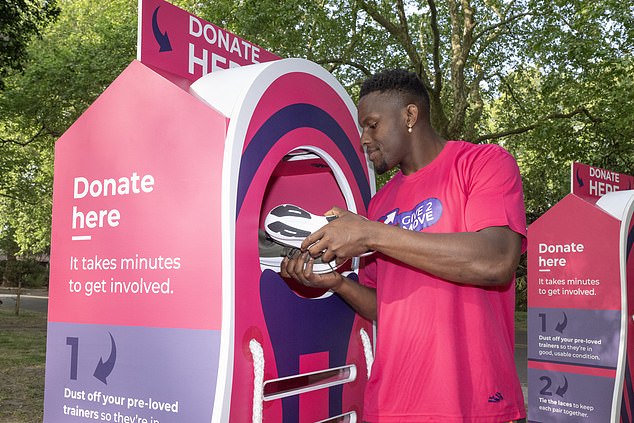
Itoje said: ‘Staying active should be something everyone can access, but for some people, not having the right kit can be a real barrier’
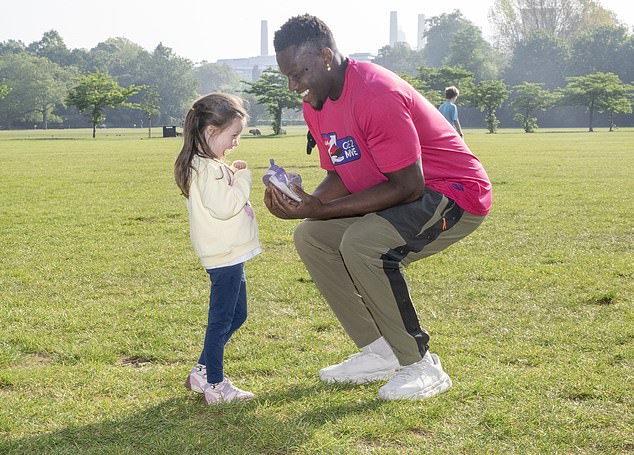
The England rugby captain is pictured handing over a tiny pair of trainers to a young fan with Battersea Power Station visible in the distance
‘I know first-hand how important regular activity is for both mental and physical health, which is why it’s so important we all come together to break down the barriers that exists to getting active.
‘Being part of Give2Move means I can be part of this movement to ensure no one can say that trainers are why they are not moving more.’
Dr Milly Marshall, Medical Advisor at Vitality, added: ‘Regular physical activity is one of the most important things we can do for our overall health, helping to reduce the risk of chronic conditions supporting our mental wellbeing.
‘But for some people, not having the right kit, including access to trainers, can be a genuine barrier to getting active.
‘Initiatives like Give2Move can play an important role in helping to remove that barrier and make activity more accessible to more people.’
Vitality has launched Give2Move in partnership with Shoe Aid and JogOn. Donation points will be available at Vitality Partners across the country