Many of us will know that a very high resting heart rate is a cause for concern, increasing the risk of stroke, heart attack and even premature death.
But now researchers say a low heart rate can also be a warning sign – challenging the assumption that fewer beats per minute is always a sign of good heart health.
Experts from Imperial College London followed 460,000 participants from the UK Biobank for around 14 years, in the largest population-level study to date.
During this time, 12,290 strokes occurred.
After adjusting for age, sex, and cardiovascular risk factors that may raise the risk of stroke such as atrial fibrillation – where the heart beats irregularly – they found stroke risk increased at both extremes: below 50 bpm and at or above 90 bpm.
Those with very high resting heart rates were 45 per cent more likely to suffer a stroke, whilst those on the other end of the scale had a 25 per cent increased risk.
Stroke risk was lowest in those who had resting heart rates of 60 to 69 bpm.
Crucially, the relationship remained after adjusting for established risk factors such as high blood pressure, diabetes and atrial fibrillation – implying a genuine biological signal.
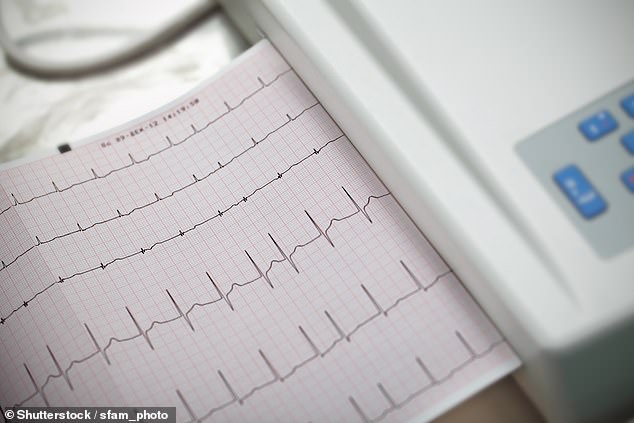
Resting heart rate refers to how many times your heart beats per minute – while you’re sitting or lying down
But when those with an irregular heart beat were analysed separately, the experts weren’t able to identify the same risk relationship.
Dr Dexter Penn, neurologist and study lead author, said: ‘This is likely because atrial fibrillation is such a strong risk factor for stroke, increasing risk by fivefold, that it outweighs the contribution of heart rate and limits our ability to detect its effect.
‘Heart rate was therefore most informative in people without atrial fibrillation, where it may provide a valuable additional tool for identifying and stratifying stroke risk.’
Presenting their findings at the European Stroke Organisation Conference, the researchers suggested the reason for this could be that very low heart rates – medically known as bradycardia – can reduce blood flow to the brain.
Common symptoms include dizziness or lightheadedness, shortness of breath, confusion, chest pain, and fainting.
But when heart drops dangerous low, the heart can’t pump enough oxygen-rich blood to the brain, potentially increasing the risk of ischemic stroke.
This type of stroke occurs when a blockage cuts off blood supply to the brain, killing brain cells.
It is the most common type of stroke, accounting for 85 per cent of cases. An estimated 1,000 people suffer a stroke every year in the UK.
Meanwhile, very high heart rates were associated with both ischaemic and haemorrhagic strokes – which occur due to bleeding in or around the brain.
The researchers said this may suggest increased stress on blood vessel walls – a key marker of high blood pressure – that could contribute both to blockages and a greater predisposition to bleeding.
When blood vessels become narrower and stiffer, as a result of stress, this causes a build-up of fatty material in the arteries, in a process known as atherosclerosis.
Clots can then form which can break away and travel to the brain, causing a stroke. An elevated resting heart rate can also damage blood vessels in the brain, increasing the risk of a bleed.
Commenting on the findings, Professor Alastair Webb, an expert in stroke medicine and study co-author, said: ‘Resting heart rate is a simple, widely available measure that deserves greater attention in cardiovascular risk assessment.’
He added that whilst more research is needed to understand how heart rate may impact treatment, the findings are very promising.
‘Very low or very high heart rates should act as a signal for clinicians to look more closely at an individual’s overall cardiovascular risk and take action to reinforce lifestyle changes and standard prevention strategies.’
Resting heart rate refers to the number of times your heart beats per minute while your body is at rest – when you’re sitting or lying down.
A normal resting heart rate should be between 60 and 100 bpm, but athletes, fit and healthy young adults and those on beta-blockers tend to have slower heart rates.
This is because the heart learns to pump blood more efficiently when we exercise, which is why doctors recommend cardiovascular exercise and aerobic activity to help reduce the risk of suffering a major heart event.
It is also normal for your heart rate to increase to 130 to 150 bpm or more upon exercise – because the heart is working harder to pump more oxygen-rich blood around the body.
Staying hydrated is another easy way to regulate your heart rate, as when you are dehydrated the volume of your blood decreases, meaning your heart has to work harder to pump blood around the body.
Losing weight can also help lower your heart rate, with obesity being another known risk factor for stroke.
Stress, alcohol and lack of sleep can also have an effect on adrenaline and cortisol, key drivers of an elevated heart rate.