This article is taken from the May 2026 issue of The Critic. To get the full magazine why not subscribe? Get five issues for just £5.
Given how rare it is for anyone to say what they actually think, I was impressed lately by a German conductor who confessed that his favourite opera was Francis Poulenc’s Dialogues of the Carmelites — because “so many sopranos get killed in it”.
This wish-fulfilment aspect of on-stage savagery could use a good deal more examination, I feel. And modern directors must surely envy their old-time Roman counterparts who, staging the ancient myths, were able to whistle up criminals and gladiators to enact the gorier bits, to have Orpheus, for example, torn to bits by a bear (maenads evidently being in short supply) or if an execution was called for, actually crucify some lucky chap on stage. (This could go wrong, crucifixion being an irksomely lengthy operation, and on one occasion at least, that old bear was hustled on stage once again to finish the job so they could get on with the show.)
Opera, of course, is notorious for the relish it takes in brutal deaths — often in harness with (or as a natural result of) illicit sex, though on the whole no tiresome moral lessons are intended or drawn from the connection, a refreshing angle we should discuss another time.
Whilst it can hardly claim credit for starting the craze — I suppose in modern times we owe it to the blithe spirits behind stuff like Titus Andronicus and The Duchess of Malfi — opera eagerly grabbed the baton and uploaded more than its share of striking images into the human memory-bank of violence and death: that gypsy girl bleeding into the sand of the Seville bullring, Brünnhilde riding her horse onto a massive funeral pyre for a spectacular suttee, an entire city squareful of heretics performing “Burn Baby Burn” in Valladolid (Don Carlos), the Jewish chick being gently lowered into a boiling cauldron in La Juive and so, divertingly, on.
Late to the party, then, but welcome as a tardy guest bearing a stash, delivering bags of good energy — indeed, Don Giovanni’s startling demise, dragged, yelling, by a gang of demons down to a fiery hell in Mozart’s 1787 opera, brought to a raucous end a good hundred years of decorous, perfunctory snuffings and phlegmatic suicides, setting a sensationally high bar.
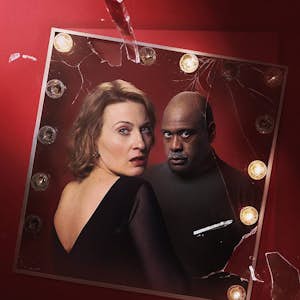
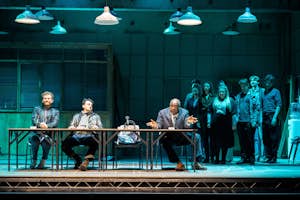
And amongst the feast of poisonings, burnings, eviscerations, drownings, burials alive, beheadings and dismemberings that followed, there can be few images so arresting and sheerly evocative of everything that squeals opera! as the sobbing loon in his blood-spattered clown-suit (otherwise available only when children’s parties go badly wrong), the two butchered bodies of his wife and her lover lying at his feet, the happy inspiration of Ruggero Leoncavallo, whose Pagliacci (Clowns) of 1892 is currently touring the country with English Touring Opera.
Nothing could be more indicative of opera’s idiosyncratic view of reality, and its maniacal dedication to that vision, than Pagliacci’s being one of the foundation texts of operatic “verismo”, which amounts in practice to members of the proletariat gutting each other in untrammelled sorts of ways, rather than the uptight, stiff-upper-lip stabbings and so on favoured by the aristos of previous eras.
(Pag usually — but not on this occasion — comes in harness with its contemporary Cav, i.e. Cavalleria rusticana, Pietro Mascagni’s equally vivid depiction of Sicilian peasants filleting each other on a hot day.)
You can imagine the head-slap moment of delight amongst composers as they realised a vast section of the population, previously beneath consideration, had suddenly been recruited as a fount of sadistic pleasure.
The forerunner of the whole set-up was really Georges Bizet’s Carmen of 1875, a Don Giovanni moment in opening up bloody new vistas, though poor old Bizet, crushed by the failure of the premiere and the fatuous Paris audience, never lived to see his marvellous opera change the world.
Carmen’s pungent exit made a terrific impact, though the audience’s minds had been trained by the lurid excesses of French “Grand Opera”, with its large-scale massacres (Les Huguenots) and lesser holocausts.
Nevertheless, it was Cav & Pag that made the murder the true apex of the show, laying the foundations for the amusing last shout of Italian opera as a tout for crimes of passion in such over-the-top farragoes as I gioielli della Madonna (Ermanno Wolf-Ferrari, 1911) and Italo Montemezzi’s L’amore dei tre re of 1913.
And not just in opera: the novels of Émile Zola, harnessed to the shit-cutting concision of these Italians’ novelty dramas, not only led towards the doomy twentieth-century social realism of Wozzeck and so on (not to mention the whole cinema thing), but more immediately gave rise to the astonishing theatre of the Grand Guignol in Paris, opening in 1897, where the whole point of attending was to be comprehensively grossed out.
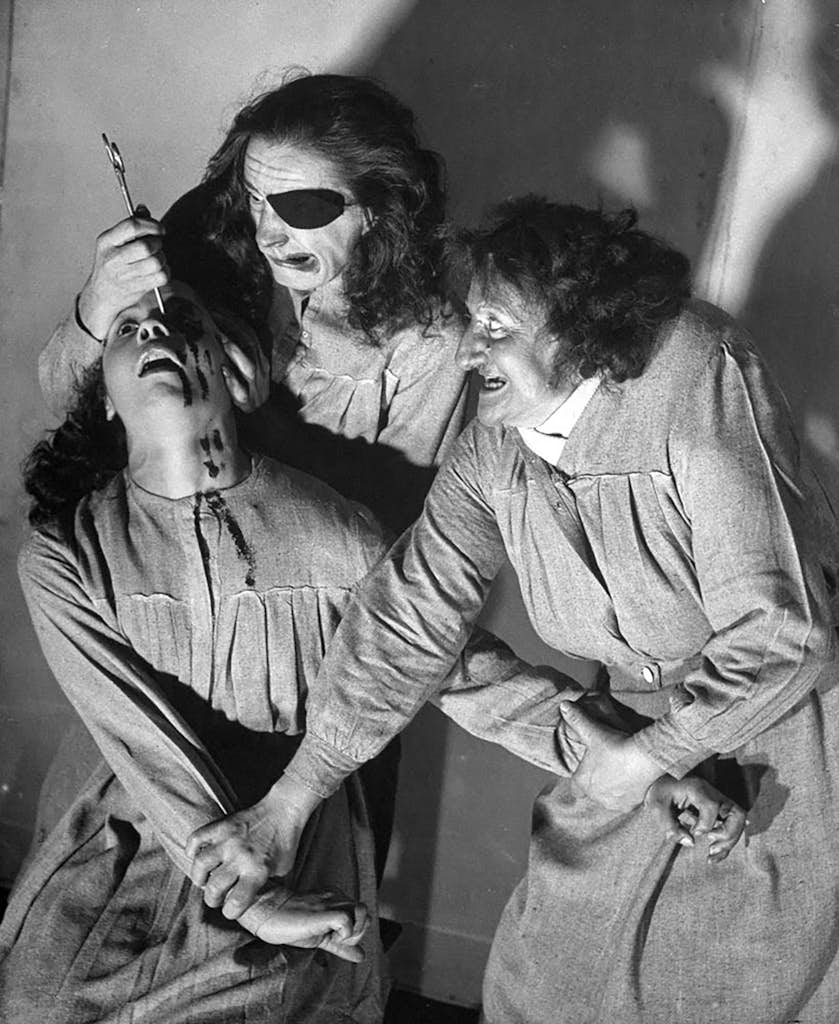
Everything went at the GG, with direction of amazing visual sophistication delivering hyper-realist spectacles of ever more ingenious tortures and deaths, the theatre’s prima donna assoluta Paula Maxa known as “the most assassinated woman in the world” — shot, scalped, strangled, disembowelled, raped, guillotined, hanged, quartered, burned, dissected with lancets, cut into 83 pieces by an invisible dagger, stung by a scorpion, poisoned with arsenic, devoured by a puma, strangled by a pearl necklace, whipped …
Obviously, the only conceivable way of improving this sort of entertainment would be by adding attractive, jaunty tunes — which is pretty much where we came in.
English Touring Opera’s Pagliacci is on tour until 20 May