Beneath the façade of everyday commerce, organised crime has quietly captured British high streets.
Something may be stirring in Britain. After decades in which our institutions turned a blind eye to the reality of mass migration and multiculturalism, it seems reality is dawning on them.
Earlier this month the BBC ran a series of exposes titled ‘The Immigration Fraudsters’, reporting on what they called a “shadow industry of law firms and advisers” helping people to cheat the asylum system, although Suella Braveman raised the issue three years ago. Now the Chartered Trading Standards Institute (CTSI) has published a detailed report which reveals the extent to which whole sectors of the economy have become dominated by organised crime. This has also been an open secret for many years — as far back as 2001, the UK’s “Drugs Czar” described how money laundering was taking place in London, often via “legitimate businesses” operated by Turks and Eastern Europeans. Indeed only last May Robert Jenrick made a video in which he spoke about “weird Turkish barber shops”.
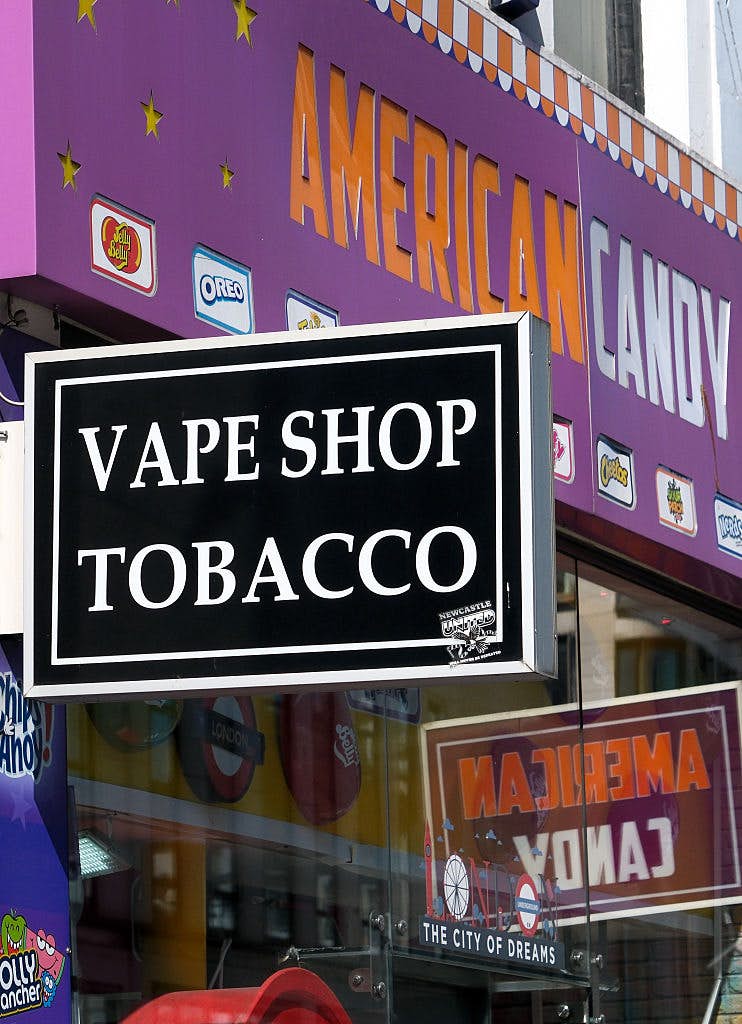
But Thursday’s report is significant, both because it comes from a serious, establishment organisation, and because it begins to describe the extent to which organised crime has infested our economy. We learn “dodgy shops [are] present in towns and villages across the UK – not just in urbanised centres”, that 96 per cent of trading standards officers have encountered serious organised crime (SOC) or organised crime groups (OCGs) in the course of their duties, and 97 per cent “were aware of suspected OCGs operation out of retail premises on their local high street”. Indeed, “in some areas as many as half of mini-mart / convenience stores and vape retailers, up to a third of American candy stores, and one-in-four fast food takeaways are estimated to have links with organised crime”.
What do “links with organised crime” mean in practice? I spoke with a man I knew in prison. He was once a senior member of an OCG concerned with the large-scale supply of drugs. He explained to me that businesses which handle a lot of cash are very attractive to OCGs because they allow them to launder money which they would otherwise be unable to deposit in a bank. These OCGs take cash acquired in the course of selling drugs or other illegal activities, and pass it through a business as though it were normal revenue before depositing it in a bank account. Thus, corner shops, vape shops and barbers are all attractive to OCGs. But my contact also mentioned that bookies, car and even watch-dealers can all be used by criminals seeking to launder money. The key is that they are companies which might reasonably handle a lot of cash. It is therefore revealing that the CTSI found that “99% of Trading Standards professionals have seen an increase in the number of cash-intensive businesses” on their local high streets since 2020.
But this isn’t just about money laundering. The CTSI also does an excellent job explaining how the many kinds of illegal activity flow through these criminal businesses. They’ll often deal drugs from the premises, employ people who don’t have a right to work in the UK or who have been trafficked and forced to work as slaves, sell illegal or unsafe products, evade tax and have even been linked to child sexual abuse and exploitation.
This widespread criminality has been allowed to fester and spread in part because of a squeamishness about recognising that certain ethnic and national groups are particularly criminal, or particularly likely to be involved in certain crimes. But there is also the unavoidable matter of a collapse in capacity. Astonishingly, it seems there is no official record of how many trading standards officers there are in the country, but I understand that numbers have collapsed from around 6,000 at the beginning of the 2010s to more like 3,000 today. It seems that local councils, faced with tight budgeted and soaring statutory obligations (such as for housing and social care) treated trading standards as a function which could be cut without much pain. In some cases the results have been extreme — according to data published in 2025, the London Borough of Enfield only employed one full time trading standards officer.
The remaining workforce is also ageing. According to the most recent CTSI workforce survey, over a third of trading standards professionals had more than 20 years of experience, and 56 local authorities reported that they did not employ any apprentices, meaning the next generation are simply not being trained. This is why CTSI are asking for a £100m increase in funding over the next four years, in order to begin rebuilding staff numbers across the country.
Where that capacity exists, results can be dramatic. Operation Vulcan, a joint effort involving Greater Manchester Police, Trading Standards, Immigration Enforcement, HMRC and even the Intellectual Property Office, targeted Cheetham Hill, the “counterfeit capital of Europe”. They closed 206 criminal establishments, seized 1048 tonnes of counterfeit goods with a value of £1.56bn, and as a result saw a dramatic reduction in other crimes — public order offences down 45 per cent, vehicle and violent crime both down 69 per cent, burglary down 58 per cent and theft cut in half. For crime clusters, and targeting visible, rampant criminality makes us all safer.
But it is not fair or reasonable to expect trading standards officers to bear the risks of confronting organised crime. The BBC has reported that two dozen trading standards officers have described the intimidation and violence they often face. In one example, a Kurdish crime gang threatened to kill Mandy, a trading standards investigator and burn her house down when she investigated their operations which involved the sale of illegal cigarettes and nitrous oxide via mini-marts across the UK.
To confront these serious, violent and dangerous criminal groups we need a significant, and muscular increase in how we police them. We’ve imported large, clannish communities who operate vast criminal enterprises and are perfectly willing to use violence and intimidation to keep the state at bay. It’s time for clear-eyed honesty: perhaps even those most wilfully blind institutions can now see that.