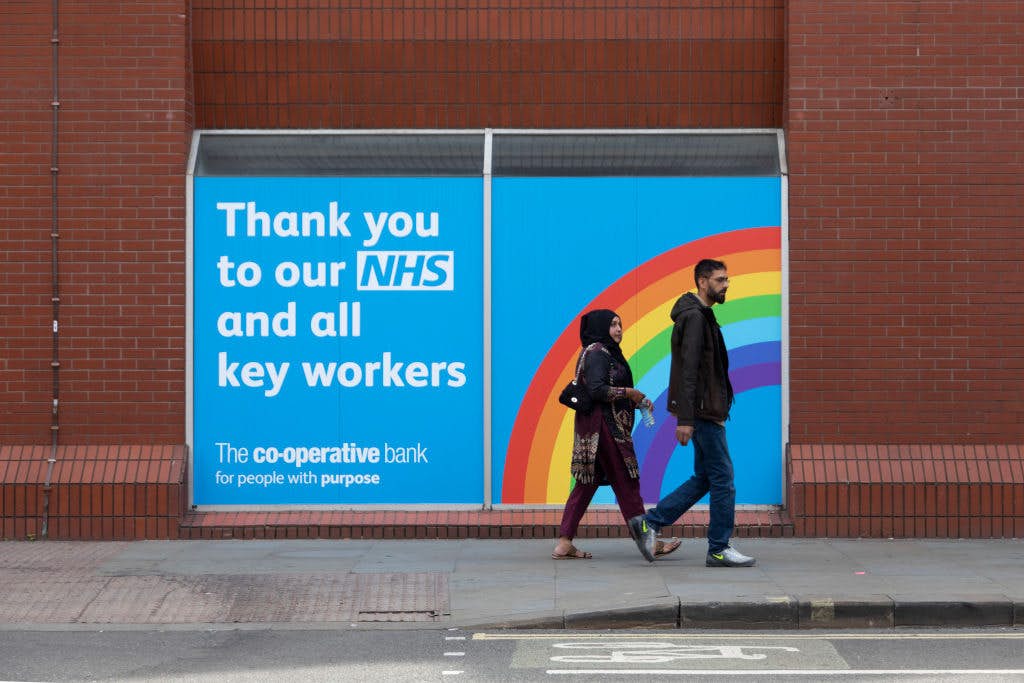
The NHS is no longer the Sacred Cow it once was. Criticising it will still not make you popular, but people will no longer act as if you were trying to murder their families.
Nowadays, one can quite regularly read articles in mainstream newspapers which criticise the NHS, and compare it unfavourably to some of the alternatives, especially Social Health Insurance (SHI) systems. SHI, in simple terms, is a system of universal health insurance without risk discrimination, and with a safety net for people who cannot afford their insurance premiums.
In response to this de-sacralisation of the NHS, and the growing interest in SHI alternatives, the NHS’s defenders had to raise their game. It is no longer good enough to yell “But America!” or “The NHS saved my mum!” They now have to come up with actual arguments.
Some NHS defenders have risen to that challenge. A good example is the report “Bismarck vs Beveridge Revisited: Does the model shape the outcome?” by the Institute for Public Policy Research (IPPR), which follows similar reports by the Health Foundation, the King’s Fund and the Nuffield Trust.
The IPPR is not saying that SHI systems are bad, or that it would be terrible if Britain had one. Nor is their argument that the NHS is wonderful, or that all we need to do is throw some more money at it. Quite the opposite: the report is about as scathing about the NHS’s performance as anything the IEA has ever published on the subject, if a lot more sympathetic in tone. Their argument is simply that if we compare a variety of SHI systems to a variety of tax-funded systems on a variety of measures, neither type of system completely outperforms the other. There is usually more variation within each type of system than there is between them, so changing from one type of system to another is unlikely to be a solution. It would, they argue, just be a massive waste of time and energy.
I am impressed by how the quality of this debate has improved. A few years earlier, defenders of the NHS would not have bothered to write a report like this. They would simply have posted a copy of an American hospital bill, and accused their opponents of plotting to sell the NHS to Donald Trump.
But I am, nonetheless, not convinced by the IPPR’s claim that a British SHI system would not be an improvement over the NHS.
While it is true that SHI systems do not outperform tax-funded systems on every single metric, the ones on which they do outperform them seem a lot more important than the ones where they don’t. The IPPR report itself shows that hardly anyone who lives under an SHI system reports to have unmet healthcare needs, that SHI systems tend to have shorter waiting times, and overall, fewer avoidable deaths (although, again, with variation).
On the other hand — what is it that tax-funded systems do better? They have lower administrative costs, lower out-of-pocket expenditure, and fewer people with supplementary health insurance. But these are not, in themselves, good or bad: it simply depends on the reason why. If a system leaves you with a huge hospital bill, or reliant on supplementary insurance, because the primary insurance system is so patchy, then yes, that would be a bad thing. But if a system offers optional extras and upgrades (such as single-room accommodation), and if people end up spending more out-of-pocket or via supplementary insurance for that reason — what’s the problem with that? On the administrative side, systems can be under-managed as well as over-managed, which can be just as inefficient, so I wouldn’t read much into small differences in administrative spending.
I also have some issues with how the IPPR classify systems. The French system and the Australian system are fundamentally quite similar: both are hybrid systems with major public and major private elements. Yet the IPPR report classifies the former as SHI, and the latter as a cousin of the NHS. This makes a difference, because we are working with small sample sizes, and at least in this report, the Australian system comes out as one of the best, while the French one is struggling on some measures.
Again, though — the IPPR is not saying that it would be terrible if Britain had an SHI system. Their main argument against such a system is the transition to it, which, they say, would be hugely disruptive, and take decades. But there are examples of relatively swift and smooth transitions to SHI, which the IPPR simply ignore. The Czech Republic, Slovakia and Eastern Germany did precisely that in the 1990s. It can be done.
The IPPR accepts that the NHS is a poor performer. Their argument is that there are better examples of tax-funded systems, and that we should learn from those rather than SHI. But, tellingly, they cannot come up with any actual reform suggestions beyond the usual platitudes about “care in the community”, “more investment”, and “public health” (which, in practice, always just boils down to hectoring people to stop eating fast food). If they were serious about learning from international best practice, they would have to come up with a reform plan that would also be quite difficult and demanding. In which case — why not go the whole hog?