Faced with Mandelson, Starmer offers a bold defence: he didn’t know, and that’s what makes him blameless.

Outside, it was a warm spring Monday, but Labour MPs, obeying some collective instinct, were wearing dark clothes, as though for a funeral. In the circumstances, it was unlikely that any of them were going to praise Keir Starmer. The question was whether they were going to bury him.
We had come for the latest round of the never-ending scandal of Peter Mandelson, a man who has been resigning from government jobs for longer than some people reading this have been alive. The revelation that he was made ambassador despite having failed his security vetting has sparked this government’s greatest crisis yet. The prime minister increasingly resembles a Wacky Races character suspended over a precipice by a single fraying thread. Would this be the final episode of the Kalamities of Keir?
The omens were not, frankly, good. Labour had sent their MPs a list of supportive questions they could ask, and someone had promptly leaked it to the press. Speaker Lindsay Hoyle opened by warning MPs that they weren’t allowed to accuse the prime minister of lying, a strong hint of where he saw this session going.
A trial, Tom Cruise tells us in A Few Good Men, is about assigning blame. Starmer’s path to escape was to pin it on someone else. His target was Sir Olly Robbins, the urbane former head of the Foreign Office who made the decision to overrule the vetting process, and not to tell Number 10 that he’d done this. The prime minister, a former prosecutor, gave us a speech that was effectively the case for the prosecution.
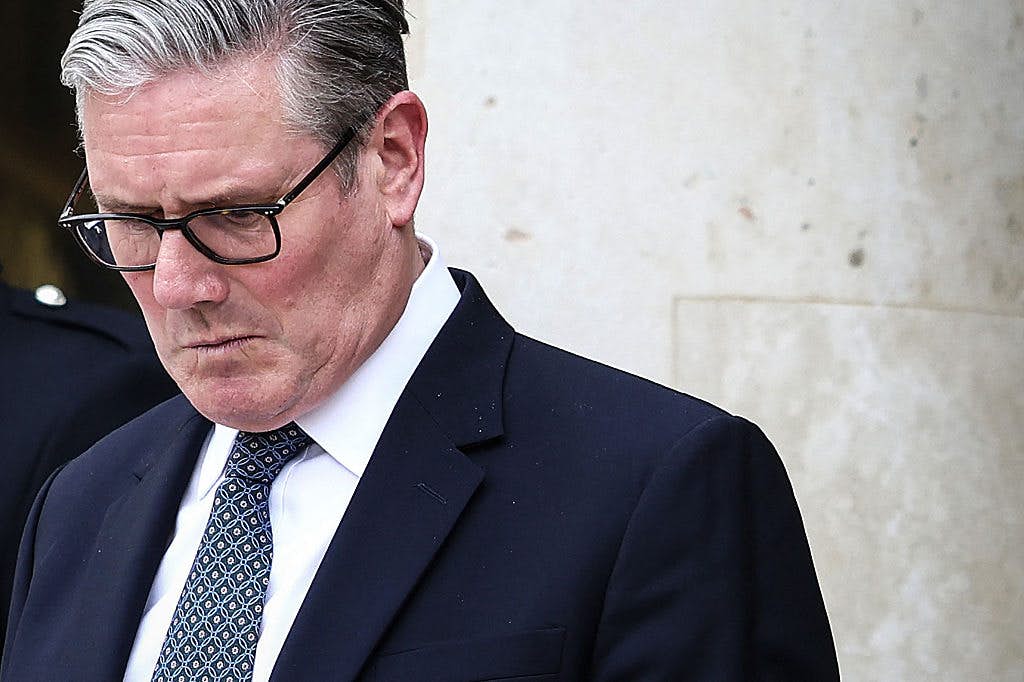
“I’d like to provide the House with information that I now” – the prime minister emphasised the word – “have about the appointment of Peter Mandelson.”
He paused to deal with his biggest problem, the reason that any of this was happening: “At the heart of this there is also a judgement I made that was wrong. I should not have appointed Peter Mandelson.” Having dealt with that, he moved on to the many sins of Robbins.
Mandelson had been granted clearance against the recommendation of the people who had vetted him. “Not only that, the Foreign Office officials who made that decision did not pass this information to me, to the foreign secretary, to her predecessor, the deputy prime minister, to any other minister, or even to the former cabinet secretary,” Starmer said. “I found this staggering.”
It was an effective speech. Had the House been misled? The prime minister had been misled first! The wicked Robbins had kept the truth from everyone. Did MPs think Starmer should have known? Well so did Starmer! In a very real sense, he was the victim here. He had been deceived at every turn. “I know many members across the House will find these facts to be incredible,” Starmer said, pausing to give opposition MPs a chance to cheer and jeer. It was a rhetorical trap. “I can only say they are right.”
So persuasive was all this that one could almost forget that there was, in January 2025, a bit of information about Mandelson that was available to anyone with access to the internet. True, some bad things have come out since then, but there was already plenty that was bad enough.
Kemi Badenoch tried to turn the case back against the prime minister, but her speech was bogged down in points of detail about process, and it wasn’t clear what she was accusing him of: really having known about the vetting, or not having known when he should have known. She finished by quoting Starmer’s 2022 words to Boris Johnson about Partygate, “if he misled the House, he must resign”, but this wasn’t a standard that she’d supported at the time. In any case, Johnson’s claim at the time was that he hadn’t been aware of parties he had been photographed attending.
Still, she may have shaken the prime minister, because he was significantly less confident in reply, hesitating and almost stammering at times. Definitely more wounding were the early comments that came from the Labour side, starting with Emily Thornberry of the Foreign Affairs Committee: “Getting Peter Mandelson the job was a priority that overrode everything else.” Diane Abbott got cheers from the Tory benches, possibly for the first time in her life, as she stormed: “It’s one thing to say nobody told me. The question is why didn’t the prime minister ask?”
Through it all, Starmer stuck to his line: if he’d known what a rotter Mandelson was, he wouldn’t have appointed him. He had been let down by the process. The problem with this is that it was clear at the time that the prime minister hadn’t wanted to know, and so Robbins hadn’t told him. This was the process working.
it was clear at the time that the prime minister hadn’t wanted to know, and so Robbins hadn’t told him. This was the process working.
Now that the prime minister does know, he says he would have wanted to know sooner. But how was Robbins to know that the prime minister would have wanted to know, when it seemed so clear he hadn’t wanted to know? After all, if anyone did want to know things about Mandelson in January 2025, there was a great deal that was already known, and all the evidence was that no one in Number 10 had any interest in knowing them. Perhaps, as Starmer now claims, had they known the things Robbins knew, they would have wanted to know even more. But perhaps not. It’s all so unknowable.
Tomorrow, we get the case for the defence, as Robbins appears before Thornberry’s committee.