A tourist from Birmingham this week called for greater clarity on airline baggage small print after falling foul of Ryanair’s ‘confusing’ sizing rules.
Luana Botas, 43, was asked to pay £55 at Budapest airport during an Easter break – because her daughter’s small, hard-shell case was deemed to exceed the 40 x 30 x 20 cm dimension limit set out on the budget carrier’s website.
Frustrated flyer Ms Botas accused the Irish airline of inconsistency with applying its own rules, with staff on her flight out to Budapest not ‘batting an eyelid’ at the size of the case – only for Ryanair workers in the Hungarian capital to issue her with a £55 bill on the way home.
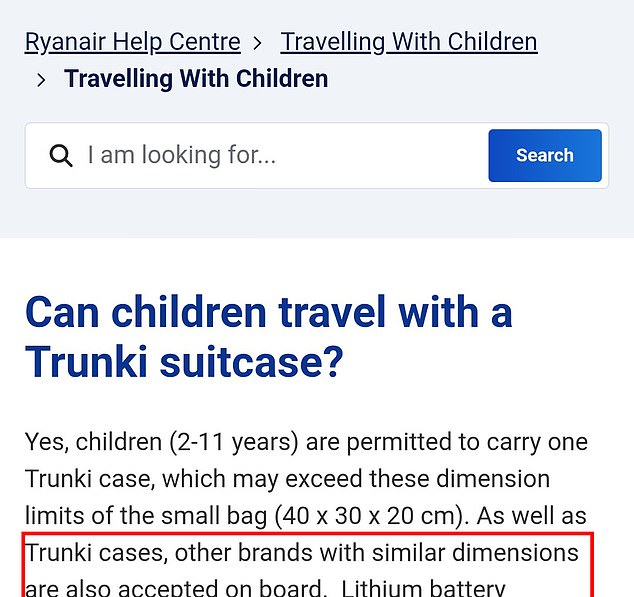
According to information on Ryanair’s website, children aged between 2 and 11 are permitted to bring onboard a Trunki or a case of similar measurements, despite them exceeding the airline’s strict 40x30x20 cm dimensions.
The mother-of-one admits her daughter Maia’s case was larger at 48 x 26 x 33 cm but hoped the small print about children being allowed to carry a ‘Trunki or a case of similar measurements’ would mean the item was exempt.
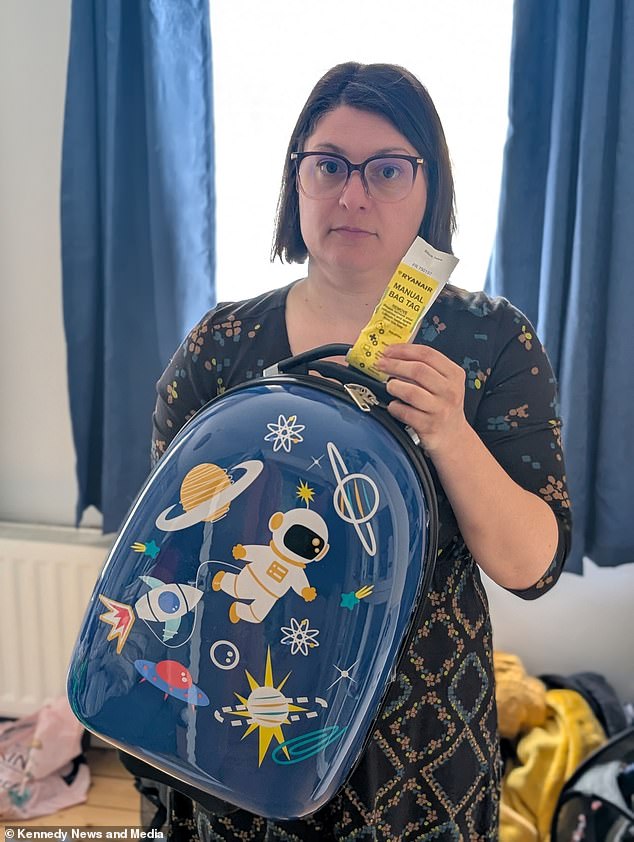
Luana Botas, from Birmingham, paid £55 in Budapest after her daughter’s carry-on exceeded Ryanair’s strict hang luggage size limits – the mother-of-one said the carrier’s information wasn’t clear, and it had been permitted on her outward journey
UK travellers are already more than familiar with changing rules around cabin baggage sizes – the last 30 years have seen many short-haul airlines introduce pricing tiers on everything except rucksack-size bags.
Those who, like Ms Botas, have faced the sting of expensive unexpected additional charges at the airport, will know that often an over-sized baggage bill can cost more than the original flight tickets.
Inconsistency among airlines appears to be the major factor that catches travellers out when it comes to the small print.
With no generally applied regulations, carriers can decide exactly what their dimensions should be.
How do they differ? Ryanair charges a gate bag fee for any items larger than 40 x 30 x 20cm, as does Wizz Air.
British Airways and Jet2 both offer a 10kg cabin bag, effectively a small suitcase, measuring 45 x 36 x 20 cm, as standard, which can go in the overhead lockers.
easyJet, meanwhile, allows a free cabin bag up to 15kg and measuring 45 x 36 x 20 cm – but it has to be able to fit under the seat in front of you.
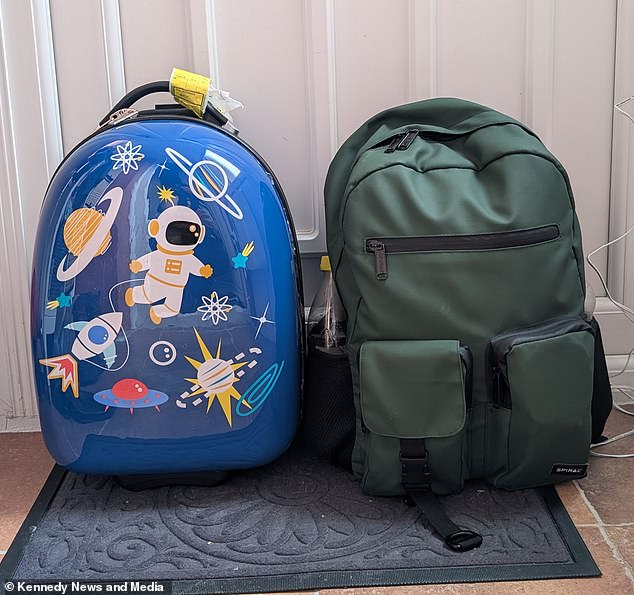
Ms Botas claims that her daughter’s hard-shell luggage was ‘the same size’ as her own backpack, which had been allowed through
The mother claims that her daughter’s hard-shell luggage was ‘the same size’ as her own backpack, which had been allowed through
Experts say the language used by different airlines to describe cases can easily lead passengers into uncertainty over what they need to pay for.
For example, all of the five airlines above refer to baggage in a different way.
Wizz Air calls a small suitcase that has to be paid for a ‘trolley bag’, Ryanair labels it ‘cabin baggage’ and easyJet calls it a ‘large cabin bag’.
Andrew Harrison-Chinn, Business Leader at travel and lifestyle platform Dragonpass, says passengers should pay close attention to the finer details when booking and understand every carrier has different rules.
He tells the Daily Mail: ‘The wording that catches people out most often is around what’s actually “included” in a fare.
The Civil Aviation Authority (CAA) advises passengers to ‘familiarise themselves with their airline’s baggage allowance to avoid unexpected fees’, with almost all of the major popular carriers for short-haul European destinations using different wording
‘Terms like “small bag”, “basic” or “priority” sound straightforward, but they vary significantly between airlines in terms of size, weight and what you’re entitled to at the airport.’
He continues: ‘Even something as simple as a “small bag” is not standard across carriers, so passengers can easily assume a bag is compliant when it isn’t.
‘Airlines also use “priority” differently, which is why travellers need to check the exact entitlement rather than rely on the label alone.’
A spokesman for the Civil Aviation Authority told the Daily Mail: ‘Luggage allowance will vary depending on where a passenger is travelling to, the airline they are travelling with and the class they are travelling in.
‘Before travelling, we advise passengers to familiarise themselves with their airline’s baggage allowance to avoid unexpected fees.’
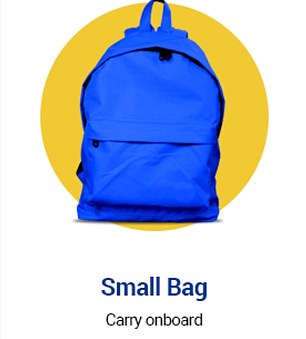
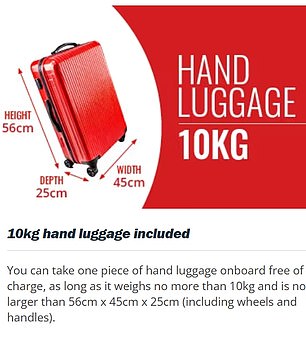
Different airline, different terminology: There’s no consistency in wording across carriers. A Ryanair ‘small bag’ (left) and Jet2’s ‘hand luggage’ (right) are both free, but vary substantially in size and weight
Where else can you come a cropper if you don’t focus on the small print?
Harrison-Chinn says: ‘It’s also important to check whether airport check-in or bag drop is included, as these can sometimes come with additional charges if you don’t complete everything online in advance.
‘And another common issue is extras being added during the booking process – things like seat selection or insurance can be pre-selected, so it’s always worth reviewing the final breakdown before you pay.’
For ultimate clarity, it’s better to bite the bullet and pay up front for your baggage rather than put it off until a few days before you go, or try and wing it at the airport.
Harrison-Chinn says: ‘The key is to build the real cost of the journey upfront rather than focusing on the headline fare.
‘That means factoring in baggage, seats, airport services and even transfers before you book, not adding them later.
‘The real risk isn’t one large fee, it’s the accumulation of smaller conditions across the journey – from baggage rules and airport processes to insurance and onward transfer costs – that can quickly inflate the overall price.’