Ryanair CEO Michael O’Leary claims both Wizz Air and airBaltic could exhaust their cash reserves by the end of the winter due to the ongoing fuel crisis – leading to their potential collapse.
O’Leary has stated that fuel costs for his airline increased by £50 million this month, with warnings that the wider airline industry could face shortages as early as May.
He cautioned the situation could worsen if the ‘dual blockade’ of the Straight of Hormuz – a vital waterway in which 20 per cent of the world’s oil passes through – continues.
Iran has largely blocked the strait since February, with the U.S. enforcing its own counter-blockade against Iranian ports since April.
Ryanair has locked in about 80 per cent of its fuel at $67 (£49) per barrel through next March, but the remaining 20 per cent is tied to marked rates that have spiked above $150 (£110).
This price swing creates a massive financial burden, and has forced many airlines to hike ticket prices and add fuel charges just to stay to stay afloat.
Michael O’Leary noted Wizz Air and airBaltic are at high risk because they haven’t locked in lower fuel prices.
He further cautioned that if oil prices don’t drop, both carriers could run out of cash by the end of the year, potentially leading to their collapse by October or November.
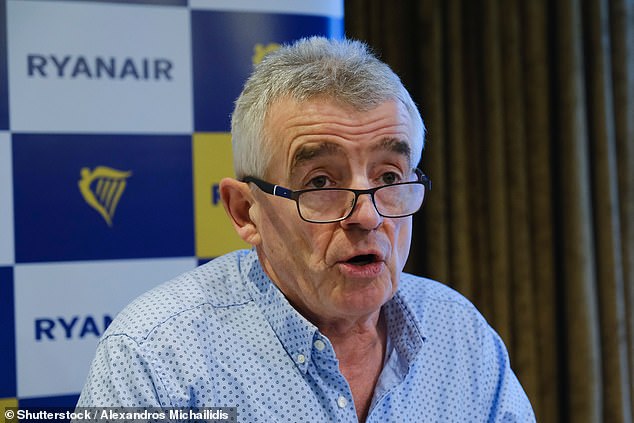
Ryanair boss Michael O’Leary has warned Wizz Air and airBaltic could collapse by the end of winter due to the ongoing fuel crisis
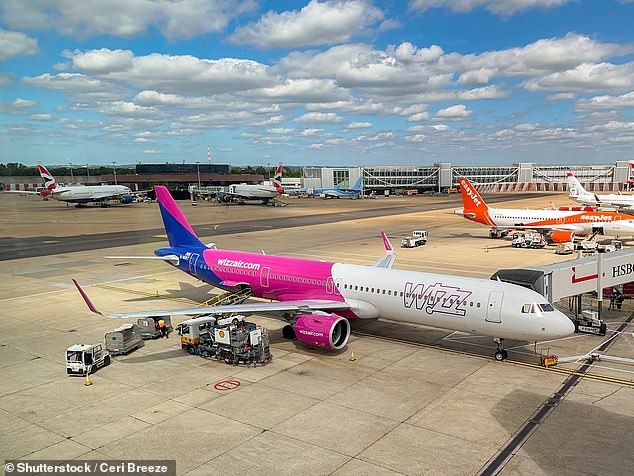
It comes as Wizz Air continues to rapidly expand, launching new routes from Maastricht Aachen Airport and Eindhoven Airport
The airline boss said to Il Sole 24 Ore: ‘If oil stays at these levels, two or three European airlines in October or November could go bankrupt like Wizz Air, which wants to sue me but won’t have enough time to do so, and airBaltic.’
The warning comes as both Wizz Air and airBaltic continue to rapidly expand, with Wizz Air launching new routes from Maastricht Aachen Airport and Eindhoven Airport, and airBaltic setting up routes between Groningen Airport Eelde to Tenerife.
However, O’Leary remains sceptical, suggesting that rising fuel prices and shaky liquidity could make such expansion efforts difficult to sustain.
The wider airline industry is already battling the knock-on effects of the fallout in the Middle East, which has resulted in rising operational costs and declining airline share prices.
Ryanair has already seen a notable drop in its share price, which has decreased from €35 (£30) to €25 (£21) over a period of just three months.
O’Leary warned that if fuel supplies tighten further and Wizz Air and airBaltic run out of cash, both airlines could by grounded by Q4, effectively benefiting Ryanair as competition would be reduced in the European market.
Wizz Air has since dismissed O’Leary’s claims as ‘flatly untrue and false’, claiming they have enough liquidity to last 18 months or more, and have hedged a larger portion of fuel than their competitors.
Meanwhile, airBaltic’s future remains uncertain, as the airline recently had its credit rating lowered despite acquiring a short-term loan from the Latvian government.
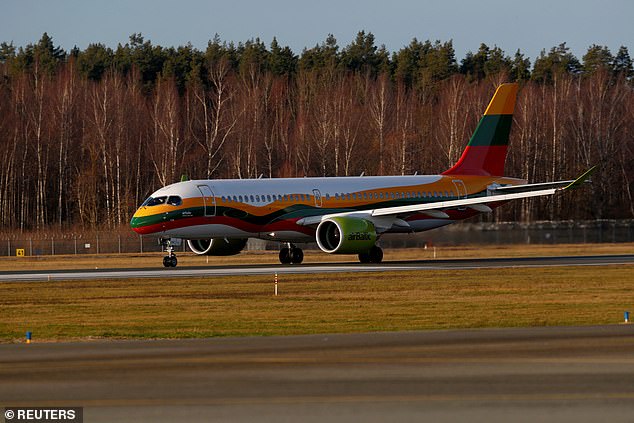
Although airBaltic has recently set up new routes between Tenerife and Gronigen Airport Eelde, it appears the airline’s future remains uncertain
A spokesperson from Wizz Air said: ‘Michael O Leary’s recent comments about Wizz Air’s financial prospects are flatly untrue and false.
‘Wizz Air has a strong balance sheet, substantial liquidity, and funds its aircraft 18 months in advance, with leasing companies and other financiers competing strongly for every opportunity. This is a business with clear stability.
‘Wizz Air is one of the best hedged airlines in the industry against the rapidly changing fuel prices, while our fleet is already 75% A320neo family aircraft, providing a structural cost advantage compared to any other airline in Europe through significantly lower fuel burn and greater efficiency.
‘Wizz Air also maintains long-standing relationships with leading lessors and manufacturers, continuing to execute its fleet strategy without disruption.’
‘We continue to rapidly expand our footprint across Italy and other key markets. Our focus remains exactly where it should be: delivering the lowest fares, operating the youngest and most fuel-efficient fleet of aircraft, and serving millions of our customers!’
It comes after a top easyJet official warned of jet fuel uncertainty in ‘three to four weeks’ as the Iran war continues to hit holiday plans.
With the price of oil and its derivatives, including jet fuel, sharply rising following the war in the Middle East, holidaymakers across the world have been warned that thousands of flights in the coming weeks may be axed.
Javier Gándara, the country director for easyJet’s southern Europe, told the Majorca Daily Bulletin that it is ‘difficult’ to predict exactly how bad the problem will be after ‘three or four weeks.’
He added: ‘Everything [will be] affected because, ultimately, we are talking about a global market.
‘No one will be immune to potential supply problems.’
But he also said he believed that whatever impact the ongoing war in the Middle East will have on fuel prices will likely be negative: ‘All consumers will experience a significant impact on their income due to the increase in mortgage and rental prices, food, gasoline, and so on.
‘What will be the net effect of both? It’s difficult to predict.’