This article is taken from the April 2026 issue of The Critic. To get the full magazine why not subscribe? Get five issues for just £5.
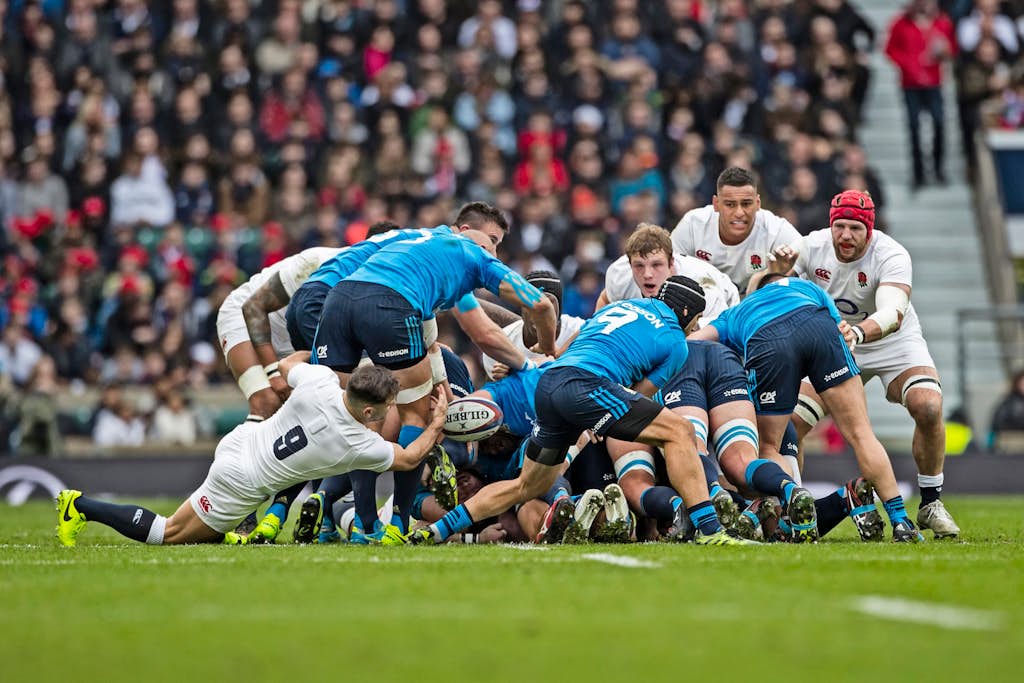
Nine years before Italy finally beat England at rugby in this year’s Six Nations, the Azzurri came up with a wacky strategy that almost worked. They called it “The Fox” and England responded like headless chickens.
According to the laws, an offside line was created when a ruck was formed of one player from each team on their feet over the ball. Conor O’Shea, Italy’s coach, realised that logically and legally, if you chose not to defend the ruck, there was no offside line. QED, as the ancient Italians put it.

His players could go where they liked, so stood between the England scrum half and his backs, blocking his pass. Bewildered captain Dylan Hartley asked the referee what he could do. “I’m not your coach,” he replied. Italy led 10-5 at half time.
During the break, England’s coaches pointed out the bleeding obvious — that if no one is defending in front of you, just run forward — and they adapted. Italy ran out of steam and lost comfortably. After much moaning from the English about this not being cricket, or even rugby, the law was changed and The Fox run to ground.
Rugby has always sought new ways to be sneaky. Its foundation story, after all, involves young William Webb Ellis catching the ball and running with it, an action described on a plaque at Rugby as showing “a fine disregard for the rules”. The maestro of innovators today is Rassie Erasmus, the South Africa coach, who challenged convention with things like having no substitute backs, so an entire pack could be replaced by a fresh one, or taking a scrum from a mark to wear down their opponents.
Sam Larner, an obsessive student of data, has written a comprehensive guide to modern analysis in rugby, explaining the numbers that really matter and where coaches can find those vital marginal gains. He makes you rethink preconceptions.
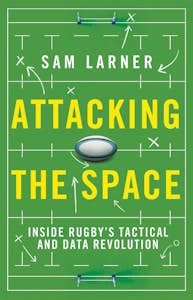
Take possession: a stat often used to show who had a good game. But possession is not the same as creating pressure. Larner argues that we should look instead at tackle count and entries into your opponent’s 22, which the data shows is a better judge of whether you will win than anything bar the actual score.
Larner also debunks the complaint about there being too much kicking in the modern game. Sir Clive Woodward, one of the greatest coaches, complained in 2020 that he had never seen the ball kicked away so often — but Larner points out that the previous year’s World Cup had fewer kicks than in 2003, when Woodward’s England won, and that the ball was in play for almost two and a half minutes more per game. The key is when and where you kick, balancing risk and opportunity.
England were the masters of this at the 2023 World Cup. Excessively pragmatic to the point of tedium, they reached the semi-finals and were within two points of beating South Africa.
They did this not through the three metrics that Larner identifies as crucial for winning (metres carried, offloads and tries as a per centage of score), since England came 203rd of the 204 clubs and nations he applied this to, but through a big kick-chase game. Simply put, England hoofed the ball up high but not far and had three tall quick blokes chase to win it back. It wasn’t pretty, but it worked.
There’s lots of analysis like this. He looks at when forwards should be deployed on the wings, allowing the speedy boys to roam, and asks why more teams don’t start with their best scrummagers on the bench since 58 per cent of all scrums come in the second half, and 31 per cent in the last quarter. We learn that a try is scored with every 200 metres run, every seven defenders beaten and every 1.7 line breaks.
This is the sort of data-dive being done at the top of rugby. Larner says that the more knowledge you have, the more you love the game. This is not something I completely buy as a lifelong watcher of club and international rugby. With England, alas, it seems that for all the laptops in front of the coaches at Twickenham, there is little instinctive feel for the game being shown. It is paralysis by analysis. Give me any day the blood and thunder — or even the thud and blunder — of the more innocent, raw, unexamined form of rugby I see in the grassroots game.