A migrant hotel has an arcade-style video games room and even features an air hockey table, it has been revealed.
Images from inside Birmingham‘s Grade II listed Rowton Hotel reveal pool tables in a communal leisure area for use by hundreds of asylum seekers.
The Victorian red-brick hotel features a communal area with Street Fighter, Pac Man and Mortal Kombat game devices.
There are thought to be around 300 male inhabitants who can use the facilities with the bill footed by the taxpayer.
Footage shared online shows a security guard attempting to stop recording, but viewers can see a darts board and a football table.
The man behind the camera, a blogger says: ‘Look at the games they’ve got in here! There’s Pac Man… let me have a go on Mortal Kombat.
‘Look how retro that is. Look at this one, Street Fighter. These aint cheap are they? We’ve got darts, we’ve got pool. We’ve got it all.’
Plans to house 327 asylum seekers at the site were initially rejected in 2021, before they were given the go ahead soon after.

A video taken inside Birmingham’s Rowton Hotel shows migrants have been treated to an arcade-style gaming room

The room features ‘retro’ games such as Pac Man (pictured), Mortal Kombat and Street Fighter
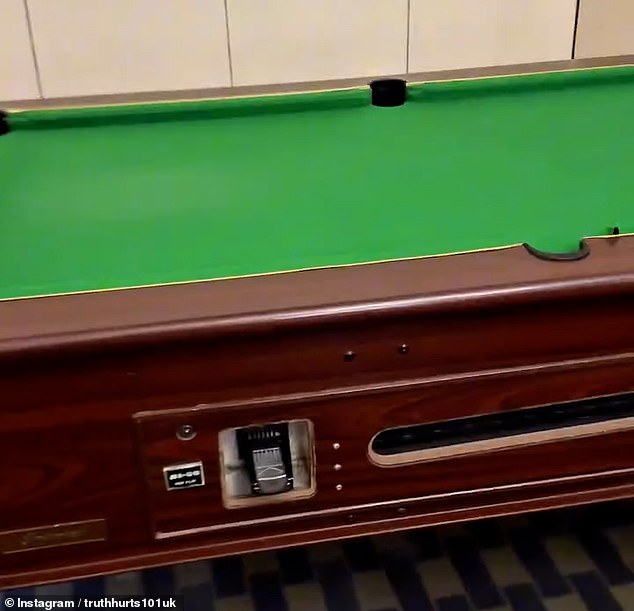
The communal leisure area, which is thought to be being used by around 300 migrants, is also kitted out with a pool table
The establishment, formerly the Paragon Hotel, previously described itself as one of the ‘most beautiful wedding venues in Birmingham’.
It could accommodate up to 550 people and has ‘four elegant’ function rooms, which were licensed to hold civil ceremonies.
The three star hotel used to sell rooms for £70 a night before it was taken over by Home Office contractors five years ago.
Its owners secured a ‘lucrative government contract’ where 230 rooms could be rented out, according to a former listing on Rightmove.
Many of the male ‘guests’ are from middle-eastern countries such as Afghanistan and Iraq and travelled to the UK illegally on small boats.
The Government’s use of hotels for asylum seekers has faced scrutiny over costs, security, and the use of high-standard facilities, such as the 4-star Britannia International in Canary Wharf, which was the site of furious protests.
Anti-asylum demos have also taken place at other sites such as The Bell Hotel in Epping, Essex, after a migrant sexually assaulted a 14-year-old girl and a woman.
Ethiopian national Hadush Kebatu, 41, was jailed for a year over the attacks in September.
The Government has contracted out the task of accommodating migrants in 200 hotels to three companies: Serco, Clearsprings and Mears.
These hotels cost £5.77million a day, government figures show.
The projected cost over the decade to 2029 has shot up from £4.5billion in 2019 to £15.3billion.
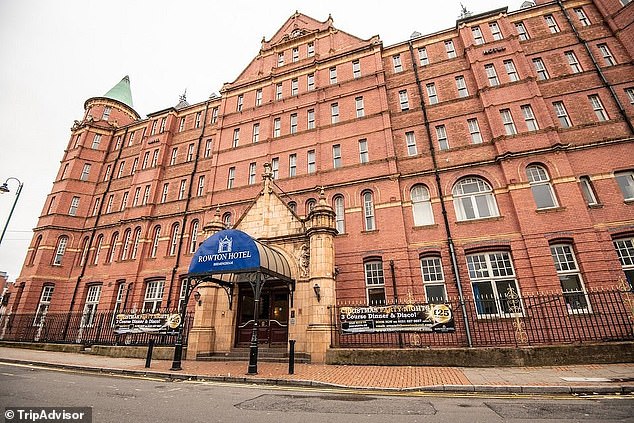
The Rowton Hotel (pictured) previously described itself as one of the ‘most beautiful wedding venues in Birmingham’
Since Channel crossings began rising in 2018 there have been 200,000 recorded asylum seekers entering the UK by small boat.
A council spokesperson said: ‘Birmingham City Council does not own, operate or manage asylum accommodation, including hotels.
‘The use of hotels to house asylum seekers is commissioned, funded and overseen by the Home Office through its national accommodation contracts, and no Birmingham City Council funding is used for this purpose.
‘Any communal facilities shown are existing features of the hotel and are not installed, upgraded or provided by the Council. Local authorities have no role in setting accommodation standards or determining the facilities available within Home Office‑commissioned sites.
‘Asylum seekers awaiting decisions on their claims are lawfully present in the UK and are housed on a temporary basis while legal processes are ongoing. Any questions relating to accommodation provision, costs or contractual arrangements should be directed to the Home Office.’
The Home Office said: ‘This government is removing the incentives drawing illegal migrants to Britain and ramping up removals of those with no right to be here.
‘That is why we are closing every asylum hotel and moving asylum seekers into basic accommodation including ex-military sites.
‘Numbers in asylum hotels have dropped by nearly 20% over the past year and by 45% since the peak under the previous government, driving down support costs by almost £1 billion.’