It’s 3.30pm on an unseasonably hot Wednesday in June and my dad has bolted the front door from the inside and locked us out.
My mum calls to him through the letterbox. My sister and I rest our mini scooters against the stone wall. All the curtains are closed.
I peek through the letterbox. I can see our poor cat and the dark staircase. Our socks and pants and school clothes, folded in little piles up the stairs. I burst into tears, which makes my sister cry, too. My mum walks us back to the car. We’ll go to stay with friends while she comes up with a plan.
My mother was resourceful in a crisis, something she learned during her own chaotic childhood. And at 11, I had grown accustomed to the pattern of my dad’s depressions, mania and relapses. Though he’d never locked us out before, it was in character for the mad, unrecognisable person he became when he drank.
In regular life he was a quiet, brilliant, troubled man. An American originally from small-town Ohio, he had degrees from Harvard and LSE and, in his younger years, what might have been a promising career as a political economist.
Then, in his late 20s, married and settled in Bath with two children – his first family – he began to experience episodes of disorienting mania and debilitating depression. His own parents had been alcoholics and to deal with the highs and lows, he too began to drink heavily.
He found another escape in affairs. In 1988 an old friend from Ohio introduced him to my mother, an American writer who was living in Oxford with her own two children after a messy divorce.
By my dad’s account, he was completely drunk the night they met but my mother didn’t even notice. She’d grown up in Istanbul, in a bohemian community where most adults, including her Irish-American father, were hard drinkers.
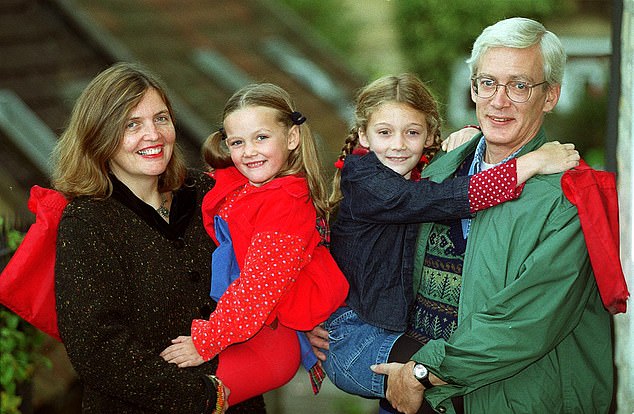
Helen, right, with her younger sister Pandora and parents Maureen and Frank
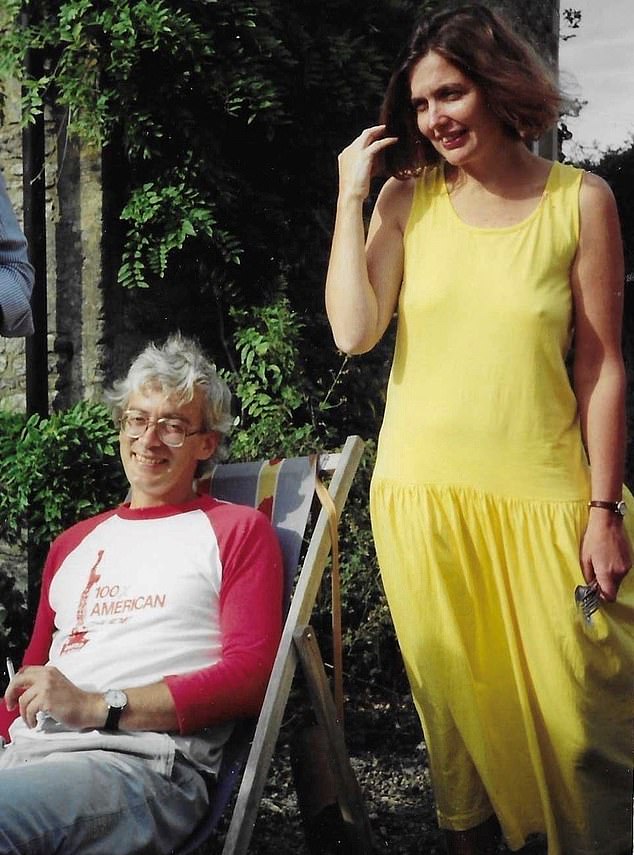
By Frank’s own account, he was completely drunk the night he met Maureen, but she didn’t even notice
It didn’t take them long to fall in love. My dad left his family in Bath and moved into the cottage my mother was renting in Oxford. She dreamed of children who might bring their broken families together. I was born in 1991 less than a year into their new life, followed by my sister Pandora in 1993.
By now we’d moved back to Bath and into a big, dilapidated rental, where there were sometimes six kids under one roof – Pandora and me, plus our four older half-siblings – and life was frantic with noise, laughter and big fights I couldn’t understand.
In the background my mother, Maureen Freely, was writing novels and picking up whatever newspaper work she could – but never enough to cover the bills.
My father, by this point, was drinking beer at breakfast, turning up to teach at university drunk, or not at all, and steadily losing his mind. He spent nights crying to Harvest Moon on a loop.
He picked fights with my older siblings, screaming and shoving – and on a few occasions hitting them.
When I was four, he drove into a country field, drunk out of his mind, and tried to kill himself with a car exhaust. It didn’t work and he returned home in a terrible state. After that my mum managed to get him into a rehab clinic in Wiltshire.
One of my earliest memories is visiting him there on a breezy Sunday afternoon. I’m throwing stones at a statue in the middle of a pond. I slip and fall into the cold green water. My 13-year-old brother Kimber jumps in to save me. They take me inside and find dry clothes but I’m inconsolable, because I believe that when we leave, my dad will fall in too and no one will be there to save him.
These were my four-year-old worries but I know now it was his three months in rehab that gave my dad the strength to live again and face his problems. When he came out he was committed to sobriety, with lots of plans and new ideas for research. But the fallout from his years of drinking was impossible to overcome.
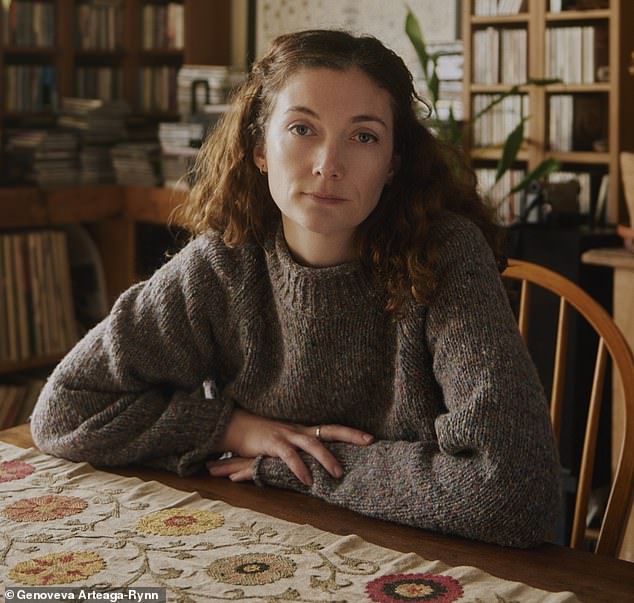
Author Helen Longstreth says her father would drink beer for breakfast and turn up to work drunk
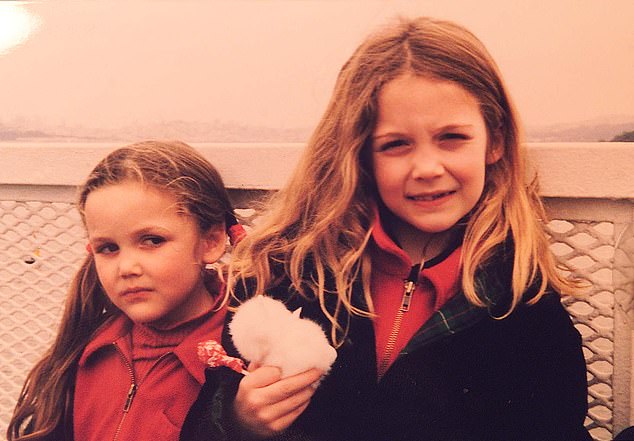
Helen, right, pictured with Pandora when they were seven and five years old respectively
He was only 45 but the university was pushing him into early retirement. Our landlady was kicking us out for late payment of the rent. His daughter from his first marriage was no longer talking to him. His relationship with my mum’s children by her first marriage had become so bad that my half-sister Emma left to live with her dad and his wife Alexandra Shulman, then editor of Vogue, in London.
In a stroke of grace, my parents found a rundown cottage going cheap and my dad’s mother stepped in to help them pay the £5,000 deposit.
But during the move he started drinking again. The next morning, on my fifth birthday, he went missing. According to my mother I was very sad. What I remember is that this was the day my beloved gecko died. He hadn’t survived the move and I couldn’t get over his empty glass tank with the twigs and the leaves by the strange new front door.
My dad came back, sorry and ashamed, three days later. From then on it was mainly my parents, my sister Pandora and me in the fixer-upper that never quite got fixed. My older siblings came and went, to visit, or to the rescue. My dad lost his job and my mother supported the family with freelance journalism and a new teaching job at Warwick University.
This meant she finally had a secure salary but the university was 80 miles away so she was gone for two nights most weeks.
My dad was the one at home – plaiting our hair, taking us to school and making us dinner. Often, he was calm and quiet and loving. Sometimes he shuffled around the house in a cloud of medicated depression, saying only hello and goodnight.
Other times he was unable to sleep or sit down. The lows would lead to highs and eventually to drink – behind closed doors at first and only when my mother was away.
Once he started, he couldn’t stop and our precarious home would fall apart. He’d go missing for weeks or my mum would kick him out, or we’d leave instead.
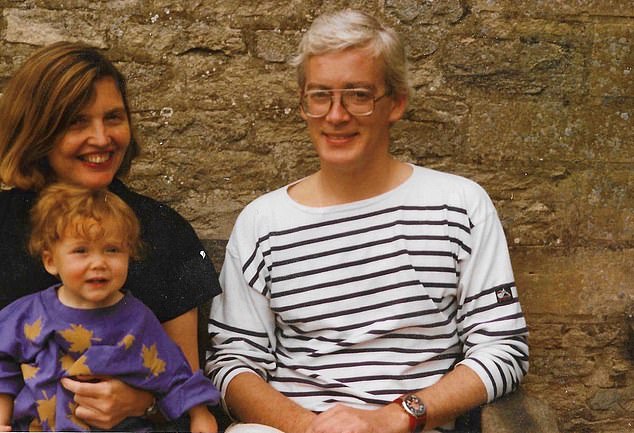
Often, Dad was calm and quiet and loving. Sometimes he shuffled around the house in a cloud of medicated depression, saying only hello and goodnight, writes Helen Longstreth
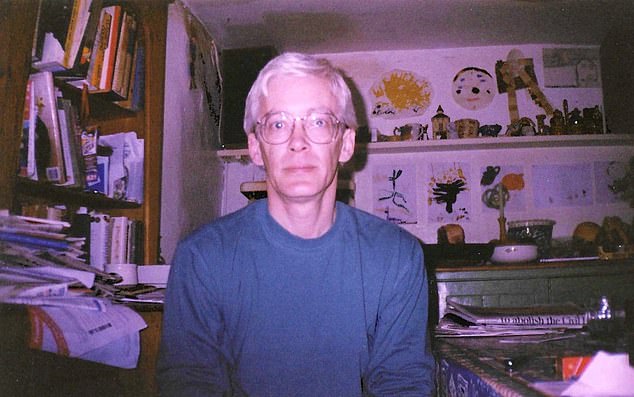
Once he started drinking he couldn’t stop and our precarious home would fall apart. He’d go missing for weeks or my mum would kick him out, or we’d leave instead
His inevitable relapse was something I both dreaded and braced myself for. I learned not to let my guard down, especially when my mother was away. I paid close attention to the signs: a bottle of vodka hidden behind the fridge, an uncanny cheerfulness when he walked us to school in the morning, a familiar sweet-stale smell when he hugged me goodbye at the school gates.
Though to be prepared for something bad to happen doesn’t necessarily make it easier when it finally does. If the afternoon my dad first locked us out is still vividly clear to me, it may be because it sums up what it’s like to grow up with a parent who is an addict: to be locked out of your own life.
Each time he locked us out after that – and he did throughout my teenage years – I’d knock and scream through the door. I just wanted to go home. And yet I did have a home. There are so many more half-remembered afternoons of childhood – the haze between light and dark, glimpses that come and go like the weather when I look back.
My mother typing in her chair by the window. My dad getting up to make ice-cream floats as soon as we came in from school.
The sounds and smells of chopping herbs and frying garlic. My dad laughing on the phone. My parents talking through their days, the back door open. The warm, cosy home.
And then a cold, shadowy one too. Smoke wafting behind a closed door in the afternoon. Dad turning up drunk and slurring at the school gates, falling off the kerb on the way home. Mum shouting at him behind a door. My older stepsister Emma distracting me with stories about the goldfish. Dad shuffling into the kitchen, head bent down in shame, to put a banana into his lime green dressing gown pocket. Dad sober again, sitting back at his place at the table. A ghost of a dad. As present as the smoke rising from his cigarette.
This was how it was until Pandora and I left for university. With my mother off at work and him alone in the house, he began to lose hold of what had just about kept him afloat. At the end of the university year, he’d agreed to drive up to Manchester to bring me and my things home. But then he started drinking and didn’t make it on the day we’d agreed.
I spent a few dismal days waiting around the empty halls of residence and when he did come, driving all the way from Bath, I was too angry to speak to him.
That summer he started sneaking drinks even when we were home. There was a bad relapse just before my 21st birthday. I’d got into an exchange programme in California and was leaving the next day. He pulled himself together in time to say goodbye.
He took me to the airport and, though I felt this might be the last time I’d ever see him, I was still angry at him and didn’t know what to say. I cried all the way, until the agent at US border security told me to stay away from all the hippies in San Francisco – and my new life began.
I fell in love with California. The golden light and green-gold hills and cheerful students with their enormous backpacks and big ideas and dreams. It was so freeing to be away from England and home and all the worries that came with it.
And then, three months in, I got the call. My dad had suffered a catastrophic stroke and wasn’t going to make it. So I made the long journey back. The next few weeks were strangely comforting. All my siblings had come home and we spent the days doing paperwork and preparing for the funeral. The nights were spent cooking and eating together.
The saddest thing was waking up in the morning and having to remember that he was gone all over again. But there was also a great relief. I no longer had to worry that the worst was going to happen. For the first time in my life I was no longer angry at my dad. I felt that I was starting to see him whole – his love with his pain.
A deeper understanding came later, when I began to write. By then I was making my own mistakes. In my mid-20s, I moved back to California and fell in love with a golden lost boy who had his own problems with addiction and mania.
I watched friends fall into full-blown alcoholism. I began to ask myself why, when I was so far from home, I kept ending up in the same place.
I took that question with me when I returned back to my childhood home in my early 30s, heartbroken and lost.
My mum took care of me with meals and stories. In return I started helping her clear out the house, which had hardly changed in the ten years since my dad had been gone. While emptying out his desk, I came across a journal he kept one week in 1997.
‘The night was mainly fear and fog,’ he writes. He goes on to describe that fear, the money worries, the shame of not getting things done, the dread of failure, the overwhelming desire to drink.
He also writes about how much he loves the paintings we’ve brought home from school and how planting flowers helps to disperse the clouds of his depression. Apart from the drinking, it was all very recognisable to me. I could see what we shared and also what we did not.
But childhood’s emotional weather never leaves us. I’d grown up in a loving family that was half a home and half a sea, bound to the storms of an addict.
There are still times, when someone I love lets me down and I am shaken back into my child self, standing outside that front door, locked out of my own life.
But then I remember all the other times. When my mum was there, or my siblings – or my dad – in the kitchen, ready at 3.30pm, to let me in.
Things In Every Room by Helen Longstreth (£20, Jonathan Cape) is out now.