In its daily use of social media (three hours, 32 minutes on average), Latin America leads the world. Over the past quarter century, it has nearly tripled the number of people attending university and cut poverty by about half. This list of notable trends could go on, regardless of concerns about crime, corruption, and caudillo-style rulers. Together, however, they might help explain this latest news:
Last year, the region saw the greatest improvement in key indicators of democracy, such as political participation and civil liberties, compared with Asia, Africa, and elsewhere. In fact, it was the only region to improve.
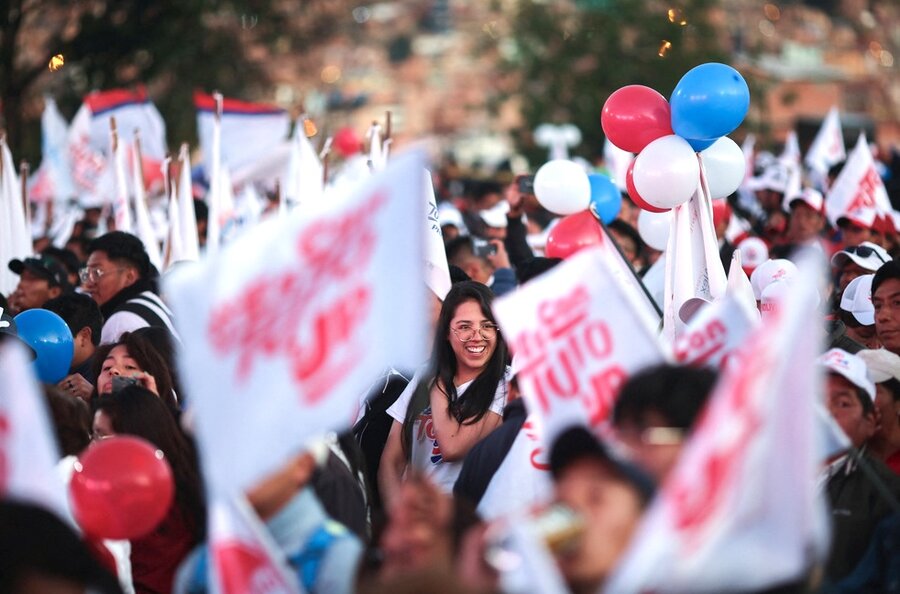
And Latin America did so after seeing nine years of decline on the index of democracy compiled annually by the Economist Intelligence Unit (EIU). More than half of the region’s countries raised their scores in 2025. Bolivia stood out for its election of a centrist presidential candidate after nearly 19 years of a descent into deep political polarization. (Colombia had the sharpest decline, mainly due to political violence.)
Perhaps part of the reason for the shift is a rise in conservative leaders who exhibit an unusual bent for reforms more than for power.
“Today’s Latin America is a region where the tone and substance of some political events would not seem out of place in Texas or Nebraska; where mainstream political leaders speak glowingly of fiscal discipline and police crackdowns; and where demands for social justice seem to have been superseded, at least for now, by invective against narcoterrorists and socialist dictators,” wrote Brian Winter, editor-in-chief of Americas Quarterly, in Foreign Affairs.
The region’s relative democratic success helps bolster the index’s key global finding: A slide in democracy has paused for the first time in nearly a decade. “The evidence is more promising than not,” the EIU declared, even as it pointedly criticized a democratic decline in the United States.
A critical dynamic in the current trends is the rise and impact of political participation, aka civic engagement. One factor might be young people’s intense use of social media. In fact, last year’s pro-democracy uprising in Nepal, led by Generation Z protesters, was triggered by a government ban on popular social media platforms. A similar stirring is underway in Russia as the Putin regime tightens its grip on digital freedoms.
For all its flaws, social media and its popularity reflects a passion for individual freedom while also providing a place for connection. “Traditional means of political participation have not enabled significant political change,” the EIU stated. For Latin America – a region known for its culture of community and personal interactions – a surge in mobile connectivity might now be reshaping the political landscape.