HIGH on enough marijuana to numb the mental torment, a young man armed with only a sledgehammer heads out to hunt for his next victim.
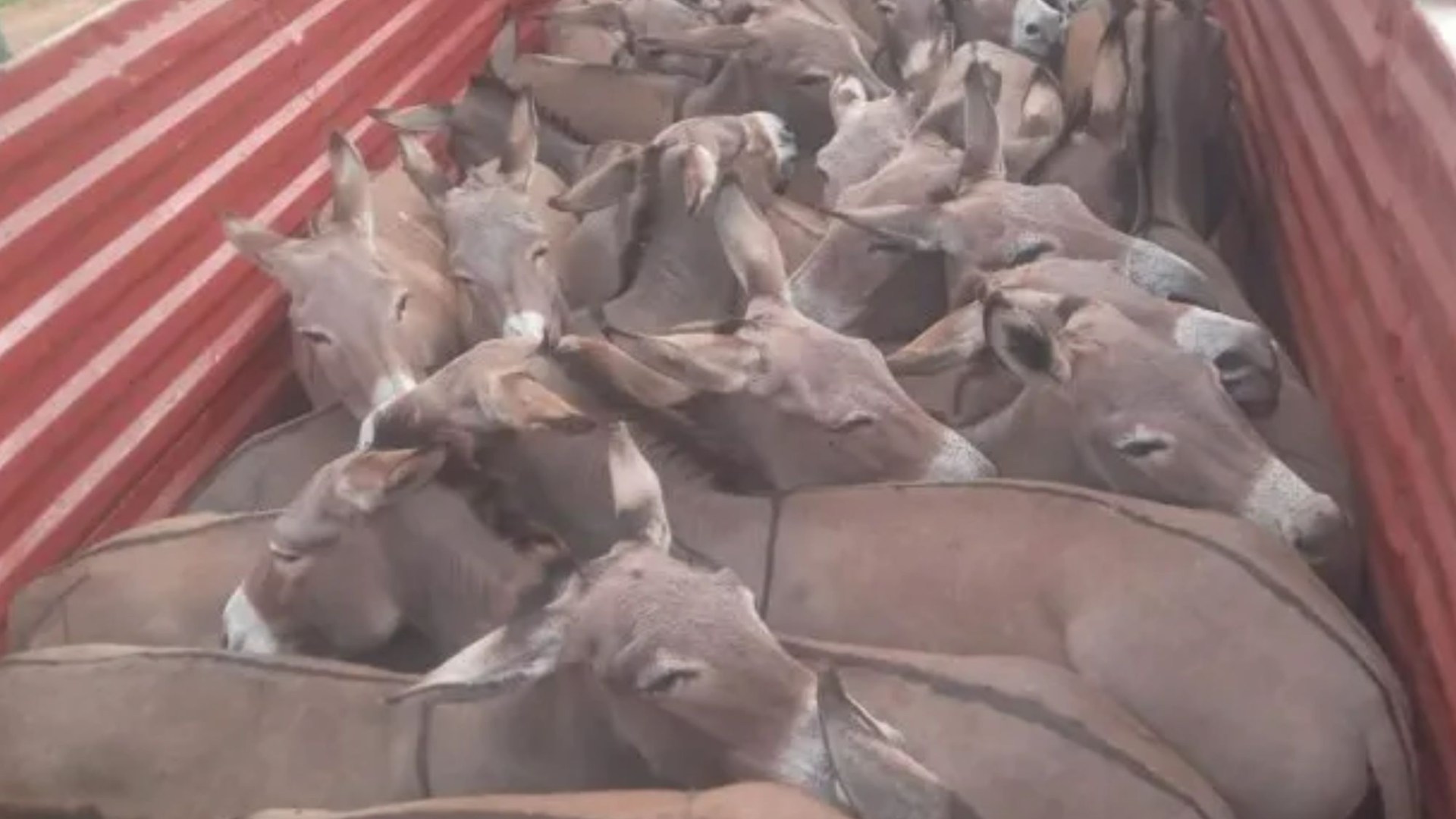
Paid less than £15-per-kill, villagers in Kenya are decimating the country’s donkey population at a terrifying rate with the animals bludgeoned to death and skinned to help fund illegal trade.
Recruited hunters steal donkeys from local families and hack off their legs or knock them out with a hammer before shipping their boiled down hides off to China – sometimes selling them directly through social media.
Raphael Kinoti, Brooke’s Regional Director in East Africa, told The Sun the savage black market trading is “alive and kicking” and must be stopped before the crisis gets any worse.
He says the slaughtering campaign is one of the gravest atrocities many nations are facing today.
Donkey hides are one of Kenya’s most sought after exports with butchered skins used to help create an ancient Chinese medicine known as Ejiao.
Read more in trade horrors

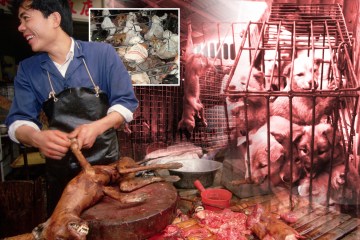
A constant supply is needed to fuel the industry – with Ejiao products sold on shelves as cosmetics or supplements from Asia to Europe.
The gel is used in products to help with anemia, insomnia, and dizziness – and often marketed as beneficial for anti-aging.
Africa is the main market for traders who exploit the population year-on-year with two-thirds of the world’s estimated 53million donkeys residing on the continent.
Kenya has quickly become the epicentre, with illegal businesses paying off locals to capture, kill and skin donkeys every day.
Lucrative payments of around £10-£15 per donkey hide allow depraved networks to recruit Kenyans to do the dirty work while they reap the rewards.
Only the skin is valuable to trades – which means skinless donkey carcasses are strewn across the vast grasslands in Kenya and left to rot.
Donkeys are often stolen from family homes – where they are as crucial as a car is in Western countries – and led to their brutal deaths.
Recruited killers will shepherd away the animals before striking them with a debilitating blow.
Villagers will take a sharp knife and slash at the back legs to make it unable to walk before slicing its neck to kill it.
Another sick method is to take a hammer and smash the donkeys over the head to knock them out before slaughtering them in open fields.
Raphael works with a young man who was paid to slaughter donkeys in his village – and told to use the sledgehammer technique.
Raphael said: “He told us the killing is so cruel. He would actually have to smoke marijuana as it meant you’re not thinking properly about how you’re treating the animal.
“He told us that he knew he was killing a very critical animal but the traders would come and would really encourage him to do this.
“This drove him to have to really smoke and be high on something before he could go and kill the animal.
“He would demobilise the donkey from the back legs by cutting the actual tendon, or they get a sledgehammer and hit on the head, so that then it falls down.”
In heavily built-up areas where donkeys are easy to steal in Kenya, traders have set up slaughterhouses designed to kill and skin the animals.
Just this month, officials found 3,721 animal skins packed in boxes in the back of a truck in Kenya.
All of the hides are believed to have belonged to massacred donkeys who were killed in the bush.
Authorities also intercepted 64 live donkeys stuffed in the back of a car headed towards a slaughterhouse.
“This shows that the trade is alive and kicking,” Raphael said.
It comes despite a new law coming into force in 2024 which made it illegal to slaughter donkeys for their skin across Africa.
African state leaders approved a continent-wide ban at the African Union summit in Ethiopia two years ago to joyous approval from charities.
Raphael called the move a “terrific moment for communities in Africa”.
“Three-quarters of the donkeys that were slaughtered in those legal abattoirs were killed in an inhumane manner with the animals not being stunned before they were killed,” he said.
“A quarter of the donkeys that were slaughtered in those abattoirs were also pregnant. It was decimating a population.”
Illegal warehouses still exist on the outskirts of many communities where the animals are killed on mass every day, Raphael warns.
The Ejiao industry in China requires up to seven million donkey skins every day, according to research by Brooke.
They also estimate that around 5.9 million donkeys are killed for their hides annually – with the figure staying around the same total since the ban.
Donkey skins have even been advertised online in recent years with sites such as Facebook, YouTube, Instagram and X all showing adverts.
A report by the Donkey Sanctuary charity in 2022 outlined how traders often find it far easier to sell and ship the hides in bulk through social media.
And it often allows for the buyer to turn the skins into Ejiao themselves – eliminating a costly step of the process for traders.
Raphael is concerned how Ejiao is becoming normalised across the globe as a vital ingredient in supermarket goods.
He hopes exposing the trade will encourage shoppers to stop buying the products.
Raphael says: “Ejiao is not only used in China as a country like the US takes a third of the gel and I would think even the UK shares a portion of it.
“We have talked with journalists in Germany, and even they were saying in the shelves of their shops you can find Ejiao products.
“But all these consumers don’t know how these animals are sourced. They don’t know the trail of destruction they are causing at the household level.
“They don’t know, the pain and the inhumane treatment that these animals go through for the consumer to get that item.”