A high-stakes election kicked off in the eastern Indian state of West Bengal on Thursday, but longtime government worker Imran Hossain will not be casting a ballot.
He wants to. Mr. Hossain says he is well aware of how “important and sacred” the right to vote is, especially in these tightly-contested elections. This fall, he spent months going door to door in his village, often working late into the night, checking voter documents and uploading details into official databases, to update the state’s electoral rolls.
But when the final list was published, he found the names of hundreds of legitimate, verified voters from his village missing – including his own.
Why We Wrote This
How does a government balance its responsibility to guarantee fair and secure elections with the need to protect citizens’ fundamental right to vote? A voter-roll clean-up in India is sparking allegations of suppression.
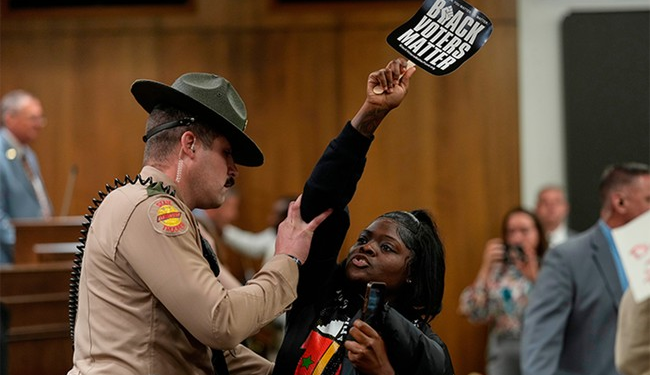
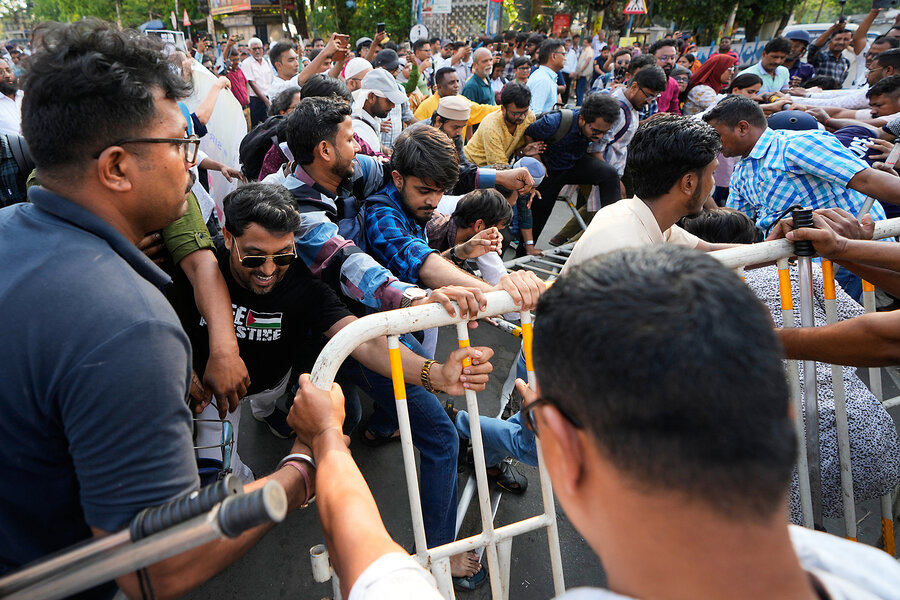
Indeed, Mr. Hossain is among millions of people in West Bengal who have been removed from the rolls just before state elections, which run through April 29. According to data released by the Election Commission of India, 9.1 million names in the state, or roughly one-tenth of West Bengal’s electorate, were removed during this Special Intensive Revision, or SIR. Officials say many of these entries were removed because voters were deceased, had shifted residence, or were flagged for “logical errors,” such as duplication. But scores of residents – including Mr. Hossain and several of his family members – have objected to their removal.

The SIR has become one of the most contentious political issues in India, where the ruling Bharatiya Janata Party (BJP) has been accused of weakening democratic institutions. Opposition parties argue that the SIR is the latest – and perhaps deepest – blow to Indian democracy, with the scale, opacity, and timing of the exercise raising serious concerns about electoral integrity. Authorities defend it as necessary to remove duplicates and ineligible entries, but critics say this goes well beyond standard election maintenance.
Voting “is a fundamental right, and every government employee involved in the process is expected to uphold it, whether that be at the level of documentation or on the day of voting,” says Mr. Hossain, who has regularly been assigned election-related duties over his 20 years of government service. “What we are seeing now is astonishing and goes against both the law and the fundamental spirit of democracy.”
Political stakes
The Hindu nationalist BJP, led by Prime Minister Narendra Modi, came to power nationally in 2014 and has since expanded its footprint across several Indian states. Yet West Bengal has remained one of its most elusive political targets.
Governed by the Trinamool Congress (TMC), the state has repeatedly resisted the BJP’s advances, even as the party has improved its electoral performance in recent years and emerged as the TMC’s principal opposition.
The TMC and other opposition groups have raised serious allegations against the Election Commission of India, and last month moved an impeachment motion against its top official in Parliament, accusing him of favoring the ruling BJP. They argue that the revision of voter rolls – conducted in multiple states so far – is part of a broader strategy that could disproportionately affect Muslim and other minority voters, who have traditionally not supported the BJP.

“It is a constitutional right of the people that if you have the documents, if you have proof of residency, you have a fundamental right to vote. But this SIR exercise is an assault on the basic structure of the Constitution,” says Sagarika Ghose, a member of Parliament from the Trinamool Congress. “In [West] Bengal, this was an exercise to help the BJP win this election. That was the wicked motive behind it.”
Researchers and activists agree that religion appears to be a significant factor in the deletions, with Muslims disproportionately affected.
“The biggest reason for deletions overall is death, but, for Muslims, it is often ‘logical discrepancies’ such as minor spelling variations or other data mismatches,” says Sabir Ahamed, who leads the Kolkata-based research institute Sabar, which has been studying voter deletions in the state.
In his majority-Muslim village in West Bengal’s Murshidabad district, Mr. Hossain says 460 people were absent from the final list, despite having valid documents.
He now feels he participated in “a fraudulent exercise” to thin out voting pools in Muslim areas, and give the Hindu-nationalist BJP an electoral edge.
Immigration concerns
Voter-roll revision is a routine exercise in India and in other democracies around the world. However, this iteration has triggered unusually strong opposition, in part because the current SIR has shifted the burden of proof onto voters, requiring them to renew their eligibility through documentation.
In the case of West Bengal – where final voter lists were only published in late February – many voters have been unable to reestablish eligibility before polling started this week.

“It is almost impossible to predict election results,” says Mr. Ahamed. “But as Muslims and women appear to have been affected in large numbers – and they have traditionally been voters of the Trinamool Congress – it is likely that the party’s winning margins could shrink.”
Yet BJP authorities insist the SIR falls within the realm of acceptable election maintenance. They’ve also raised concerns that migrants from Bangladesh are “infiltrating” voter rolls in border states such as West Bengal and Assam, framing the SIR as a necessary step to identify undocumented immigrants and protect electoral integrity – an argument that risks conflating documentation with citizenship.
At an election rally last week, India’s home minister, Amit Shah, said that the Election Commission of India had “only removed infiltrators from [West] Bengal’s electoral rolls,” referring to alleged undocumented immigrants. He added that “the bigger task, to drive them out of the country, will be done by us.”
Critics say this rhetoric makes it easier to cast Muslim citizens and lawful residents as outsiders.
Kamaruddin, a schoolteacher who, like many in West Bengal, uses a single name, lives in Chachanda village, just across the Ganges River from Bangladesh. He says he submitted valid documents to officials, including his passport, but was still excluded from the electoral roll. Both his parents remain listed.
“There is panic among people,” he says. “We are afraid that this exercise is not only taking away our right to vote, but could also be used to strip us of other rights in the future.”