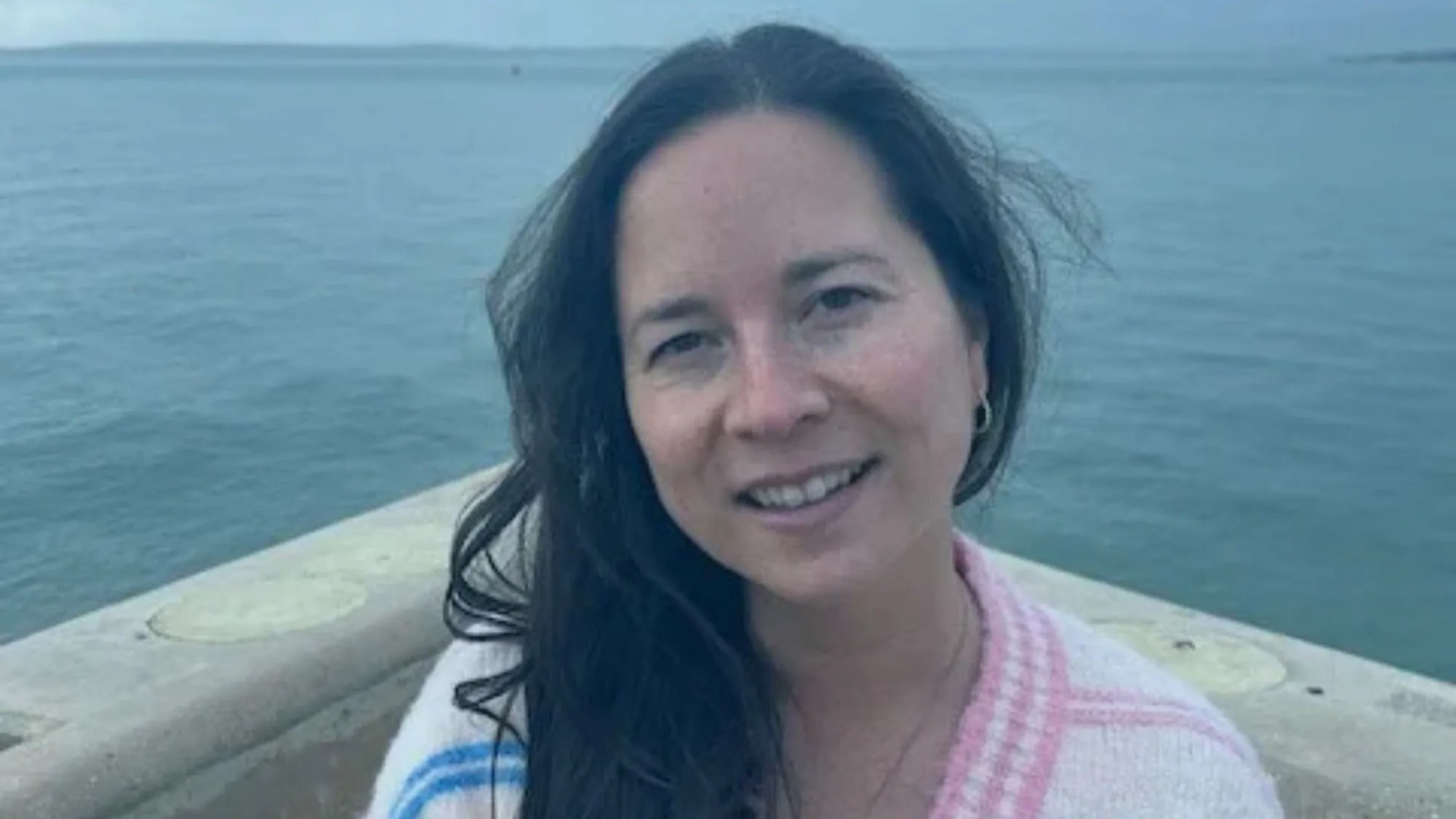
HELEN Richardson, 41, is a teacher and lives in Portsmouth with her husband Tim, 43, an accountant.
“Sitting in the nursery I’d lovingly decorated for my baby daughter, it was such a bittersweet moment. After five miscarriages, my dream of becoming a mother had finally come true.
But, tragically, my rainbow baby Amelie only lived for six weeks, and as she lay nestled in the cold cot beside me, I knew this would be her only time in our home before her funeral.
Tim and I met online in 2016 and got married three years later. We’d always wanted a family, as we couldn’t imagine a life together without children.
Between 2020 and 2022, I had four miscarriages, each around the seven-week mark. Every time, I was devastated, but I never gave up hope, plus we received wonderful support from the charity Tommy’s.
The following year, we decided to try IVF in the hope it would give me a better chance of successfully carrying a pregnancy. However, because I was then 38, my local NHS trust wouldn’t treat me, so we went private, using £20,000 from our savings and help from family.


The first attempt, in June 2023, was successful, but once again I miscarried within a couple of months. The second embryo transfer that November didn’t work, but the following July we decided to do another transfer, and this time, miraculously, it was successful.
I couldn’t believe it when I was still pregnant at our seven-week scan, having prepared myself for yet another loss.
But that elation turned to shock when, at 12 weeks, our baby was diagnosed with a condition called exomphalos, where the abdomen wall doesn’t develop fully in the womb, so the baby’s bowel and some organs are on the outside of the body.
I felt angry. After all I’d been through to reach this point, how could this happen? It felt so deeply unfair, and I was so worried about what it meant for our baby.
Doctors were positive, though, and explained that, although our baby would require surgery, her prognosis was good.
I refused to allow the diagnosis to overshadow the joy I felt seeing my bump grow and feeling the baby kick, and my pregnancy was such a happy time.
In March 2025, Amelie was delivered by C-section at 37 weeks, weighing 7lb 9oz. I was able to hold her briefly before she was taken to NICU in Southampton.
At two weeks old, she had surgery lasting six hours, with doctors trying to place her bowel and organs back inside her body. It was terrifying, as we knew there was every chance she might not survive the operation.
We were so relieved when she came through it, but then doctors broke the news that it hadn’t been totally successful and she’d need more surgery in the future.
However, in the weeks that followed, Amelie battled infection after infection, and her kidneys began to fail.
Every day would either bring bad news or a glimmer of hope. It was emotionally exhausting as we sat beside her incubator. We just wanted to take her home.
In May, doctors gently explained there was nothing more they could do for her. Realising we had to say goodbye after just six weeks was incomprehensible.
Our families were able to spend time with Amelie in a private room before all the machines she was hooked up to were taken away. Just before she died, she opened her eyes to gaze at us, and I felt it was her sign to us that she was ready to go.
We spent the next few days at children’s hospice Naomi House, where we cuddled Amelie, took photos and made castings of her hands and feet.
We were also able to bring her home for a few hours before her funeral. It was so important to us to have memories of her there.
Almost a year on from losing Amelie, Tim and I have had counselling, and I am building a social media community for families affected by major or giant exomphalos.
For some, a rainbow baby after pregnancy loss is not the happy ending we’d desperately hoped for.
Tim and I find ourselves navigating life as parents without their child, though I do hope to have another baby one day.
Amelie was with me so briefly, but she made my dream of motherhood come true, and I will always cherish the time we had together.”
Finding support after a miscarriage
MISCARRIAGE is the loss of a pregnancy during the first 23 weeks.
It happens more than you might think. According to the NHS, around one in eight known pregnancies ends in a loss.
Figures from the charity Tommy’s show half of adults in the UK say that they, or someone they know, has experienced pregnancy or baby loss.
Symptoms can include vaginal bleeding and cramping and pain in your lower tummy, but some women don’t have any symptoms at all and will only find out they’ve had a miscarriage during a routine pregnancy scan.
The majority cannot be prevented and a cause is usually not known. But there are some things you can do to reduce the risk.
These include avoiding smoking, drinking alcohol and using drugs while pregnant, being a healthy weight, eating a balanced diet, and reducing your chances of infection.
If doctors suspect you have had a miscarriage, you will usually be referred to a hospital for an ultrasound. If confirmed, there are several options.
Often the pregnancy tissue will pass out naturally in one to two weeks, but sometimes medicine or surgery is needed.
There are also several potential risks, including bleeding, perforation and sepsis.
The process can be emotionally and physically draining, but there is support available.
You can contact The Miscarriage Association, Tommy’s and Sands for more information. The NHS also offers counselling services.