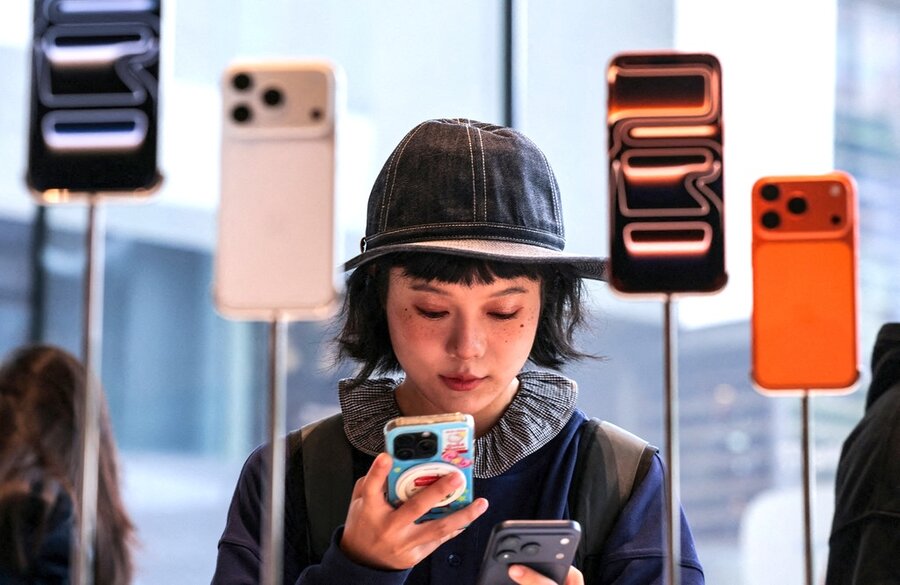
A recent surprise in China was a survey that found professional women have adapted faster to using artificial intelligence than men. They also show less fear of AI. Yet it was the explanation for this AI gender gap that offered a keyhole into how Chinese women are changing themselves and society from inside the narrow lanes imposed upon them by the ruling party.
One insight on the survey came from Poh-Yian Koh, president of FedEx China. She said in the era of AI, the common female traits of flexibility, resilience, empathy, long-term vision, and bridge-building allow women to serve as “indispensable ‘interpreters’ who connect technology with humanity.”
“Technology can be replicated. Empathy cannot,” she said. “In the age of intelligence, trust is the scarcest resource.” Technology might determine how fast society moves, but “humanity determines how far we go.”
Women in China are still locked out of the country’s highest positions of power. Yet in the digital universe, they are defining a different future.
“Humor, coded language, and private networks became safer ways to share experiences and support one another,” Lina Ma, a New York-based researcher who specializes on the topic, wrote in The Diplomat.
“Across platforms such as RedNote, Douyin, and Bilibili, women exchange stories and practical advice about everyday struggles,” she wrote. Some posts circulate concrete information, but others help women reinterpret their experiences separate from societal expectations or official controls over public life.
This style of informal connection might foreshadow the future of digital activism everywhere. “The Chinese example shows that repression does not eliminate political consciousness; instead, movements adapt,” Ms. Ma wrote.
One woman who has risen in China’s limited national politics is Jiang Shengnan, who started her career as an online writer. She achieved some reforms in the country’s largely rubber-stamp parliament. Yet her widest influence has been as a trusted, empathetic voice on the internet.
“Many people support me, saying that I’m a precious female voice,” Ms. Jiang told Shanghai magazine Sixth Tone in 2023. “But in fact, I’m just an ordinary female voice. Everyone knows that things are precious because they are scarce. My greatest hope is that I will become less precious as soon as possible.”