AFTER this week, Britain’s energy crisis looks like getting a whole lot worse.
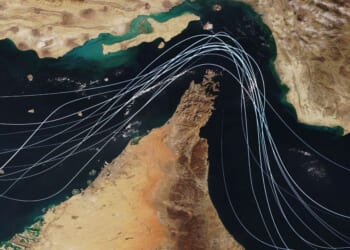
The last tankers to have made it through the Strait of Hormuz before the war in Iran are due to arrive in Europe.
After that, even if the war ends tomorrow, there will be a gap of many weeks before we are able to receive more oil and gas from the Middle East.
Motorists and householders face further price hikes and possibly rationing, too, as the country tries to eek out what supplies it can secure.
But what is the man charged with Britain’s energy security policy doing about it?
Sadly, precious little — other than stand in the way of policies that could make a real difference.
READ MORE ON ENERGY CRISIS


Ed Miliband was last week reported to be on the point of finally changing his mind and approving development of the Jackdaw gas field in the North Sea.
Yet that now seems a forlorn hope.
He is holding out against any relaxation of the block on new North Sea licences — and preparing to cry “betrayal” of Labour’s climate policy should the Prime Minister try to make the decision over his head.
But Keir Starmer cannot afford to indulge the Energy Security and Net Zero Secretary’s ideology a moment longer.
Miliband hasn’t just become a block on Britain’s energy security, he has become an electoral liability for the Labour Party.
A few weeks ago he was still leading polls for the most popular Cabinet minister among Labour Party members.
Yet a poll commissioned by the group Looking For Growth last week showed just how isolated he has become on the issue of North Sea drilling.
It found that Labour Party voters are in favour of new North Sea licences by a margin of 51 per cent to 21 per cent, with the remainder undecided.
Among all voters the proportion was 57 per cent in favour to 15 against.
It tells you something when even RenewableUK — the trade body for the wind and solar industry — is advocating for new licences.
Whatever they might favour in the long term, they can see that in the short term, running down the North Sea while continuing to rely on oil and gas imports makes no sense.
It pushes up prices, deprives the Government of tax revenues and even increases carbon emissions.
This is particularly so in the case of the liquefied natural gas we import from the US and Qatar, which has a far higher carbon footprint than locally sourced gas pumped through pipelines from the North Sea.
Miliband, perversely, continues to insist that new North Sea drilling wouldn’t take a penny off our energy bills nor make us more energy-secure, because the fuel would just be sold on the international market at the global price.
Perhaps he hopes that if he repeats this mantra often enough, it will magically become true.
But it is bunk. You can talk about a “global price” for oil, but not for gas.
Because gas is much more expensive to store and transport, wholesale gas prices vary enormously around the world.
In the US, where for the past three decades Presidents of both political colours have taken energy security seriously, wholesale gas prices are a third of what they are in Europe.
Should the Jackdaw gas field be developed it will be linked by pipeline to the UK national gas grid.
Theoretically, it would be converted into liquefied natural gas and shipped abroad.
But why on earth would anyone want to do that when the UK price is so much higher than across most of the world?
Contrary to the claim that the North Sea is virtually exhausted and therefore there is no point exploiting the last few drops, it still manages to provide half the UK’s gas demand — and Jackdaw alone could by now have boosted output by six per cent.
Feeding extra gas into the UK grid would create extra supply and improve energy security, as well as exerting downwards pressure on prices.
This is basic economics, yet still it seems to go straight over Miliband’s head.
As for accelerating the development of wind and solar to try to stave off a national energy crisis, forget it.
Currently, just five per cent of our national energy consumption is satisfied by wind and solar, compared with the three-quarters supplied by fossil fuels.
A logical UK energy security policy would encourage some “home-grown” wind and solar, for sure.
But it would make an absolute priority of securing the oil and gas that keep the country running.
As well as developing the North Sea, we should be fracking shale gas on land.
Cuadrilla, the company which has already dug exploratory wells before the last government’s fracking ban, estimates there is enough shale gas below Britain to meet current needs for at least half a century.
It has said it could be producing gas within three months if it was allowed to.
The scale of the energy crisis, and what Britain needs to do about it, is finally dawning on government ministers.
Rachel Reeves last week said she favoured new North Sea production. But Miliband remains imprisoned by his own ideology.
It is the British people, not Labour’s climate policy, he is betraying.
The Prime Minister, for once, must discover a backbone, over-rule him and get North Sea oil and gas gushing.