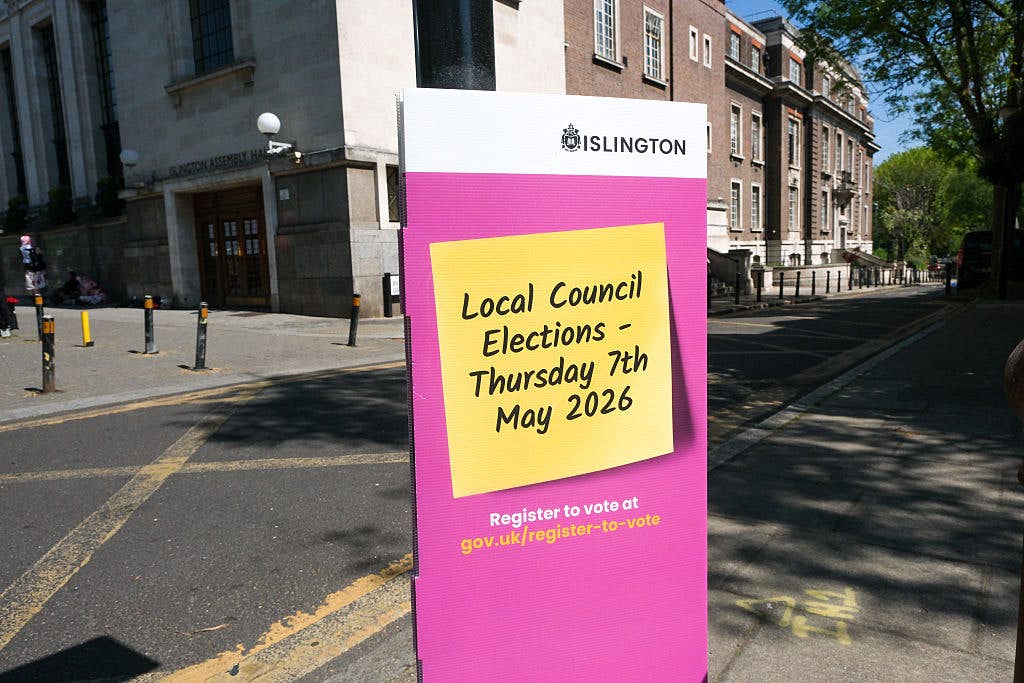
A few months ago, this week’s local elections promised to be a make-or-break moment for Kemi Badenoch. They may yet prove to be one for Sir Keir Starmer. For the Green Party and Reform, they are a chance to see if they can translate their polling surges into tangible gains on the ground. For the Liberal Democrats… well, nobody is talking about the Liberal Democrats.
For all that Westminster can fixate on local elections, actually divining the larger significance of the results is often very difficult
Yet for all that Westminster can fixate on local elections, actually divining the larger significance of the results is often very difficult. There are simply too many confounding variables – the varying geography of which councils are up for election, for example, or the drastically lower turnout, which favours parties with more energised voters.
Perhaps most confusing of all is the fact that performance is often judged not simply in terms of seats won or lost or councils controlled, but relative to a party’s performance at the same set of local elections many years before, which most voters can be forgiven for not having committed to memory. Then there is the role of “expectations”, that nebulous metric by which parties on the back foot try to turn bad results into good ones by claiming to have thought things would be even worse.
Finally, and especially relevant now, there is the fact that council elections are conducted under First Past the Post, and with five parties bumping along in the teens or twenties that introduces a high degree of random noise into the picture — reflected, perhaps, in the relatively high number of councils forecast to slip into No Overall Control (NOC). There is no statistically significant difference between a party winning by 100 votes or losing by the same, but politicos will still burden the result with great narrative weight (and politics is, ultimately, a narrative business).
As such, the finish lines for the various parties have been set in very different places. Peter Kellner, for example, posits that only gaining a thousand or so councillors would be a very disappointing night for Reform UK, whilst merely losing 600 or so would be a very good night for the Conservatives. That latter might be true in light of the party’s current polling, but given that Labour is defending seats it won at the height of Partygate, it doesn’t say much for the “Kemi Bounce”.
If you step back far enough and squint a little, though, you can pick out the broad trends in the chaos which probably tell us most about where our politics is and might be going.
First, for all that their polling lead has started to deflate in recent months, Reform still seems to be the biggest show in town. Nigel Farage’s party is forecast to pick up well over a thousand councillors, and threatens to wrest control of councils both from the Tories (Essex, Norfolk, Suffolk) and Labour (Gateshead, Sunderland, Wakefield, and more), as well as make big advances in London.
An interesting thing to note this time will be whether the pollsters got it right. Just days before last year’s landslide result for Reform, I was talking to pollsters who thought they were likely to pick up only one or two smaller councils, and had been deeply disadvantaged by the decision to delay so many local elections in their stronger areas. Have the pollsters made the same mistake again — or might they have overcorrected?
The other big winner looks set to be the Green Party, forecast to gain hundreds of councillors and potentially take control of several London councils including Lambeth, Hackney, and Haringey (where I live, thoughts and prayers appreciated). That would be a dramatically expanded local government base for a party which has previously run very little outside Brighton, and potentially provide a springboard either for gains at the next election or, if Labour MPs start getting nervous, defections.
Strong as those results are, they do also seem to illustrate how the Greens’ appeal has narrowed under Zack Polanski’s leadership: all their strong advances are in urban areas and against the Labour Party. Until recently the Greens had been doing a good job, like the Lib Dems, of being different parties in different places and looked as if they might threaten a handful of Conservative seats at the next election; Polanski’s higher profile and much more stridently left-wing messaging seems to have put paid to this.
If so, that’s the one bit of good electoral news the Tories have had this Parliament. Whilst for all the reasons above one should be careful not to overread the future in local election results, it is nonetheless a very bad omen indeed should the Conservatives go backwards again on Thursday. Historically the party has rebounded in local elections even when, as under William Hague, it went on to make no progress whatsoever at the next election. To still be going backwards, and from an already-bad previous result at that, is very bad news indeed, no matter what CCHQ’s or the pollsters’ “expectations” might be.
Labour, conversely, can at least comfort itself that its losses are being measured from a high point in 2022, just as the Tories did during last year’s rout with their strong 2021 showing. But the strategic picture painted by the forecasts is still bleak, and if borne out in the results would leave the party in a deeply invidious position.
Like the Conservatives, Labour is confronted by an increasingly choosy electorate and potent alternatives to both its left and right. Reform is predicted to take over several Labour councils and make advances in urban areas, especially London, where the traditional right has been in retreat for over a decade. Reform placed second in 89 Labour-held seats at the last election, and on current polling could expect to scoop most of those and a few more besides.
Yet on its other flank we have the Greens. We have yet to see just how big the direct electoral challenge they pose will be, although a left-wing party with big appeal in inner-city areas could tear through rusted local Labour machines which haven’t faced a serious challenge in decades. But even now, they make life almost impossible for any sensible Labour leader because the Green challenge seems to provide an excuse to ignore the threat of Reform and lunge to the left.
Beneath these big picture considerations there is also one way in which the granular details of who-wins-what-ward will matter. In an age of withered party memberships, councillors (and their friends and family) tend to provide the core of a party’s political infantry: knocking on doors, delivering leaflets, and flying the party flag in the long stretches between elections. A town-hall rout can thus severely hobble a party’s ability to mount an effective ground campaign in a general election.
Nobody is more aware of this than MPs, and as such any MP without a very comfortable majority — and this is the most marginal parliament, in seat majority terms, since 1945 — is going to be extremely worried to see their regiment of councillors getting mown down. Panicked enough, perhaps, to contemplate a move on their leader … or a move to a new party.