Bipartisan agreement on Capitol Hill is rare these days. But it has been in evidence in recent weeks among a handful of congresswomen concerned about allegations of sexual misconduct by a few House members. They have called for Congress to expel three representatives and to publicly release records of its recent investigations (a motion voted down in early March).
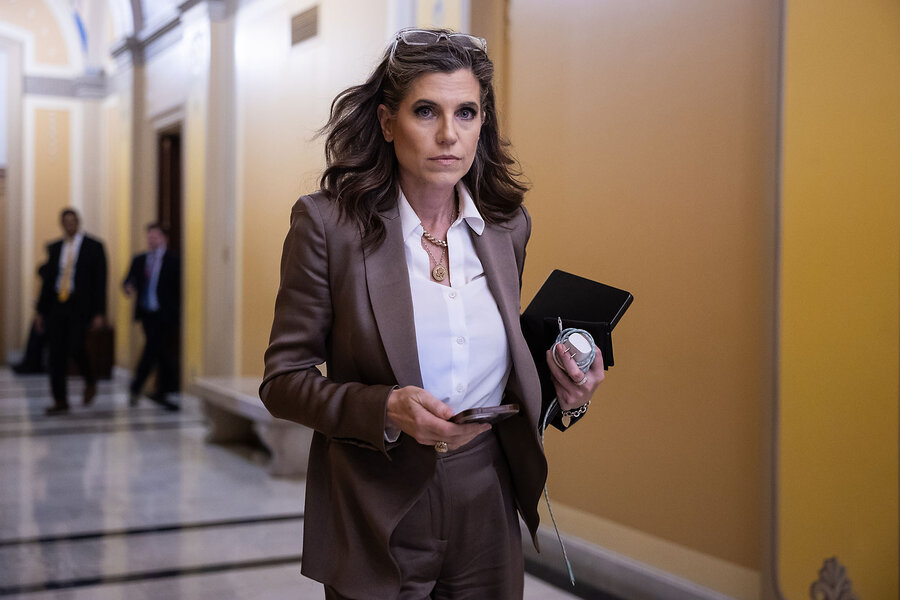
“Women deserve to be safe,” Republican Rep. Nancy Mace of South Carolina said last month. “And the American people deserve to know” when elected officials are “abusing power instead of serving their constituents.”
On Monday, two House members announced they would step down – Democrat Eric Swalwell of California, who denies allegations of sexual assault by a former staff member and three other women, and Republican Tony Gonzales of Texas, who has admitted to an affair with an aide.
Nearly a decade after the #MeToo movement gained prominence, these events signal that Americans’ expectations of elected officials’ public and private ethics have changed – to demand greater transparency and accountability, as well as congruence between both.
In 2018, “we saw a real acknowledging of problems in the halls of power … especially affecting female staffers,” veteran congressional correspondent Lisa Desjardins said on NPR this week. That year, Congress tossed out the long-standing practice of using taxpayer money to settle claims of misconduct by elected officials – as well as a rule that required staff to accept up to 90 days of counseling, mediation, and “cooling off” before lodging a formal complaint.
Since then, Ms. Desjardins noted, it’s been taken “for granted … that this problem has been solved.”
Clearly, there is more work to be done to extend recognition of and respect for women’s autonomy and inherent ability to contribute freely and fully in political and public life – especially among women themselves.
“Women – even those who are highly educated, well-credentialed, and politically engaged – often do not” see themselves as viable candidates for office, a 2022 study found. “Until women are just as likely as men to consider running for office,” the researchers concluded, “we really haven’t achieved full inclusion.”
Today, women constitute 28% of the membership of the current 119th Congress. While this is a substantial increase (of 44% between 2015 and 2025), more than half of all American adults feel there are too few women in high office.
There are varied reasons behind the desire for more women in politics. “Increased representation of women in elected office is associated with counteracting corruption” and having a greater focus on public service delivery, according to a global survey by the London-based Westminster Foundation for Democracy and King’s College. “When women take part in politics, the whole of society benefits.”