It takes two days and roughly a hundred knocked doors to meet my first Labour voter.
Elizabeth Williams, a bubbly 87-year-old, greets me outside her pebble-dashed end-of-terrace property in the former pit village of Garnlydan with a gap-toothed smile and a twinkle in her eye.
‘I’ve always voted Labour, my mum and dad voted Labour, and I’ll be staying loyal’ is how she put it.
It’s a sunny afternoon in the Valleys and I’m attempting to speak with voters on Keir Hardie Close, one of several local streets named after the politician who, in 1900, was elected MP for nearby Merthyr Tydfil and Aberdare.
Hardie, a charismatic former coal miner with a prodigious beard, became Labour’s first ever Parliamentarian. Historians call him the Party’s ‘founding father’.
Some 62 years later, a Left-leaning toolmaker named Rodney Starmer decided to call his newborn son Keir, by way of tribute. Rodney’s son now lives in No 10 Downing Street.
The voters of Wales are, meanwhile, about to head to the polls, in an election where both Hardie’s noble legacy and Starmer’s future are very much up for grabs.
To understand why, you only need to look at opinion polls.
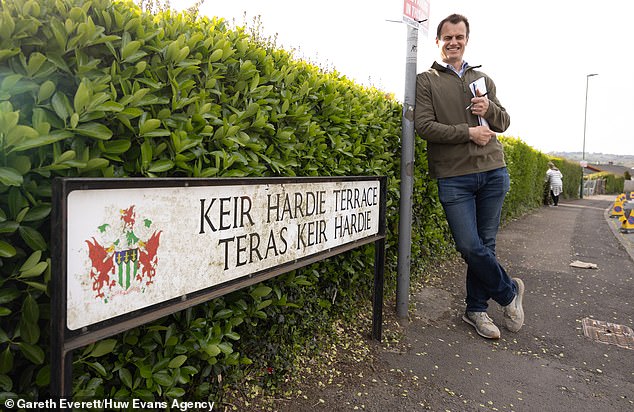
The Daily Mail’s Guy Adams on Keir Hardie Terrace in Swffryd, south Wales, a road named after the Labour party’s ‘founding father’
For 126 years, Wales has been Labour’s heartland. They’ve won a majority of Parliamentary seats here in every election since the Great War, gaining an astonishing 61 per cent of the vote under Harold Wilson in 1966 and 55 per cent in the Blair landslide of 1997.
Since devolution, in 1999, Labour has won every election in the Senedd, or Welsh Parliament, turning the land west of Offa’s Dyke into a sort of one-party state.
You can probably guess the next bit. For in Wales, and particularly here in the Valleys, tectonic plates are shifting.
‘The old joke was that you could put a three-legged donkey on the ballot, and so long as it was wearing a red rosette it would win,’ says Jason O’Connell, a Reform Party candidate I met in Merthyr Tydfil last week. ‘Now the exact opposite is true.’
We’d just spent two hours canvassing the Gurnos Estate, a notoriously deprived neighbourhood where they would once have weighed Labour votes rather than counting them – but I didn’t see a single resident tell O’Connell they planned to vote Labour.
Around half backed Reform. Most others weren’t planning to vote at all.
Pollsters broadly agree with this snapshot. They make next Thursday’s election a two-horse race: between Reform and Plaid Cymru, which are each expected to gain just under 30 per cent of the votes.
Labour is holding on to 17 per cent, a third of their vote a generation ago, while the Conservatives, traditionally the second party in Wales, are hovering around eight points, roughly three behind the Greens. The Lib Dems, on five per cent, bring up the rear.
After a week on the campaign trail, knocking on doors and interviewing activists from every party who would let me (perhaps tellingly, Labour wouldn’t), I would say these numbers are broadly accurate.
Almost everyone seemed to hate Labour. Partly because they dislike Keir Starmer, partly because of the abject incompetence which, thanks to their 27-year reign, now runs through Welsh government like letters through sticks of rock they flog in the seaside town of Barry (where Reform picked up a key council seat in September, pushing Labour into fourth).
Working class areas are turning to Reform. Middle class voters, including a not insignificant faction who vehemently dislike Nigel Farage, are switching to Plaid Cymru to stop Reform. A few Lefties will go Green instead.
The Tories, meanwhile, are despised for familiar reasons: Remainers blame them for Brexit, Brexiteers think they messed Brexit up, many say Liz Truss crashed the economy and the words ‘Boris Johnson’ elicit an eye-roll. While Kemi Badenoch has the odd fan, the party is essentially fighting a rear-guard action to cling on to its core vote, hoping things improve next time.
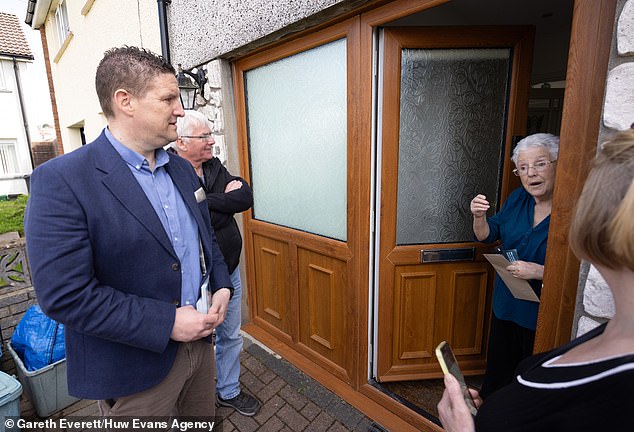
Jason O’Connell, Reform’s candidate for Merthyr Tydfil, canvassing at a doorstep on the Gurnos Estate
What polls don’t capture, however, is the real disdain that voters now have not just for Starmer, but for politicians of all parties.
After 27 years of single-party rule, Wales is crying out for change. The Senedd chews through £27.5 billion a year, a sum that equates to £9,000 for each person in the country.
Yet while taxes soar, Welsh schools and hospitals underperform their English counterparts on a host of key metrics. On the doorstep, voters complain about everything from potholed roads and 20mph speed limits to unchecked immigration, welfare fraud and a string of recent scandals involving either Welsh NHS failures or Labour’s allegedly wasteful spending on woke obsessions such as planting trees in Uganda (at a cost of £4 million for taxpayers).
The Welsh people believe the system is broken, but they don’t trust anyone to fix it.
In the rural town of Crickhowell, where I spend a morning canvassing with the Conservatives, I meet a 73-year-old grandmother who has been waiting more than four years for a new hip and is now clearing out her life savings for a £15,000 private operation. Will she be voting? ‘Probably not. They’re all the same!’
At times, the levels of hostility towards activists are striking.
My host in Crickhowell is Tyler Chambers, a charming 20-year-old Cardiff University student, who sits atop the party’s list of local candidates. ‘Some bloke called me ‘posh scum’ the other day,’ he recalls.
‘It was quite a nice neighbourhood. I grew up on a council estate, and neither of my parents went to university, but I’m being called posh scum by someone in a £500,000 house. Online, it’s even worse. You need a very, very thick skin to do politics.’
In Merthyr, I knocked doors with Zak Weaver, a former Tory aide who defected to Reform. He went viral across social media recently thanks to doorbell camera footage of a homeowner inviting him to – how can I put this? – take a razor blade to his genitals. Videos of the encounter notched up several million views.
‘I went to the Cardiff City game on Saturday and when I got on the train the first thing I heard was ‘alright razor!’ ‘ he says. The other prevailing feeling, aside from hatred, is apathy.
I live in South Wales and have covered politics here for more than 25 years, but I’ve never seen the voting public less enthused by an election contest. You can drive for hours without passing a single banner or placard. I would be very surprised indeed if turnout surpasses the last Senedd election’s woeful 46 per cent.
In Swffryd, a village overlooking the old Navigation and Oakdale collieries adjacent to Neil Kinnock’s old seat, I knocked on more than 30 doors on Keir Hardie Terrace, another street named after the former MP, in a fruitless search for a Labour voter. Or, indeed, any voter at all.
Eventually, I met a window cleaner named Chris, who said he was backing Reform to ‘stop the boats in the Channel’, but reckoned: ‘Nigel’s lot won’t be able to go through with it, because they’ll find a way to stop him.’
‘They’ refers to the 96 men and women who will take up their £76,000-a-year seats in the Senedd from May 7.
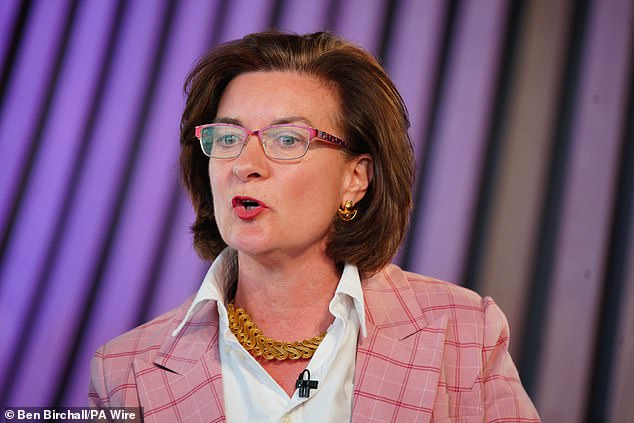
Welsh Labour leader and First Minister Eluned Morgan speaking during a Channel 4 leaders’ debate in Cardiff ahead of May’s Senedd election
That’s 36 more members than before and means that the Welsh Parliament will soon have three times as many politicians, per citizen, than in Westminster. Few of the politicians who voted for this job creation scheme, which is likely to cost taxpayers £120 million over the next four years, can articulate how it will improve the NHS, or sort out schools, or brighten up the grim economic prospects of a region where GDP per capita is around £10,000 less than it is in the rest of the UK.
Little wonder that the drastic expansion of this failing Parliament had dismal public support. Much like the people who run it.
Eluned Morgan, a dour career politician who has been Labour’s First Minister since 2024, has made so little impression on the public consciousness that, according to an article in last week’s Spectator, a voter in a recent focus group managed to misgender her. ‘He’s not a leader. He hasn’t got that presence’, is how he described Morgan.
In a TV debate with other party leaders on Tuesday, she got in an awful mess after being asked if she’d decided to ban Keir Starmer from Wales due to his unpopularity. Asked five times in two minutes whether the PM would be visiting before polling day, she would say only: ‘Keir Starmer is not on the ballot in this election.’
Starmer was, reportedly, prevented from campaigning prior to October’s Senedd by-election by Morgan due to fears that his presence would damage the party’s prospects. But a fat lot of good it did: Labour’s share of the vote there fell from 46 to 11 per cent, pushing them into third place.
It was the first time they’d lost that seat for a hundred years.
Reform is providing plenty of plot twists too. One of its candidates, a former Tory aide named Corey Edwards, recently stepped down ‘citing issues with mental health’ after a picture of him emerged performing a Nazi salute. Debate still rages over whether it was a ‘Basil Fawlty-style’ gesture, or something more sinister.
Another candidate, Martin Roberts, sparked a row last week by suggesting that the country’s daycare centres are riddled with paedophiles. He argued that Plaid Cymru’s plans to extend free childcare to babies from the age of nine months would cause ‘abuse in nurseries to skyrocket’.
Plaid Cymru, who I joined on the campaign trail in Rhiwbina, a leafy suburb of Cardiff, has its fair share of wingnuts too.
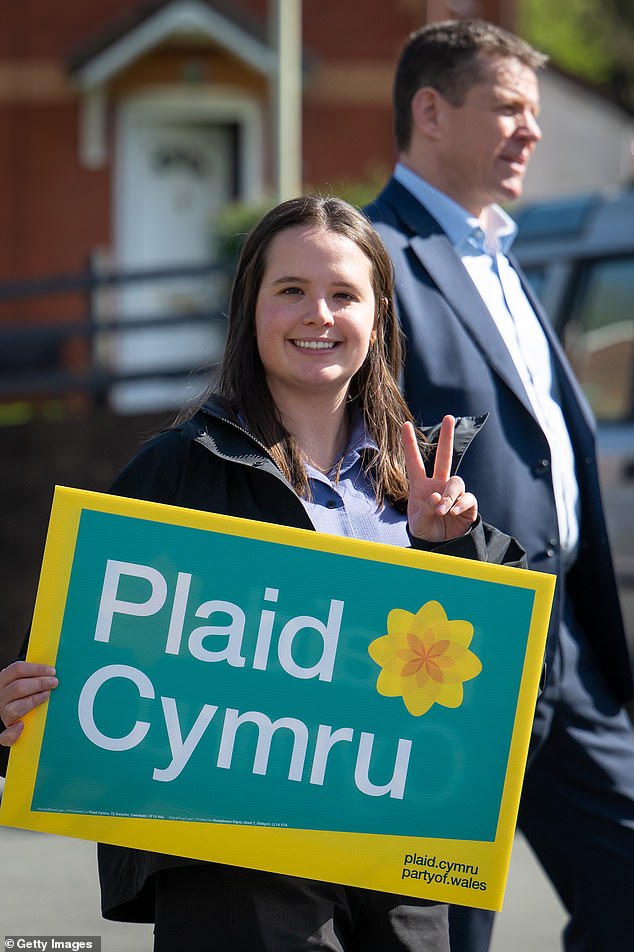
Zaynub Akbar, Plaid Cymru’s candidate for Caerdydd Ffynnon Taf, holds a campaign sign in front of her party’s leader Rhun ap Iorwerth
Earlier this month, Liz Saville-Roberts, MP for Dwyfor Meirionnydd, took to X to call for Britain to ban jump racing in the wake of the death of several horses at Aintree, saying the sport ‘doesn’t feature in the Welsh rural economy’.
That would be news to the 120,000 people who attended 70 race meetings at Wales’s three courses last year, or its 27 training yards, and their hundreds of employees, or to Welsh champion jockey Sean Bowen.
She eventually deleted the post, following fierce criticism from members of her own party who are desperately trying to court rural votes.
Wrexham boasts a candidate named Kayleigh Unitt, a disabled, non-binary TikTok influencer famed for, among other things, posting videos of herself performing vigorous dance routines on the campaign trail, or at trans rights or pro-Gaza protests.
During a recent interview, she claimed to be unable to hold down a normal job due to her disability (she has a genetic condition called Ehlers-Danlos syndrome), saying: ‘I would love to work a 9-to-5, but my health won’t let me.’
Quite how this makes her a good candidate for the very-much-full-time role as a member of the Senedd, for which taxpayers would pay her £75,000 a year, is anyone’s guess.
Plaid was, of course, formed for one reason alone: to campaign for Welsh independence. But with that cause remaining deeply unpopular (two thirds of voters are opposed), the party now says the issue will be off the table for at least the next four years.
Dafydd Trystan Davies, a charming and hugely enthusiastic university registrar who is their candidate in Caerdydd Ffynnon Taf, was doing a reasonable job of peddling that tricky line when I joined him last week. But Left-wing voters who aren’t buying it are likely to instead shift to the Greens.
My sneaking suspicion is that Plaid’s activists are far more positive about independence than many of their new supporters. After polling day, this strange contradiction may well come back to haunt them.
Adding to the surreal nature of this campaign is a baffling new voting system which requires the public to vote for a party, rather than individual candidates, and has seen Wales split into 16 constituencies, each with faintly unpronounceable names. Many have been gerrymandered into vast, geographically incongruous territories that take hours to navigate via car.
So how might this election unfold? Recent polling is calling things as follows: Reform will get 37 seats, Plaid 36, Labour 12, Greens seven, Tories three and Lib Dems one. You need 49 for a majority, so any party wishing to form a government will need the support of the very rivals that voters have rejected.
The most likely outcome, therefore, is that Plaid will rely on the votes of Labour (and possibly some Green) Senedd members to elevate its leader, a former BBC journalist named Rhun ap Iorwerth, to the position of first minister and pass subsequent legislation. Reform could very well win the most seats.
Labour may, in other words, still hold the balance of power. A strange outcome, which is the exact opposite of what voters want, in a country that despises the party who’ve been in charge for 27 years, but isn’t entirely sure how to replace them.