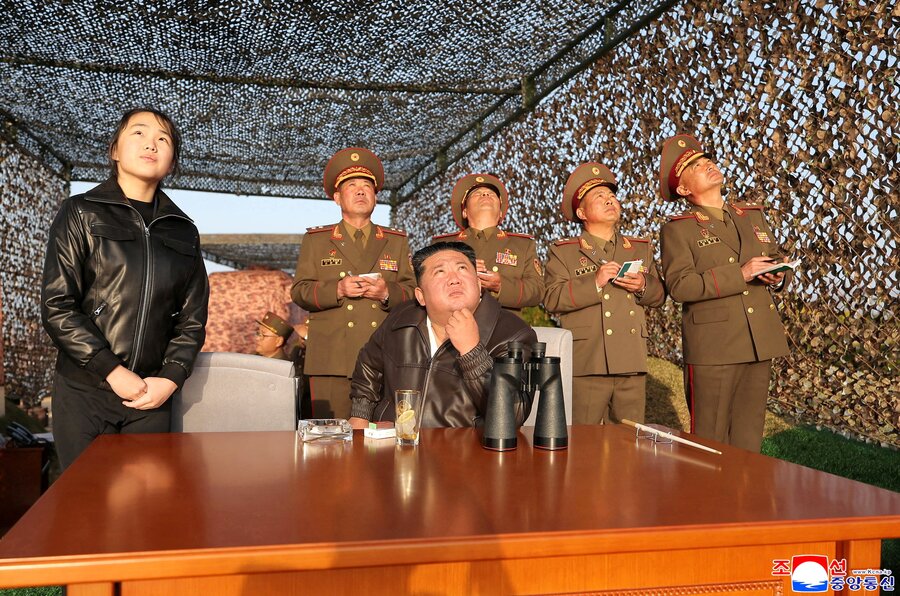
North Korea has closely watched Russia’s failure to conquer Ukraine along with Iran’s calamitous missteps in trying to dominate the Middle East with proxy militias. This week, news broke that the regime in Pyongyang might have learned a lesson about avoiding such misguided aggression.
After more than seven decades of threatening to use force to reunify with South Korea, it officially gave up claims on its neighbor on the Korean Peninsula. It rewrote its constitution to remove an obligation to “realize the reunification of the fatherland” and the ethnic Korean people.
This does not mean Seoul and its American ally can now stand down their defensive forces against the North’s nuclear arsenal. Nor has South Korea given up hope of peaceful reunification. But the constitutional change, which was first signaled in 2023, suggests a warming of what has been a long, cold peace.
To add to a possible new normal, a North Korean women’s soccer team will travel to Seoul to compete against a South Korean team, the first such match in years. The May 20 tournament, held by the Asian Football Confederation, means the two nations must coordinate on security and other arrangements.
Under its new policy, North Korea frames the match as between separate countries. In general, it describes relations as “two hostile states,” perhaps a recognition that the two are only technically at war after a 1950-53 conflict that ended in an armistice.
Despite that, the constitutional change “may provide part of the institutional groundwork for peaceful coexistence between the two Koreas,” Lee Jung-chul, a North Korea expert at Seoul National University, told The Korea Herald.
Other changes hint that the country’s leader, Kim Jong Un, might now realize that North Korea – and its largely closed economy – must be more open. “This fits in the context of a prolonged effort to redefine North Korea as a ‘normal state’ just like any other,” Christopher Green of the International Crisis Group, told the Financial Times.
The previous normal – preparing to break through the borders of another country – has lately not worked well for a few other countries.