They are the little platoons of quiet givers during a national crisis.
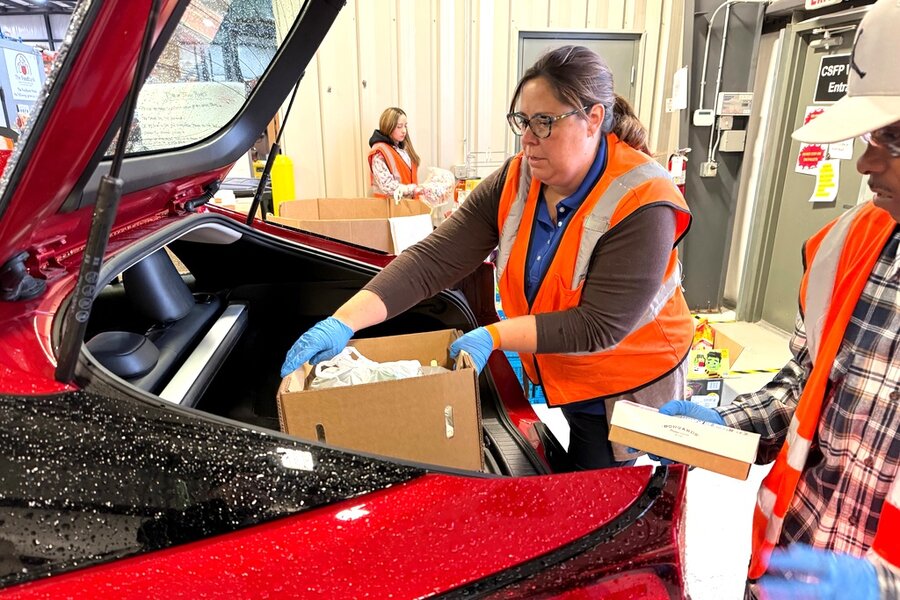
In recent days across the United States, people have dipped into their digital wallets or donated food to help those living on the edge as the government shutdown has led to the possibility of delays, if not a pause, in the federal food assistance program that helps some 42 million people.
“We’re seeing early support from donors,” stated Marty Martinez, head of the United Way of Massachusetts Bay.
“I have seen this community give,” Elaine Streno, head of Second Harvest Food Bank of East Tennessee, told the Knoxville News Sentinel. “I know the people who have the means to give do not want their neighbors to hurt.”
In South Carolina, the governor is sending the all-volunteer State Guard to assist food pantries with logistics. In West Virginia, the governor launched a donation drive to help those dependent on the benefits provided by the Supplemental Nutrition Assistance Program (SNAP). In Tennessee, the governor set up a website to solicit funds for food banks.
Americans are not just donating money or shelf-stable food. “The generosity of the farmers, the ranchers, the orchardists, the grocers, the manufacturers in this region … make it all possible for us,” Eric Williams, community partnerships director at Second Harvest Inland Northwest in Spokane, Washington, told The Packer news site.
The crisis for SNAP, which has led federal judges to intervene with orders for temporary funding, has put a spotlight on the traditional giving spirit of Americans. “This moment calls for grace, generosity and compassion,” said Erin McAleer, head of Project Bread in Massachusetts.
The temporary spike in giving might not replace all of SNAP’s federal funds that may be withheld. Yet it demonstrates the flexibility and immense capacity of this social sector, often called charity or nonprofit. The “giving” sector represents 5.2% of U.S. gross domestic product and employs 10% of the American workforce, states Jody Levison-Johnson, head of Social Current, an advocacy organization.
“We are builders of jobs, innovators in care, stewards of families and communities, and an essential part of the nation’s economic infrastructure,” she wrote on the news site Inside Philanthropy. “If the [American] social sector were its own country, it would rank among the top economies in the world.”
Small donors, or those who give from $1 to $100, make up 51.9% of the American donor base. And in times of crisis, they are the little platoons that spring into action.