Zimbabwean victims of one of Britain’s most barbaric and prolific child abusers are bringing a legal claim against the Church of England over allegations of a cover-up.
Six men, including Rocky Leanders, who were abused as teenagers at John Smyth’s Christian holiday camps in the African country, are among the seven claimants.
The other is the mother of Guide Nyachuru, a 16-year-old boy whose naked body was found in a swimming pool at one of the sadistic sexual abuser’s camps in 1992.
The group joined forces to allege that senior clergy and church officers in England orchestrated a cover-up that meant Smyth could continue abusing boys for decades.
Justin Welby resigned as Archbishop of Canterbury last year over his handling of the case of Smyth, who abused more than 100 boys and young men in the UK and Africa.
The horrifying abuse included forced nudity, beatings with table tennis and jokari bats, indecent exposure, groping and intrusive conversations about masturbation.
Smyth beat boys naked for hours in a purpose-built, soundproofed shed in his garden in Winchester, leaving them bleeding to the extent that some needed adult nappies.
Law firm Leigh Day has sent a letter of claim on behalf of the seven which connects the Church’s failure to act in the 1980s to abuse that later occurred in Zimbabwe.
It said the Church not reporting Smyth’s abuse in the UK from 1982 until 1984 directly led to his move to Zimbabwe, where he continued to prey on vulnerable boys.
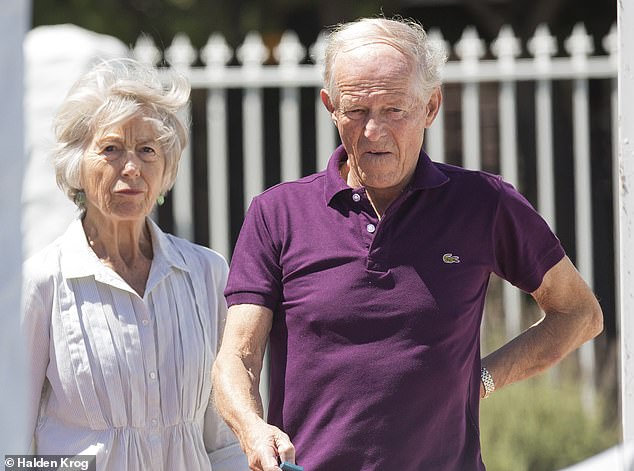
John Smyth and his wife Anne at their home in Bergvliet in Cape Town, South Africa, in 2017
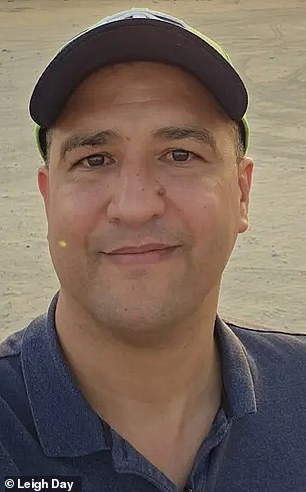
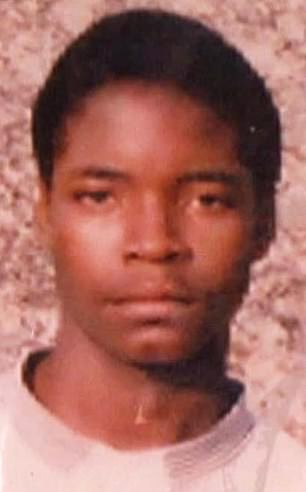
The claimants include six men who were abused as teenagers at Christian holiday camps run by Smyth in Zimbabwe, including Rocky Leanders (left); and the mother of Guide Nyachuru (right), a 16-year-old boy whose body was found in a pool at one of Smyth’s camps in 1992
While an internal investigation acknowledged the criminality of the beatings, the police were not told – and Smyth was instead encouraged to leave the UK.
He moved to Zimbabwe and set up the Zambesi Trust UK which funded his work and expenses – meaning he could host the camps where further abuse took place.
Mr Leanders was hit 35 times by Smyth on the bottom with a table tennis bat or wooden paddle during a one-week camp with 80 other boys aged 14 to 16. He was also forced to swim naked and queue naked for the shower while Smyth watched.
The 47-year-old said: ‘The memory of the shame and humiliation I suffered to satisfy John Smyth has never left me. After the Makin report was published I expected some redress. But none came.
‘I feel increasingly angry that the Church of England exported this criminal to Zimbabwe. I am sharing my story to raise awareness and encourage other survivors of abuse to speak out.’
Guide was found dead in the swimming pool at Zambesi Holiday Camp in December 1992 after reportedly going swimming naked, as was Smyth’s tradition at the camps, before bed.
Smyth, who had move to Zimbabwe in July 1984, officiated at his funeral and later called it an ‘unfortunate incident’.
He was charged in the mid-1990s with culpable homicide regarding Guide’s death and criminal injury in relation to other boys who were harmed.
But the prosecution was discontinued when Smyth’s legal team, which was largely led by the barrister himself, argued the prosecutor had a conflict of interest.
Guide’s sister Edith Nyachuru said: ‘My brother Guide was just 16 when he died at Smyth’s camp. For years, we’ve lived with unanswered questions and unimaginable grief.
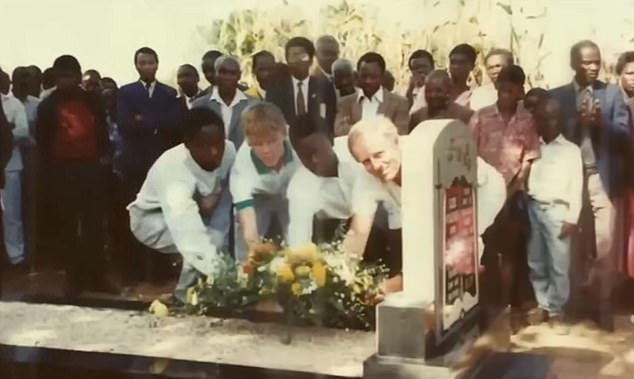
Smyth (left of gravestone) at Guide’s grave during the boy’s funeral after he was found dead in the pool at Zambesi Holiday Camp in December 1992 after reportedly going swimming naked
‘The Church of England had the power to stop Smyth before he ever came to Zimbabwe. Instead, they chose silence. We want truth, accountability, and change.’
The lawyers have sent the letter of claim to St Andrew the Great Church in Cambridge – formerly the ‘Round Church’, which employed the late Reverend Mark Ruston, who led the internal investigation into Smyth’s abuse in 1982.
The law firm alleges that Mr Ruston, other clergy and senior church officers from other parishes deliberately concealed the abuse and failed to report it to the police, despite acknowledging that crimes had been committed.
The failure to report Smyth to the authorities was allegedly ‘motivated by a desire to protect the reputation of the Church of England – particularly among senior figures in its conservative evangelical wing’, the lawyers said.
The action follows the Makin report into Smyth – thought to be the most prolific abuser associated with the Church – which concluded Mr Welby did not adequately follow up on reports about the Christian camp leader and barrister.
The review, which was released in November 2024, said Smyth might have been brought to justice had Mr Welby formally reported allegations to police in 2013.
The report said Smyth ‘could and should have been formally reported to the police in the UK, and to authorities in South Africa (church authorities and potentially the police) by church officers, including a diocesan bishop and Justin Welby in 2013‘.
Mr Welby initially said he would not resign as Archbishop of Canterbury over the report and remained in post for a further five days before announcing he would quit.
The review also stated that the Church had covered up Smyth’s abuse in 1982 and considered him ‘a problem solved and exported to Africa’.

Guide’s sister Edith Nyachuru said the family had ‘lived with unanswered questions’ for years
At the time, Mr Welby – who spent more than a decade as the 105th Archbishop of Canterbury – said he was quitting ‘in sorrow with all victims and survivors of abuse’.
But in a later interview at the Cambridge Union in May 2025, Mr Welby said new evidence had come to light after the review which showed reporting was ‘fully’ given by clergy to the police, who asked the Church ‘not to carry out its own investigations because it would interfere with theirs’.
Over five decades between the 1970s until his death, Smyth is said to have subjected as many as 130 boys and young men in the UK and Africa to traumatic physical, sexual, psychological and spiritual attacks, permanently marking their lives.
While some 30 boys and young men are known to have been directly physically and psychologically abused in the UK, and about 85 boys and young men physically abused in African countries, including Zimbabwe, the total ‘likely runs much higher’, the report said.
Smyth died aged 75 in Cape Town in 2018 while under investigation by Hampshire Police, and was ‘never brought to justice for the abuse‘, the Makin Review said.
Despite his ‘appalling’ actions having been identified in the 1980s, the report concluded he was never fully exposed and was therefore able to continue his abuse.
Mr Welby knew Smyth because of his attendance at Iwerne Christian camps in the 1970s, but the review said there was no evidence that he had ‘maintained any significant contact’ with the barrister in later years.
Mr Welby said he had ‘no idea or suspicion of this abuse’ before 2013.
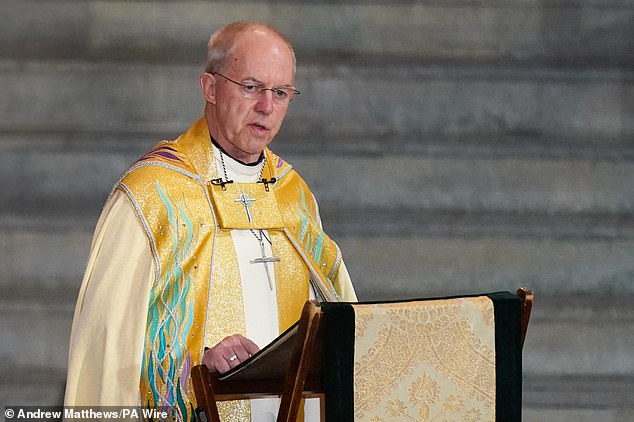
Justin Welby resigned as Archbishop of Canterbury last year over his handling of the case
The Makin report said church officers in the UK were ‘very aware’ Smyth was under investigation in Zimbabwe in the 1990s and they ‘could and should’ have reported him to police for abuses in the UK.
It said: ‘People in the UK, including church officers, were very aware of these attempts at bringing John Smyth to justice in Zimbabwe.
‘At any point in this period, any one of those people could and should have taken the initiative to report John Smyth to the police for his abuses in the UK.
‘His UK abuses were well known to many people in Zimbabwe by 1995 and the number of people being aware steadily grew until he left Zimbabwe to move to Durban in South Africa in 2001.’
The Leigh Day legal letter states: ‘In orchestrating this cover up, Ruston and the other Church of England church officers and clergy who covered up Smyth’s abuse knowingly enabled him to continue to have access to and be involved with vulnerable boys, and their care, including our clients.
‘But for the breaches our clients would not have been abused by Smyth and would not have suffered the harm detailed.’
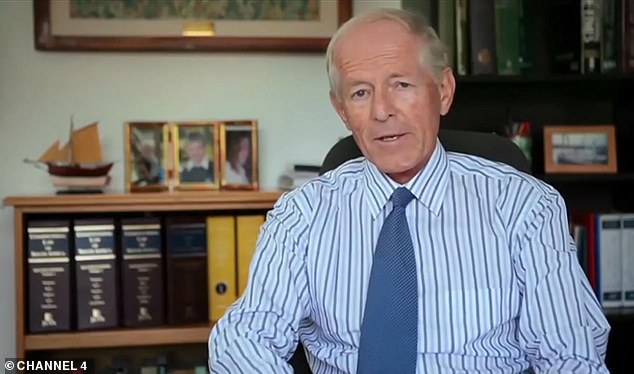
Serial abuser John Smyth abused more than 100 boys and young men in the UK and Africa
The claimants now want an apology and independent review into learning from the abuses perpetrated by Smyth in Africa, as well as financial compensation.
Rebekah Read, the solicitor representing the seven, said: ‘This case is about accountability. The Church of England had multiple opportunities to stop John Smyth and protect vulnerable boys.
‘Instead, it chose to protect its reputation and take control of sweeping this horrific abuse under the carpet. Our clients are seeking justice not only for themselves, but to ensure that such failures are never repeated.
‘The claimants hope that the current leadership transition in the Church of England will signal a renewed commitment to transparency, accountability, and justice for survivors.’
A Church of England spokesperson told the Daily Mail: ‘We are truly sorry for the horrendous abuse carried out by John Smyth, both here and in Africa, and the failures in the Church’s response to such abuse.
‘The Church in South Africa has already carried out its own review. We have been in contact with the Church in Zimbabwe and offered to support and contribute financially to any review that it might choose to undertake, building on the review undertaken by David Coltart in 1993.
‘The Church of England has accepted the majority of the recommendations of the Makin review and has recently published an update on implementing these recommendations.

John Smyth’s son PJ Smyth (above) previously told Channel 4 about how his father abused him
‘The National Safeguarding Team has taken out complaints under the clergy discipline measure against 11 members of the clergy criticised in the Makin review, eight of which are currently in progress.’
The ‘update’ referred to in the statement was an announcement in November 2025, one year on from the Makin review, in which the CofE said it had partly accepted three of the report’s 27 recommendations and fully accepted the other 24.
One of the recommendations accepted in full was to consider the commissioning of a full independent review into Smyth’s abuses in Zimbabwe between 1985 and 2001.
A spokesperson for St Andrew the Great Church told the Mail: ‘We are full of sorrow about the horrendous abuse carried out by John Smyth which has had lifelong effects on survivors, both here and in Africa, and that he was not stopped sooner.
‘While we are unable to comment on the specifics of this claim, we take the safety and wellbeing of our congregation, staff and volunteers extremely seriously and follow the Church of England’s Safeguarding Policy and Practice Guidance designed to protect vulnerable people.
‘If anyone has been affected by this issue and wants to talk to someone independently, please call the Safe Spaces helpline on 0300 303 1056 or visit safespacesenglandandwales.org.uk. Further support is also available via contacts on our safeguarding webpage.’