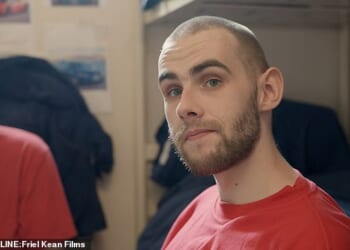
Young boys ‘have a lack of role models’ – and men should ‘step up’ for their community as family units break down, a report has urged.
They have lost the positive exemplars once provided by rapidly disappearing youth clubs and male volunteers in sports and leisure activities, the research found.
A new report by the Centre for Social Justice has issued ‘a clarion call’ for men to set good examples for these ‘thousands of lost boys’.
The vacuum, against a background of ‘family breakdown’, has meant only one in four (27 per cent) boys aged between 10 and 15 said they were ‘completely happy’.
This is a marked decline from the one in three (36 per cent) who described their life as such around 15 years ago, as per the thinktank’s survey published on Saturday.
The study follows claims Britain has failed white working class boys, who are the lowest performing demographic in English schools.
Lord Sewell, who authored a report into disparities in racial performance, levelled the accusations at the government, which he said had left this section of society ‘stuck’.
It also comes after a NASUWT teachers’ union poll showed a concerning trend of misogyny directed at female teachers by schoolboys.
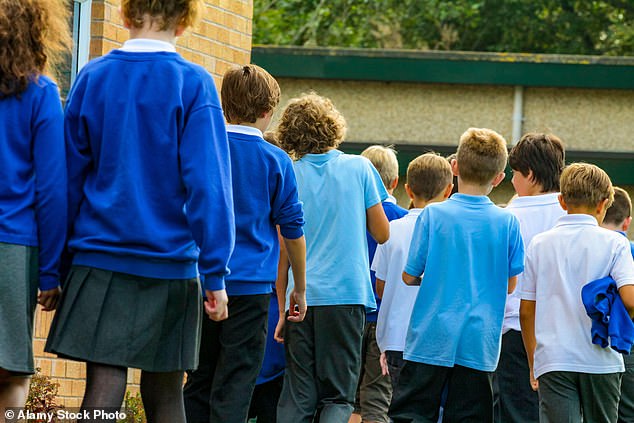
Boys have lost the positive exemplars once provided by rapidly disappearing youth clubs and male volunteers in sports and leisure activities, the research found. Pictured: File photo
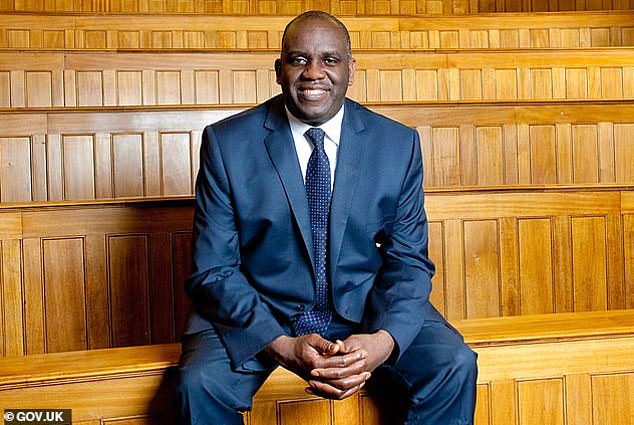
The study follows claims Britain has failed white working class boys, according to Lord Sewell (pictured), who authored a report into disparities in racial performance
This indicator, in the survey of some 5,000 classroom staff, rose to 23.4 per cent this year, from 17.4 per cent in 2023.
Polling for the CSJ by research consultancy firm Whitestone Insight found only one in 20 men aged over 45 are currently involved in a sports club.
In certain areas of the country, this figure is as low as one in 100, according to the thinktank’s report, which is part of an annual series called ‘Lost Boys’.
This has been made worse by dramatic cuts to services for young people, with 1,000 fewer youth clubs today than 15 years ago.
The number of youth workers has also decreased by more than a third, to only some 1,662.
These cuts have had a ripple effect across the lives of teens, with youth offending rates rising and GCSE results declining in areas where youth centres have closed.
Backed by consultation with more than 100 charities working with young people across the country, the report found Britain is facing ‘a crisis of masculinity’.
‘[The youth organisations] also pointed to the challenge of fatherlessness and the resulting lack of role models in their lives,’ the study noted.
‘Indeed, more young boys grow up with a smartphone than a father figure in the home.
‘Failing to take part in outdoor activities where boys experience growth-inducing setbacks and learn key skills, such as emotional resilience, from the organic role models around them only serves to compound this challenge.
‘One of the most valuable lessons that sport can teach us is how to lose and then carry on.’
The document continued: ‘We call on men across Britain to step up.
‘Charities consistently told us that men are often the best role models for younger boys, but that they struggle to get them involved.
‘This requires a cultural shift amongst men where they recognise the duty and responsibility that they owe to those who come after them, but there are opportunities that government can create to encourage this.’
This is against the backdrop of what the CSJ has identified from previous studies as the five ‘pathways to poverty’ – one of which is ‘family breakdown’.
The others are ‘educational failure’, ‘economic dependency and worklessness’, ‘severe’ personal debt, and drug and alcohol addiction.
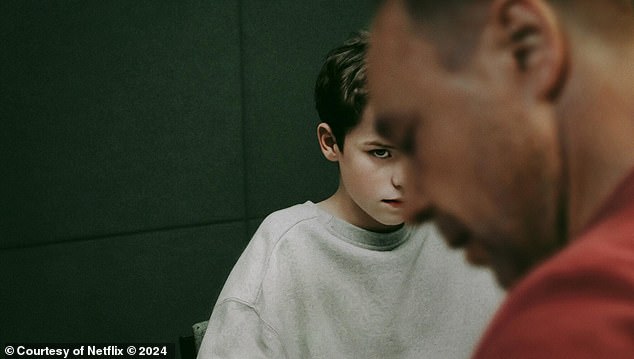
The conversation around the position of young men in modern British life has exploded in recent years – especially after the release last year of TV programme Adolescence (pictured)
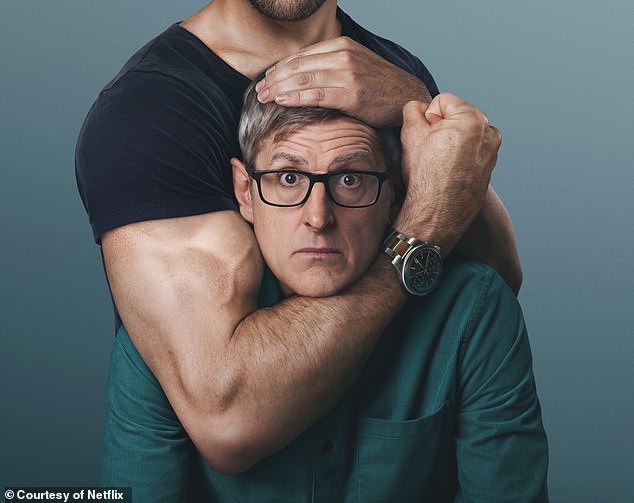
More recently, broadcaster Louis Theroux’s Netflix documentary Inside the Manosphere (pictured) reanimated discussions of the topic in the UK
The thinktank called for a ‘right to sport’ for all secondary students, with funding for a mandated two hours of after-school physical activity each week.
This scheme would also see pupils provided with an additional three hours of non-sporting extracurricular activity too.
The organisation also urged the government to create a national youth infrastructure fund of some £100million, supported by private philanthropists.
It also recommended the return of long-term stable funding for youth services.
The conclusions were based on a combination of the charity consultation and analysis of what is known as the UK Household Longitudinal Survey.
The thinktank focused on re-examining a particular branch of the study, conducted by the University of Essex, called Understanding Society.
Researchers interviewed everyone in a set of households across the country over a period of several years to see how they experience life in Britain.
The organisation also noted its previous research has found ‘boys are falling behind girls on almost every metric’, including income, education and employment.
This comes after Lord Sewell’s findings as part of his landmark review of inequality in Britain.
The Tory peer was chairman of the Commission on Race and Ethnic Disparities, a group set up by former Prime Minister Boris Johnson.
It was established to investigate if the UK is a racist country following the worldwide Black Lives Matter protests in 2021.
Speaking at a CSJ event last month to mark the fifth anniversary of his report, Lord Sewell reiterated the concerns the document laid out.
‘White working-class boys from the poorest homes are still stuck at the bottom of the class. Our warnings were not listened to,’ he said.
‘If we are serious about opportunity, we have to stop arguing about language and start delivering change in the places that need it most.’
The CSJ found in March last year only 35.9 per cent of white British pupils on free school meals achieved a grade four or higher in GCSE Maths and English.
This was seven per cent lower than the overall average and the lowest of any ethnic group.
Official government data from May also shows white working-class children are falling behind their peers in all but 21 schools across the country.
It means only a tiny fraction of more than 3,400 secondary schools across England see such pupils doing as well as their peers.
The data also showed the proportion of white working-class pupils getting grades five or higher in GCSE English and Maths was 18.6 per cent.
This is substantially below the 45.9 per cent national average.
Mercy Muroki, a member of Lord Sewell’s commission and CSJ development director, said: ‘Family stability, class, and aspiration matter far more for children’s life chances than many of the issues that dominated identity politics culture wars in 2020.
‘Five years on from Sewell’s report, the evidence is clear: family breakdown, deprivation and low expectations for young people, not ethnicity, are the main drivers of disadvantage in Britain.’
The conversation around the position of young men in modern British life has exploded in both political and cultural discourse in recent years.
Award-winning TV programme Adolescence, which was released on Netflix last year, brought the conversation right into homes across the UK.
The series told the story of a 13-year-old boy who murders his female classmate – and its creators later met with Prime Minister Sir Keir Starmer to discuss its impact.
More recently, broadcaster Louis Theroux’s Netflix documentary Inside the Manosphere reanimated discussions of the topic in Britain.
The film, released last month, examines how extremist influencers are manipulating young boys with their antiquated ideas surrounding masculinity and gender roles.