With sun, beaches and a refreshingly relaxed pace of life, Spain has long been a popular retirement destination for British retirees, alongside northern Europeans and a growing number of Americans.
A familiar holiday destination for many – the British are the biggest group of overseas tourists on the Costas – it’s the obvious place for a move, from its mild winters and well-established expat networks to high-quality infrastructure.
There were around 290,000 Britons registered as living in Spain last year, including many pensioners living along the Mediterranean coast, from Alicante down to the Costa del Sol, but also the Canary Islands.
Access to state healthcare for pensioners is another big draw – although some still remain unaware that this benefit endures post-Brexit – with a relatively affordable cost of living giving it the edge over some other European nations.
With council tax refreshingly modest, housing still far more affordable than the UK – despite Spain’s property boom – and OAP perks, the British state pension can go an awfully long way.
But what are the key things to know if you are planning to move? Here is our ultimate guide for moving to Spain.
Lifestyle and culture
Rich in history and shaped by the Mediterranean climate, Spain’s culture has something for everyone. There’s a real family-focus, with a calendar of traditional festivals and dozens of public holidays – a big pull for those who feel this is lacking in the UK.
If you want glitzy high-end living, you can head to the Costa del Sol or Mallorca. If you’re seeking somewhere more simple and affordable, look behind the coasts to inland towns and villages.
English is widely spoken in many areas which appeals to those moving in mid-life, and ready-made expat groups and communities can ease the transition. But equally, if you want to immerse yourself in authentic Spain, the bulk of the vast country is on offer, from increasingly popular Galicia in the north, to Almeria in the southeast.
A key thing to realise when moving to Spain is that the government is highly decentralised, with its 17 autonomous communities controlling social and housing policy and levels of taxation. As a result, the amount you pay in purchase tax, or whether you are allowed to rent out a property to tourists, will depend on where you are.
Housing options
Foreigners can buy property freely and have the same legal rights as locals. Despite prime minister Pedro Sanchez’s professed plan to introduce a ‘supertax’ on non-EU buyers a year ago, this has not materialised and foreigners pay the same purchase taxes as the Spanish. That said, buyers need to beware that purchase costs are higher than the UK – allow 10-14 per cent of the purchase price, depending on which region of Spain.

The areas around Malaga in Andalusia offer good value for money

Considerations include whether you want to be on an urbanisation – paying annual community fees – or out in the campo (countryside)
What’s more, thanks to Spain’s post-Covid property boom, gone are the days when you can get a house by the coast for £100,000 – but head 15 minutes’ drive inland and you’ll find options. Murcia, the southern Costa Blanca and Almeria, and Axarquia, the area east of Malaga, are all popular for those seeking better value.
Considerations include whether you want to be on an urban area – paying annual community fees – or out in the campo (countryside). Be wary of houses that are not fully legally (especially extensions added without planning permission) so always use a lawyer to do the due diligence.
Buyers generally find the purchase process much faster than the UK, taking 6-12 weeks. Mortgage rates are low: 2–3 per cent for 20–25-year term, according to Mortgage Direct, but most retirees use savings to pay cash. They should make a separate Spanish will for their Spanish home, as inheritance law works differently.
Cost of living
Expats in Spain report that the inflation has pushed up prices locally, but it’s still notably more affordable than the UK – in fact 23.8 per cent more, according to Numbeo.com, who report that the average salary in Spain is 56.7 per cent higher in the UK.

Rich in history and shaped by the Mediterranean climate, Spain’s culture has something for everyone
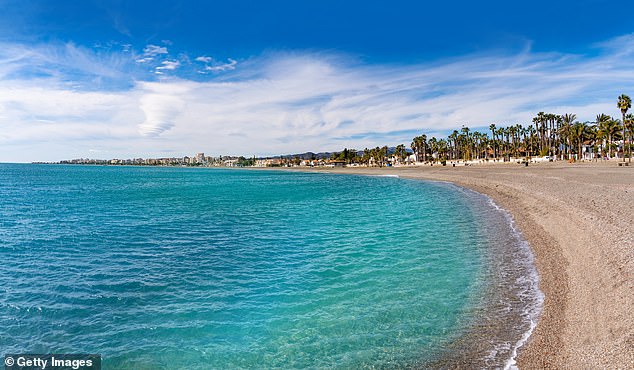
There were around 290,000 Britons registered as living in Spain last year, including many pensioners living along the Mediterranean coast
Lower housing purchase prices, rents and annual housing taxes are a big attraction – it’s typical to pay around €50-100 (£43-86) per month in community tax if you live on a development with a shared swimming pool or gardens. Annual property tax (IBI; the equivalent of council tax) is generally €200 (£173) to €500 (£433) per year (see below).
Bear in mind some modest extra costs: there can be annual costs of up to €100 (£86) for having a Spanish bank account, or you might need to pay an accountant (gestor) for annual tax returns (renta) if you own assets or income from abroad.
Spain also offers perks for its senior residents, such as discounts on public transport, entertainment and holidays.
Visas and residency
In our post-Brexit world, to legally stay in Spain for more than 90 out of 180 days you need a visa – unless you have, or are married to someone with, an EU passport, such as one from Ireland.
Known as the retirement visa, the Non-Lucrative Visa (NLV) is designed for those not planning to work. The residency permit is applied for in the UK before moving to Spain.
A third-party company BLS International handles applications for the Spanish consulates, and you need to prove you are financially independent for the duration of the visa. This is is €2,400 (£2078) per month (€28,800/£24,243 per year) for the main applicant, plus €600/month (£519) (€7,200/£6234 per year) for a spouse/dependent.
The cost of the obtaining the visa is €1,000-2,000 (£865-£1731), depending on if you pay for an expert to handle it for you. If you are under the UK state pension age (see Healthcare) you will need to pay for private healthcare cover too. Applying for a visa takes three-five months.
The visa is renewable after one year, then three years, and after five you can apply for permanent residency.
Healthcare
Spain offers a high-quality public healthcare system that makes it popular with expats and specially retirees. There are usually staff that speak English, but there can be waiting lists for treatments in busy cities like Malaga.
While residents have to get private insurance for their visa application, they can access the public system (Sistema Nacional de Salud) after registering as a resident in Spain, with options to pay into the system.
CASE STUDY: We are living like kings
Deciding that their future was not in Northampton where they owned a four-bedroom house, Michael and Cheran Rowland cast their eyes overseas. ‘We nearly moved to the US where I have lots of relatives, but the cost of living and healthcare put us off,’ says Michael, 73, a retired truck driver.
Choosing rural Valencia over Tenerife as their money would go much further, the couple moved out to Vilamarxant in 2022. After spotting it online and having a video-tour, they purchased a four-bedroom detached house with a swimming pool and nearly an acre of land for £158,000, using the rest of the profits from their UK house sale for ‘tax-efficient’ investments.
They love the tranquil location of the property and making friends with their Spanish neighbours, with whom they converse with in a mix of English, Spanish, hand gestures and a translation app.
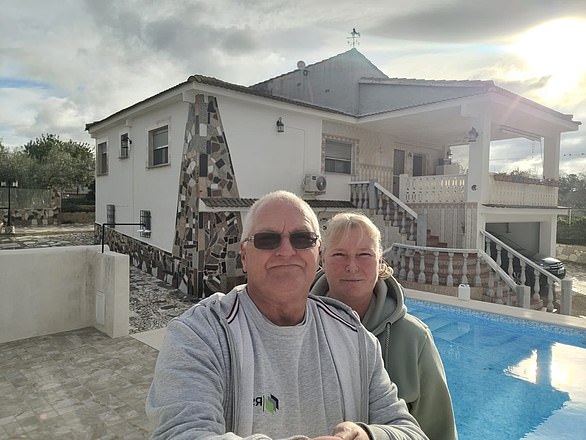
Michael and Cheran Rowland found the most challenging aspect of their move has been the paperwork – for their visa, residency card and registering for the healthcare system
The most challenging aspect has been the paperwork – for their NLV visa, residency card and registering for the healthcare system. ‘You have to get everything right or they reject it. Our advice is to find and pay for experts to help you,’ says Cheran, 56. ‘There are hurdles, so you have to fully commit to the move.’
But they say the cost of living is 30-50 per cent cheaper, which includes an annual property tax of just €405 (£350) per year, and their 10-day shopping bill that comes in at only €120 (£104), including a bottle of wine for €1-€5 (87p-£4.33). ‘We can live like kings here on pensions and investments,’ says Michael.
The one downside of their new life in Spain has been mitigated by technology. ‘The only thing we miss about the UK is our family, but we chat to them every day on WhatsApp,’ says Michael, who has two sons, seven grandchildren and a great grandchild. ‘We have no plans to return.’
Those over UK state pension age (66 years), can apply for an S1 Certificate of Entitlement from the NHS Business Services Authority and access the state-funded healthcare on the same basis as a Spanish national. If just one of a couple is old enough to get an S1, the other can access it too.
Routine dental care usually needs to be paid for, but private costs are lower than the UK – a check-up €25 (£21), a scale and polish €45 (£39), according to the British-dentist-spain.com.
Tax and finance
When you spend more than 183 days in Spain (which the NLV requires if you want it to be renewed) you will automatically become a tax resident.
Being a tax resident in Spain means you are likely to be subject to Spanish tax on worldwide assets – so start to plan financially around 18 months before becoming a tax resident in Spain. If you hold onto your UK home – as a fallback if Spanish life doesn’t work – then you could get hit for Spanish capital gains tax (CGT), says Kelman Chambers of Skybound Wealth Management, a cross-border financial advisor.
‘You will effectively pay 20-25 per cent tax on the gain, unless you are over the age of 65 and you sell it within two years of it ceasing to be your main residence; or if you invest all of the proceeds in a new main residence [in Spain].’
So the CGT on a gain of £100,000 on a house (bought for £200,000, sold for £300,000) would be around €23,000 (£20,000), depending on other gains and personal situation.
Tax-efficient UK products such as ISAs are taxable in Spain, so you might want to also close these before you leave.
Income from a UK buy-to-let property would initially be taxed (or assessed for tax) in the UK, but then the double tax agreement with Spain would mean that you would not pay this twice.
State pensions and private pensions come under ‘general income’ and are taxed at standard income tax rates of 19-47 per cent. The personal allowance depends on your age – it’s €6,700 (£5,801) for over-65s and €8,100 (£7,013) if you are over 75.
In addition to income tax, Spain imposes a wealth tax on worldwide assets for residents. Worldwide income includes investments, BTL income, pensions and dividends.
But your tax burden depends on which region you are living in, as there are differences in inheritance tax as well as wealth/transfer taxes – Andalusia and Madrid are the most tax-friendly autonomous communities.
As the double tax treaty between the UK and Spain does not cover inheritance tax, expats could remain liable to UK inheritance tax on their worldwide assets even if they are tax resident in Spain.