One in four of us feel anxious about our weight during the festive season.
For people using Mounjaro, the pressure can feel even heavier – as many worry that enjoying a traditional Christmas feast could undo their hard-earned progress or leave them feeling unwell.
If you’re wondering if you can safely indulge this festive season while on Mounjaro, the experts at digital healthcare provider ZAVA say there is a simple strategy that can help you to enjoy your Christmas Day feast without the stress, guilt or discomfort.
And it doesn’t involve nibbling on carrots while your loved ones enjoy roast turkey.
Instead, Dr Crystal Wyllie at ZAVA suggests an intermittent fast.
‘We hate the idea of people on Mounjaro feeling excluded at the Christmas table. This season should be joyful, not spent worrying about every bite,’ Dr Wyllie says.
‘Using a 16/8 intermittent fasting window ahead of your big meal is a gentle way to give your stomach the break it needs before a richer meal.
‘It’s an easy method of fasting for 16 hours and eating within an eight-hour window, which is not as difficult as it sounds, if you time it right.’

Dr Crystal Wyllie says using a 16/8 intermittent fasting window ahead of your big meal is a gentle way to give your stomach the break it needs before a richer meal
If your Christmas Day is between 12pm to 2pm, there is a specific time when you should stop eating the day before.
‘Stop eating by 8pm the night before if your lunch is at 12pm – it’s completely manageable if you have an early Christmas Eve dinner and avoid late-night snacks. You’ll wake up only a few hours away from breaking your fast. If your lunch is at 1pm, stop eating an hour later by 9pm and if it’s at 2pm, aim to finish by 10pm,’ Dr Wyllie says.
Dr Wyllie emphasises that fasting should not feel punishing.
‘If you wake up feeling low on energy or dizzy, shorten the window to 14/10 or even 12/12, and have something light like a piece of bread or yoghurt in the morning,’ she suggests.
‘Intermittent fasting works because it helps reduce “meal stacking”, a common issue for people on Mounjaro, where food tends to remain in the stomach longer.
‘Giving your digestive system time to reset makes it more tolerant of richer foods, helps stabilise blood sugar before a large meal, and importantly, removes the sense of guilt which often comes with indulging while on medication.’
Intermittent fasting can be a helpful strategy for many, but it may not be suitable for everyone.
People with certain medical conditions, those prone to low blood sugar, or anyone taking medications that must be taken with food should consult a healthcare provider before trying this approach.

Experts recommend balancing your Christmas lunch to include foods that support digestion such as Brussels sprouts, roasted carrots and green beans
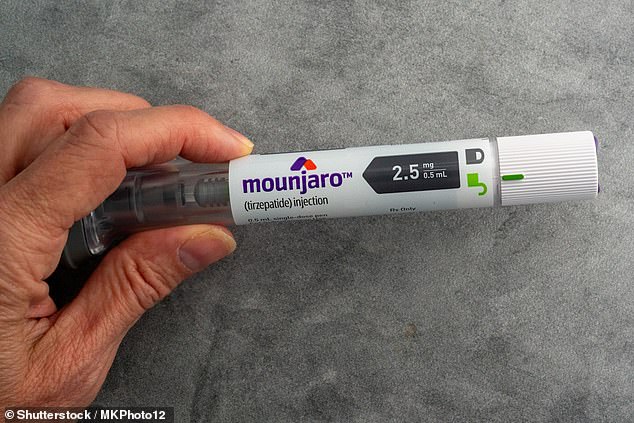
Intermittent fasting can be a helpful strategy for many when it comes to enjoying a festive meal while on Mounjaro
Remember that even with a fasting strategy, the way you eat your Christmas lunch still plays a key role.
As Dr Wyllie explains: ‘It’s crucial not to rush through your meal.
‘Eating slowly allows your body to register fullness more effectively, reducing the risk of discomfort or bloating at the end of the meal.
‘Take the time to enjoy each course, pause between bites and pay attention to your body’s signals. The goal is to feel satisfied and fulfilled, not overly stuffed.’
She also suggests balancing your Christmas lunch to include foods that support digestion.
‘Brussels sprouts are a good ally to your festive roast, along with roasted carrots and green beans, which are all high in fibre,’ she says.
‘At the same time, go a little lighter on very heavy foods like creamy sauces or extra-large helpings of stuffing, if you know they tend to leave you feeling sluggish.
‘The key is moderation and mindful eating so your Christmas meal feels enjoyable and stress-free.’
There are also steps you can take after your Christmas feast to avoid feeling unwell.
‘Lying down immediately after a big meal is a no-no. When you lie flat or slouch in a reclined position, digestion slows and the risk of acid reflux or indigestion increases,’ Dr Wyllie says.
‘Instead, take a gentle walk around your home or garden, even a short 10 to 15-minute stroll helps move food along the gastrointestinal tract and can regulate blood sugar levels.’
Simple stretches that open the chest and lengthen the abdomen can also help, Dr Wyllie says, as can standing side bends or reaching overhead, which improves circulation and relieves abdominal pressure.
‘Stick to gentle movement as intense exercise immediately after eating can worsen discomfort or nausea,’ she adds.
Additional tips include staying hydrated by sipping water or unsweetened herbal teas.
Peppermint and ginger are known to reduce bloating and support digestion, while chamomile has calming properties to ease post-meal discomfort.
‘Stay away from detox teas as many contain strong laxatives that can irritate the stomach and intestines – particularly for Mounjaro users whose digestion is already slower and more sensitive,’ Dr Wyllie says.