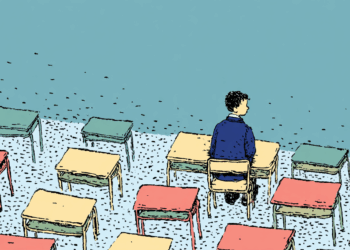
As an experienced psychotherapist, I often hear my clients expressing deep-seated negative ideas such as ‘I’m not attractive enough,’ ‘I’m not intelligent,’ or ‘I’m not capable’.
Others believe that ‘I won’t ever achieve what I want to,’ ‘I’ll never earn as much as I’d like,’ ‘My family don’t achieve things,’ ‘I’m not good enough,’ ‘I let people down,’ or ‘I’m too fat/skinny/tall/short.’
Perhaps you also tell yourself stories like these? If so, you’re not alone. As I described in yesterday’s Daily Mail, such thoughts are symptoms of the low self-esteem which, even when we are not aware of it, restricts us to leading very limited versions of our lives.
I’m sure many reading this will relate to wrestling with self-doubt which, day after day, reinforces your perception that you’re not enough.
This isn’t true; those negative core beliefs aren’t facts. You can create a new way of seeing yourself and today I describe some of the steps you can take…
Change the narrative
This exercise will help you identify and rewrite negative ideas influencing your mindset.
1. Write about an event in your life that had a lasting impact on you. It might be a difficult memory, a failure or a relationship issue – any event you feel has influenced your narrative about yourself. Example: I was bullied at school.
2. Explore what story you started telling yourself as a result of this event. Example: I felt upset that the bully took my dinner money. I felt scared and unlikeable. I started to tell myself that no one liked me and that I wasn’t a person worth being around; I didn’t feel I was good enough. I also felt weak and stupid.

Many people wrestle with self-doubt which, day after day, reinforces your perception that you’re not enough. This isn’t true; those negative core beliefs aren’t facts. You can create a new way of seeing yourself and today I describe some of the steps you can take
3. Write down how this narrative or belief has affected you in your life since. Consider its influence on your relationships, career, self-esteem and decisions.
Example: It’s made me cautious about who I can trust and befriend. It’s affected my self-esteem; I don’t feel good enough. It’s made me negative about myself, which has led to me getting into unhealthy relationships and seeking validation from others.
4. Question the accuracy of the narrative you’ve been telling yourself. Was this belief based on facts or a reaction to the situation? How would a compassionate friend or outsider view this event?
Example: The belief that I’m not good enough and can’t make friends is a reaction to the situation rather than a fact. Maybe this person who bullied me was unhappy themselves and took it out on me.
A friend would remind me of my worth and also help me to see the positive qualities I have and bring to my friendships.
5. Following these reflections, rewrite the story from a more balanced and empowering perspective. Focus on how you have grown from that experience.
Example: Instead of ‘I’m a failure’, the new narrative might be, ‘I faced a difficult challenge and my past experiences were painful, but this experience has helped make me the kind, sensitive and caring person I am.
‘I am whole, I am worthy and I let go of the past and know that it doesn’t have a hold on me anymore.’
Cloudy versus clear thinking
Knowing you can view your narrative however you choose can be empowering. If you view your story as your strength, you will step into that strength.
To do this, we have to escape negative thinking patterns.

Below are some of the most common. It can be helpful to name these as ‘cloudy’ thoughts, which are often distorted and make us feel negative. ‘Clear’ thoughts are the more balanced ways of seeing the world.
Put a tick against any that you regularly experience.
1. When trying to guess what others are thinking
Cloudy thought: No one likes me.
Clear thought: Is there another way of looking at the situation?
2. When trying to predict the future
Cloudy thought: I’m never going to achieve my goals.
Clear thought: How likely is it that this might really happen?
3. When comparing ourselves to others
Cloudy thought: They’re so pretty, and I’m so ugly and unattractive! I will never be in a relationship.
Clear thought: Could there be a more balanced or helpful way of looking at this situation?
4. When being self-critical
Cloudy thought: I can’t do anything right.
Clear thought: What would people I know and respect say to me?
5. When putting pressure on ourselves
Cloudy thought: This must be perfect. I should have all of the rooms in the house tidy before my guests come round. I should be better than this.
Clear thought: What would be more realistic?
6. When making decisions based on our emotions
Cloudy thought: I feel bad, so it must be bad.
Clear thought: My feelings are an automatic reaction, but I don’t have to keep looking at it this way.
7. When losing perspective
Cloudy thought: Everyone hates me. I’m useless and stupid and no one will talk to me because I’m such a failure.
Clear thought: How would someone else see it? What’s the bigger picture?
8. When catastrophising a situation
Cloudy thought: I’ll never find a job – no one will ever employ me.
Clear thought: Are there other outcomes that could happen here?
Cloudy thoughts can be so automatic we accept them without challenge but over the next week, write down every one that comes into your head, no matter how small. The key is to be aware of how often you have them. After a week of reviewing your thoughts, are there any recurring themes and patterns in your self-criticism?
Be your authentic self
If you’re in a relationship or friendship that you know doesn’t align with your values, but you keep maintaining it, get honest with yourself and, as scary as it can feel, listen to that inner voice.
We often try to ignore those uncomfortable feelings because the fear of changing the situation is too hard, uncomfortable and scary.
But the earlier you start acknowledging these feelings, the sooner you can take that path to find genuine authenticity in everything you do.
I’ve experienced this. I knew my values didn’t align with my former partner’s anymore (maybe they never did), but it took me years to figure this out.
When we stay in these situations, we compromise our authentic selves, effectively giving them the finger by ignoring that inner voice and our spirit and soul.
Check in with yourself when you’re doing something and ask yourself: ‘Am I genuinely interested in the activity or am I doing it because I think I should, or because it’s what I think others expect of me?
Does the situation match my personality, strengths and my way of working? Does it make me feel happy, content or, on the contrary, resentful, anxious or uncomfortable?‘
You can apply this to all areas of your life, from relationships to career or business. Remember that you only get one life and it’s precious; you deserve to live a life that makes you happy and filled with endless possibilities.
Integrate self-care into your daily life
Just like when we ask someone we care about if they’re OK, self-compassion allows us time to reflect on our feelings and offer warmth and understanding as and when needed.
When I’ve spent the day working with my therapy clients, I may feel emotionally drained, like I need to have some quiet time alone. When I’m not being compassionate to myself, I ignore my own needs, continuing with tasks such as rushing my children to their after-school clubs, cooking the evening meal, doing other household chores, and so on, until I feel burned out.
However, when I demonstrate self-compassion, I tap into what I need. This may be sitting down and having a cuppa, delegating who cooks the dinner that evening, or asking the children to take a week off their clubs so that I don’t have to be responsible for the drop-off and pick-ups that week, thereby preserving some of my energy.
Another way to incorporate self-compassion into our lives is by building small gestures into everyday routines.
For me, this is through rituals such as my daily guided meditations before bed. As a therapist, business owner, mother and wife, I give a lot of emotional energy to others.
This means it’s important for me to adopt self-compassion and care for myself, so that I can support the people I work with and my family.
Think about how you could weave self- compassion into your day-to-day life. It’s a powerful tool for emotional health and resilience. I urge you to learn to be kind to yourself, especially when you face challenges. This is normal and, trust me, I know from my own experience and those I support, that it’s part of the journey.
And finally…
The last thing I want you to consider is that change always requires some risks and I encourage you to step beyond your comfort zone, even if it feels unfamiliar at first. It’s time to express your truth, share your innermost thoughts, and embrace engagement with the world rather than withdrawing.
Low self-esteem often prompts us to conceal our authentic selves and it’s essential to break free from this cycle, prioritise your own authenticity and well-being, and show the world who you are.
For example, if there are issues in a relationship, you must ask yourself: ‘Can these issues be worked upon and overcome? Could attending therapy help me make some changes or is it time to walk away kindly?’
Focus on one or two changes at a time, as trying to tackle everything at once may overwhelm you. Often, small changes in one area of your life can lead to more significant changes overall. And the act of reading through the advice here could mark the start of you living a more fulfilled life tomorrow.
Understand how you form relationships
One tool offering a deeper insight into your narrative is identifying your ‘attachment style’, how you relate to and form relationships with others. It can help explain why you feel certain emotions, good and bad, and enable you to feel more in control of them when they arise.
There are four main attachment styles:
1. An ‘anxious style’ may manifest itself in relationships as someone who needs close proximity a lot of the time.
The person may need to feel close and become anxious when not with their partner or when they feel their relationship is under threat.
They may fear their closeness to their partner isn’t reciprocated, and they can be hypersensitive to their partner’s facial cues.
2. An ‘avoidant style’ shows up as someone feeling uncomfortable when they start to get close in relationships. They may avoid closeness and tend to be more closed to emotion. They may not find it easy to open up in relationships.
3. A ‘disorganised style’ is a combination of the anxious and avoidant attachment styles. Here, a person can present as having both high anxiety and high avoidance in relationships.
4. A ‘secure style’ means that warmth and loving come easily. People with a secure attachment style tend to feel safe in relationships and don’t generally experience jealousy.

If you tend to feel jealous and insecure in a relationship, you may have an anxious attachment style and fear your partner will leave you. Your narrative may be that no one can love you or that you can’t trust anyone, writes psychotherapist Natasha Page
Recognising your attachment style can help you understand your behaviour in your relationships, and modify any behaviours that are problematic.
If you tend to feel jealous and insecure in a relationship, you may have an anxious attachment style and fear your partner will leave you. Your narrative may be that no one can love you or that you can’t trust anyone.
With this awareness, you can improve your experience of the relationship. This may be to have an open conversation with your partner to understand why you may have these feelings.
Or maybe you get scared of intimacy in a relationship, emotional or physical, and this may mean you have an avoidant attachment style.
This could play into narratives of not wanting to get close to someone because you feel scared of commitment or being hurt in the relationship. It’s easier to just avoid strong emotions and commitment. This can make you pull away from a relationship, as you feel overwhelmed.
For many of my clients, having this new-found awareness can help them to modify their behaviour and respond in different ways, enabling them to build stronger relationships and work through the barriers.
Whatever your attachment style, it doesn’t mean one is right and another is wrong. It simply helps us understand how we relate to one another.
So, if you’ve ever felt rejection from a parent, caregiver or someone you were close to, remember this: It’s not because there is something innately wrong with you. Try instead to adopt compassion toward yourself and the person in question, for they may have their own narrative that’s impacting their ability to meet your needs.
I’m not condoning any behaviour that has been abusive or neglectful, I’m only encouraging you to realise this isn’t because of your own level of worthiness. It’s simply because humans are complex. We endure challenges that can impact our ability to form healthy behaviours within relationships.
- Adapted from Believe You’re Made For More by Natasha Page, published by Hay House this week at £14.99. ©Natasha Page 2026. To order a copy for £13.49 (offer valid to 14/02/26; UK P&P free on orders over £25) go tomailshop.co.uk/books or call 020 3176 2937.