For the first time in 20 years, the Winter Olympics are back in Europe. It’s been a century since cold-weather athletes first convened in Chamonix, France, in 1924, to ski, jump, skate, and sled. If the 2026 Winter Games in Milan Cortina offer any indication of what’s to come, it’s the ability of the Winter Olympics to continue to evolve.
For the first time, opening ceremonies will take place at four venues on Feb. 6 as Italy positions itself as a regional host, spreading events across multiple cities. But there will be other firsts happening in the rinks and on the slopes – from near gender parity among athletes to the debut of ski mountaineering. For the returning athletes, there will also be some normalcy, finally, after a global pandemic, social distancing, and empty stands took some magic away from the 2022 Beijing Winter Games.
“Coming back to an Olympics, having people here, not having a partition in the dining hall, not having a COVID test every morning, you remember some of the aspects of the Olympics that we lost in Beijing,” said Evan Bates, a U.S. ice dancer, at a press conference in Milan leading up to the opening ceremonies. “The energy in the [Milan Olympic] village is incredible. … People are excited, people are pin trading maskless. Those things, I think, are an integral part of the Olympic Games.”
Why We Wrote This
For the first time in 20 years, the Winter Olympics are back in Europe. At the 2026 Milan Cortina Games, there will be other firsts – from near gender parity to the debut of ski mountaineering.
Over the next several weeks, 3,500 winter Olympians from 93 countries in 116 events across 16 disciplines will continue to push the boundaries of performance in pursuit of medals. Read on for some highlights to watch for, and let the Games begin.
Gender gap between male and female athletes nearly closed
At the Milan Cortina Games, 47% of the athletes competing will be women, making it the most gender-balanced Winter Games in Olympic history. It’s a far cry from the first Winter Games in Chamonix, France, in 1924, when women made up less than 5% of the athletes and competed only in figure skating.
Women’s figure skating remains a marquee event of the Winter Games, but this year, 50 of the 116 events will be dedicated to women (also a record) and an additional 12 are mixed-gender events. In cross-country skiing, women’s races will now be the same distance as the men’s. That includes the long-distance event, which will now match the men’s 50-kilometer distance instead of the previous 30 kilometers. This follows the International Ski Federation’s 2022 vote in favor of equal race distances for the World Cup tour. “It absolutely is the right message that we want to send to young girls all over the world: You work just as hard as the guys; you should get to race the exact same races,” said Jessie Diggins, a U.S. cross-country star who helped break the country’s medal drought with a team sprint gold 2018, after finishing a 50km race at the Holmenkollen Ski Festival in Oslo, Norway, in 2023.
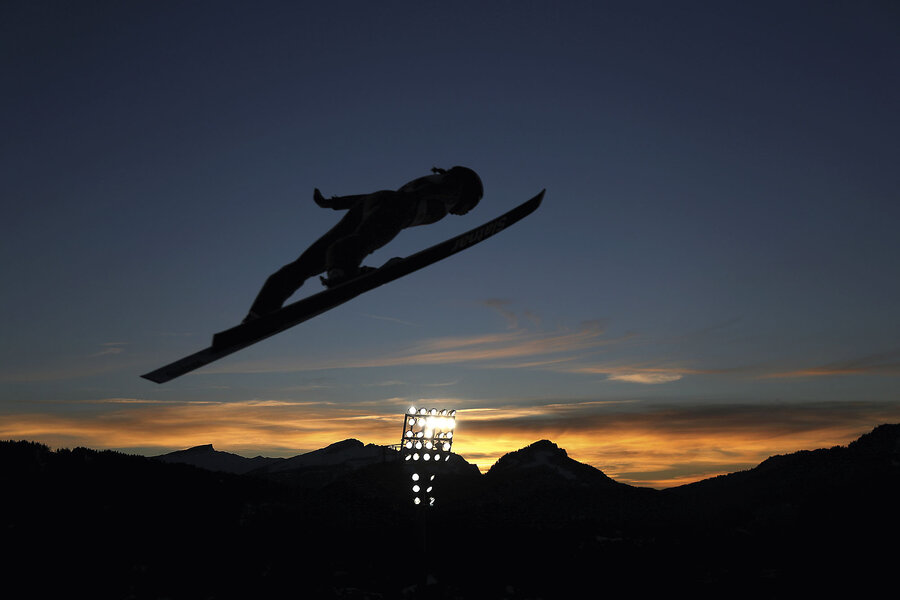
This year, there will be a second event in women’s ski jumping, large hill individual, which is an event that men have competed in since the first Winter Games in 1924. Ski jumping was the last winter event to remain men-only, with the women’s competition added in the 2014 Sochi Olympics – but only on the “normal hill.” And even back then, in 2014, on a dark night in Russia when female ski jumpers got their first night in Olympic glory, the athletes told the Monitor’s Mark Sappenfield that the large hill is where they belonged.
NHL players return with a swagger
Professional hockey players in the United States’ National Hockey League will be permitted to play in the 2026 Winter Games after not participating in the 2018 Olympics in Pyeongchang or the 2022 Olympics in Beijing.
Ahead of Pyeongchang, the NHL announced that its players would not be allowed to participate after the International Olympic Committee said it would no longer fund the travel, accommodations, and insurance for NHL athletes, which had been part of the agreement that the NHL and IOC struck back in 1995. Also at play in this decision was frustration among league owners and fans about the pausing of the NHL season for players to go abroad and compete, and the threat of injuries that could further disrupt the season back at home. And in 2022, the NHL announced that the league’s players would once again stay home, citing delays and concerns related to the COVID-19 pandemic.

Alessandro Bremec/NurPhoto/Reuters
This meant that, for the past two Olympics, the U.S. team was largely made up of retired NHL players, college athletes, and players from other leagues. And while there had been hopes for a “Miracle on Ice” moment during these two games, as in the 1980 Olympics, when a team of American amateurs beat the Soviet Union and later won the gold medal, the U.S. team was eliminated before the quarterfinals in both 2018 and 2022.
Needless to say, the U.S.’s chances for victory will rise this year. Having NHL players in the Winter Games is going to bring “a new level of excitement” to the hockey tournament, said U.S. Olympic and Paralympic Committee officials at a media summit last fall.
But hockey fans and NHL officials have expressed concern leading up to the Winter Games about the Santagiulia Arena, which remains under construction just weeks ahead of the opening ceremony. An early January test game on the ice, which will have serious wear and tear with several games a day, went well, but frustration lingers over the size of the rinks, which will be about 3 feet shorter than NHL rinks.
Debut of ski mountaineering
Ski mountaineering, also known as “skimo,” will make its debut at the Milan Cortina Games this month. The sport marries mountaineering with alpine and cross-country skiing. Athletes trek up a mountain, first with their skis on (which are outfitted with a piece of fabric called “skins” to prevent skiers from sliding downhill), then by foot with their skis on their back. They then remove the skins and ski downhill through a course. After its debut at the 2020 Winter Youth Olympic Games in Lausanne, Switzerland, the International Olympic Committee voted unanimously in 2021 to add the sport to the 2026 Winter Games.

A total of 36 athletes – 18 women and 18 men – will compete across three events. The women’s and men’s sprints are fast, with each race lasting about three minutes. Mixed relay is a little longer, with one male and one female athlete each making two ascents and descents. Though American athletes Anna Gibson and Cameron “Cam” Smith qualified to compete in the mixed relay after winning the first U.S. victory in a Skimo World Cup event in December, European athletes have long been leaders in this sport. Event favorites hail from France, Switzerland, Italy, and Spain. France’s Emily Harrop is a favorite to win the women’s sprint in the sport’s Olympic debut. Raised in the French Alps, Ms. Harrop began her athletic career in ski racing, before switching to skimo where she has remained dominant on the World Cup circuit. In the 2024-2025 season, Ms. Harrop won all seven of the sprints she competed in – including a race on the track in Bormio where she will compete during the final days of the Olympic Games.
U.S. figure skater, Ilia Malinin, has a jump on rivals
Few sports at this year’s Olympic Games have a star as bright – and dominant – as figure skating’s Ilia Malinin. Considered by fans and competitors alike to be a generational talent, Mr. Malinin hasn’t lost a competition in two years, including both national and world championships. At the U.S. Figure Skating Championships in January, Mr. Malinin won his fourth consecutive title with a score of 324.88 – more than 57 points above the second-place score. He has the three highest free skate scores ever, according to a tally by the International Skating Union (ISU), numbers that he’s largely able to rack up because of his ability to land quadruple jumps.

And land quads he does. A lot. Mr. Malinin, a 21-year-old from northern Virginia and the son of professional figure skaters who competed for Uzbekistan, goes by the nickname the “Quad God.” He first landed the quadruple axel – which, despite its name, is actually 4 1/2 rotations in the air – in 2022, and remains the only skater to do so in competition.
At the Grand Prix Final in Japan this past December, he landed seven quadruple jumps as well as a backflip, breaking his own record score. He has pushed the limits of the sport as it evolves alongside him, landing backflips that had previously been banned in competition for almost 50 years before the ISU changed the rule in 2024.
“I really want to push the sport to be one of the bigger sports again,” he told reporters at last year’s world championship in Boston. After not being named to the three-man U.S. figure skating team for the 2022 Olympics in Beijing, Mr. Malinin goes to Milan as a favorite for the gold.
U.S. Alpine skier Lindsey Vonn is back
When U.S. skier Lindsey Vonn announced her retirement in 2019, she had cemented her name as one of the most successful ski racers – male or female, from any country – of all time. At the 2010 Vancouver Games, she became the first American woman to win gold in downhill skiing; she also won bronze in the super-G. At Pyeongchang in 2018, she won another bronze in the downhill. Over her career, she has won more than 80 World Cups, the second most of any woman. And according to the “super ranking system” that calculates skiing wins from Olympic Games, World Cups, and World Championships, Ms. Vonn is the greatest female alpine skier of all time in the downhill, and the second best overall (behind fellow U.S. skier Mikaela Shiffrin) among women, and third best overall among men and women.

Now, Ms. Vonn is back. At 41 years old, she became the oldest World Cup winner in downhill skiing, man or woman, when she captured her 83rd such win in December and her first since 2018. At the U.S. Olympic and Paralympic Committee media summit this past fall, Ms. Vonn told reporters that when she retired in 2019, she was proud of what she had accomplished in her career, though she felt like mentally she “could have gone longer.”
A crash and injury while competing in Switzerland on Jan. 30 has raised questions about Ms. Vonn’s Olympic goals, but she told her followers on social media that her “Olympic dream is not over” because if there’s “one thing” she knows how to do, “it’s a comeback.” Despite her recent fall and being twice the age of some of her competitors, Ms. Vonn still plans to compete in her fifth – and what she says will be her final – Olympics. “The whole time I was contemplating this comeback,” Ms. Vonn told reporters in October, “… my goal has always been Cortina.”
U.S. speedskater Jordan Stolz poised to make history
To assess the potential stardom of U.S. speedskater Jordan Stolz, look no further than NBC’s promotional video for the 2026 Milan Cortina Games, starring Mr. Stolz alongside movie star Glen Powell. Or one could watch the video of Mr. Stolz winning the mass start at an Olympic trials race in early January, when he crossed the finish line several seconds before the rest of the pack. “No one in this field will catch Jordan Stolz,” said a commentator during the race. “He is gone.”

Geir Olsen/NTB Scanpix/AP
Mr. Stolz qualified to compete for the United States in four events in Milan – the 500-meter, 1,000-meter, 1,500-meter, and the mass start – and he is a favorite for gold in all four. He is first in the International Skating Union’s World Cup rankings for the 500-, 1,000-, and 1,500-meter races and has two world championship titles in each of these categories. Mr. Stolz, who started skating as child on his backyard pond in Wisconsin after watching U.S. short track star Apolo Ohno earn medals at the 2010 Vancouver Games, also holds the world record for the 1,000-meter. At a media conference in New York City this past fall, Mr. Stolz said the 1,000-meter was his favorite race, telling reporters going that distance at top speed “suits me best.”
He faces some competition from Dutch rival Jenning de Boo, but like Mr. Ohno, the man he watched skate as a child, Mr. Stolz is expected to make Winter Games history for the U.S.
From mall rinks to Olympic history
At the 2022 Winter Games in Beijing, figure skater Donovan Carrillo finished 22nd out of 29 competing male skaters. But he still made history.
Four years ago, Mr. Carrillo was the first Mexican male figure skater in 30 years to compete in the Winter Games, and the first Mexican male figure skater to qualify for the free skate. This year, he is set to make history again as one of only four athletes to represent Mexico at the 2026 Winter Games, alongside cross-country skiers Regina Martínez Lorenzo and Allan Daniel Corona Rodríguez, and alpine skier Sarah Schleper. Mr. Carrillo qualified for Milan Cortina after winning a bronze medal at International Skating Union’s qualifier competition in Beijing last September.

Figure skating is not a popular sport in Mexico (there are more international airports in the country than there are skating rinks, according to the Los Angeles Times), which means that Mr. Carrillo largely trained on small rinks inside malls – with shopping music playing overhead and small children learning how to skate alongside him as he practiced his jumps and routines. When the rink in his hometown of Guadalajara closed, he moved three hours away at age 13 to be near a new rink in Léon with his coach. “By choosing ice, something that Mexicans only see in their drinks, it became really complicated,” Mr. Carrillo’s father said ahead of the 2022 Games.
After his appearance in Beijing, “many doors were opened,” says Mr. Carrillo, including the opportunity to train in Canada. Mr. Carrillo’s history-making appearance speaks to a larger question that has beleaguered Olympic organizers and fans for as long as the games have existed, which is how the cold-weather event could include more countries in Latin America and Africa that have long been absent from the Winter Games. Some advocates have suggested adding other events, such as cross-country running or judo, to future Winter Games.
Johannes Høsflot Klæbo dominates cross-country skiing
He’s not yet 30 years old, but Johannes Høsflot Klæbo of Norway is already the winningest male cross-country skier of all time. Between the 2018 and 2022 Winter Games, he won seven medals – one bronze, one silver, and five golds – across four events, and became the youngest cross-country Olympic champion of all time in Pyeongchang, South Korea. He has 18 World Championship medals, including 15 golds. At the 2025 World Championships in his hometown of Trondheim, Mr. Klæbo won gold in six out of six events. Oh, and he is the most successful overall race winner in World Cup history. This February, at the Tesero Cross-Country Skiing Stadium in Val di Fiemme, Italy, Mr. Klæbo has a chance to win six gold medals at one Olympic Games – which would be the most of any athlete at one Winter Games. American swimmer Michael Phelps, the most decorated Olympian of all time, holds the record for the most golds at one Olympics, when he won eight gold medals at the 2008 Summer Games.

Maxim Thore/Bildbyran/Sipa USA/Reuters Connect
Despite Mr. Klæbo’s dominance, and expectations for more golds in Milan Cortina, the Norwegian’s biggest competition comes from his own peers. Certain countries have long had connections with certain winter sports, and this is most true for Norway and cross-country skiing, which was a means of travel, exploration, and defense centuries ago. Going into the 2026 Winter Games, six of the top 10 cross-country skiers in World Cup standings are from Norway.
Alpine dexterity: Ester Ledecká of the Czech Republic
For Czech athlete Ester Ledecká, the question wasn’t whether she would have the opportunity to compete at the 2026 Winter Olympics in Milan Cortina. For Ms. Ledecká, the question became which sport she would compete in. At the 2018 Winter Games in Pyeongchang, South Korea, Ms. Ledecká won gold medals in two different sports: the super giant slalom race in alpine skiing, in a surprising upset by 0.01 seconds; and the parallel giant slalom in snowboarding. She also became the first person to not only compete in the Winter Games in two different sports with different equipment, but also the first person to win gold medals in two different sports at one Olympics. She again competed in both snowboarding and skiing at the Beijing Games in 2022, and again won gold in snowboarding’s parallel giant slalom while placing fifth in skiing’s super-G race and 27th in the downhill.

But the 2026 Milan Cortina Games presented a logistical challenge for this dual-sport champion. Taking place across northern Italy, 2026 Milan Cortina will be the most geographically widespread games in Olympic history, with competition in hubs in Milan, the Italian Alps, as well as the Italian Dolomites. And, this year, women’s downhill skiing and women’s snowboard parallel giant slalom both take place midday on Feb. 8 – and more than 160 miles apart. Ms. Ledecká’s appeal to the International Olympic Committee was unsuccessful, so she decided to forgo the downhill and compete in parallel giant slalom, in which she already has two gold medals. But she still plans to compete in skiing at this Olympics, given that the alpine super-G race is several days later – giving Ms. Ledecká more time to make the half day’s travel between venues.