Carried out with gruesome, sadistic relish by killers who seemed to revel in their notoriety, these are murders which still transfix America today.
In 1947 an aspiring Hollywood actress known as the Black Dahlia was found dead in Los Angeles. Her mutilated body was severed clean in half at the waist, a grotesque smile carved into her cheeks.
Two decades later, the ‘Zodiac’ killer emerged from the shadows and plunged northern California into a world of fear. Stalking young couples under cover of darkness, this second monster claimed at least five victims and taunted the police and newspapers with letters and cryptograms, daring them to unravel his identity.
They failed. Despite long-running investigations into both killers, no one has ever faced justice. And, for years, it seemed that no one ever would.
Yet, today, an amateur sleuth has stepped forward to make an extraordinary claim: that not only has he identified the perpetrators of both the Black Dahlia and Zodiac killings – but that the two are one and the same.
Investigator Alex Baber says the man responsible for all six deaths – and possibly many more – was a former US Navy corpsman called Marvin Skipton Margolis.
Not only had Margolis been in a relationship with the Black Dahlia, whose real name was Elizabeth Short, in the months before she died, he also owned a Japanese bayonet that matched the injuries on two Zodiac victims.
His military training had involved sharpshooting – several victims were shot – and, as a Navy medic, he knew how to dismember bodies with surgical precision. He also had experience in code-breaking.
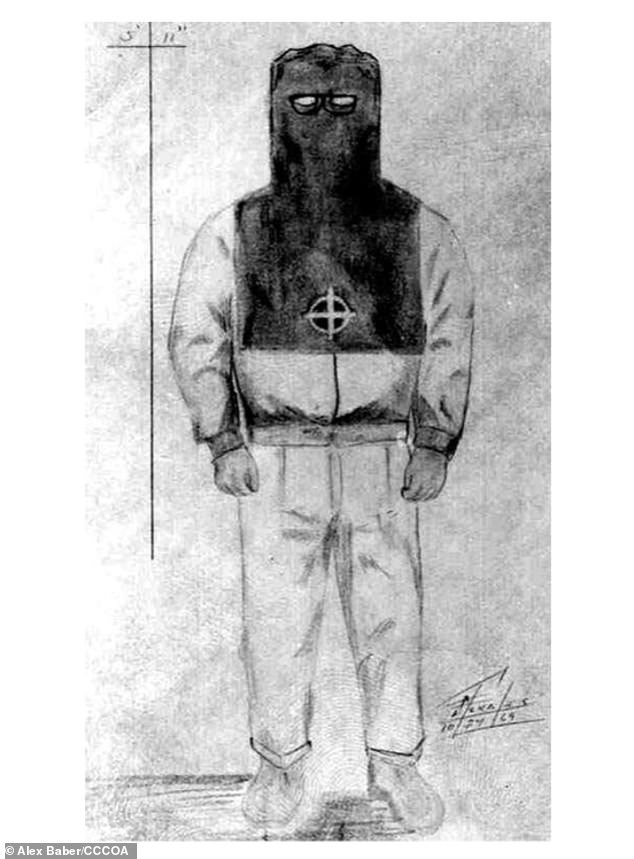
The killer was wearing a black cloth hood emblazoned with the Zodiac’s crosshair symbol
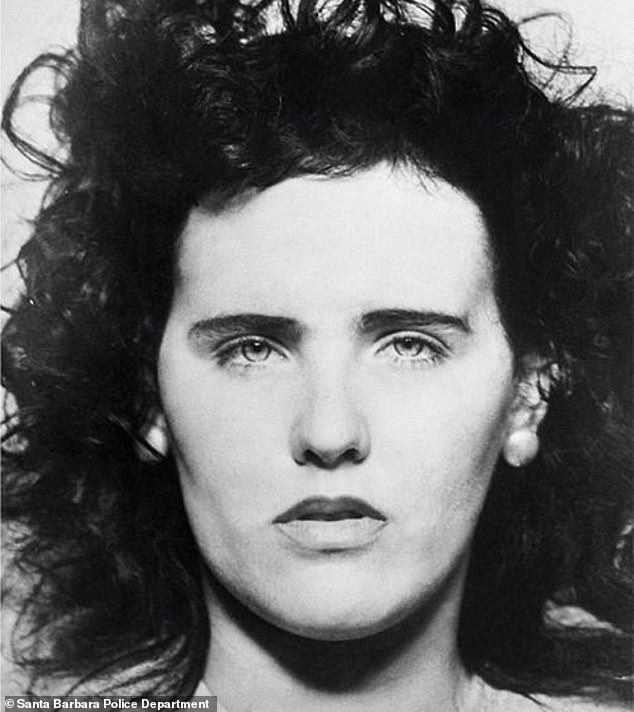
Two decades earlier in 1947, aspiring Hollywood actress Elizabeth Short, who became known as the Black Dahlia, was found dead and her body mutilated in Los Angeles
Baber suggests Margolis even made a deathbed ‘confession’. If his theory is proved correct, it will be one of the greatest breakthroughs in the history of true crime.
And, so far at least, Baber is being taken very seriously indeed, with a number of Californian law enforcement bodies now going through his findings.
It was the morning of January 15, 1947, when a woman walking with her child through LA’s Leimert Park neighbourhood came across a horrifying sight: a naked body chopped in two. The cutting was precise, with care taken not to damage the vital organs.
The killer had carved a chunk of flesh from her left thigh, removed a large square of skin from her right breast and cut away a flap of skin beside her left nipple.
There were several more cuts and slashes to her chest and a four-inch gash from her navel to her lower abdomen, and a criss-cross pattern had been cut into her skin.
A grotesque grin had been carved into her youthful face, extending two to three inches upward from each corner of her mouth. Despite the extreme disfigurement, there was no blood at the scene.
Investigators concluded that the victim had met her horrific end elsewhere and that her body had been washed before it was dumped in the open for public discovery.
She was soon identified as 22-year-old Elizabeth Short, who had moved from her home state of Massachusetts to Hollywood in search of stardom.
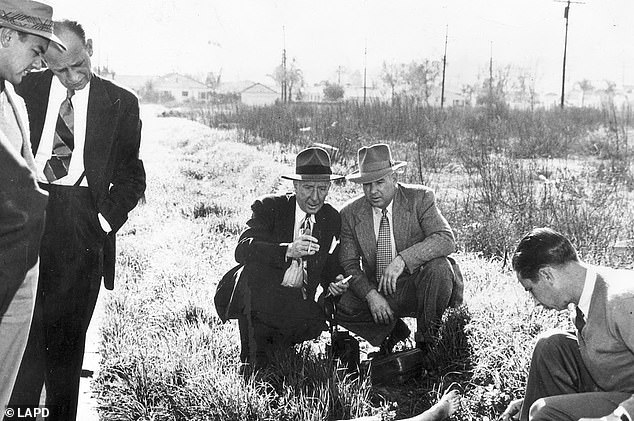
It was the morning of January 15, 1947, when a woman walking with her child through LA’s Leimert Park neighborhood came across a horrifying sight: a naked body sliced cleanly in two at the waist. Law enforcement are seen on the crime scene

The motel formerly known as the Zodiac Motel where Baber believes Elizabeth Short was mutilated by her killer
The press called her the Black Dahlia, a nickname given to her by friends because of her sheer black clothing and dark hair.
The murderer then began corresponding with local newspapers. It started with a phone call to Jimmy Richardson, an editor at the Los Angeles Examiner, on January 23, 1947.
The caller said he wanted to ‘congratulate’ Richardson on the newspaper’s coverage of the murder but noted that ‘you seem to have run out of material’. He promised to mail some of Short’s belongings.
The following day, a package was intercepted by postal authorities. Words cut from newspapers and magazines and pasted on the envelope read: ‘Here is Dahlia’s Belongings, Letter To Follow’.
Inside were photographs, Short’s birth certificate, an address book and other personal papers.
Another letter soon followed – this one handwritten in capital letters on a one-cent US government postcard. The sender claimed that he’d ‘had [his] fun at police’ and promised to surrender on January 29. It was signed: ‘Black Dahlia Avenger’.
January 29 came and went. No one appeared.
Struck by the precision with which Short’s body had been dissected, detectives believed that the killer had surgical training and focused on students at nearby medical schools.
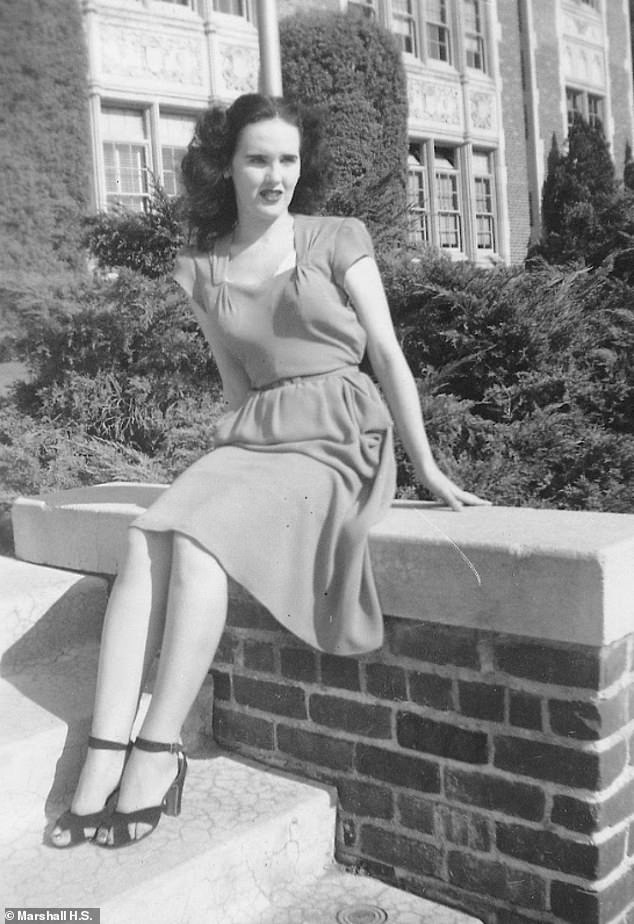
Elizabeth Short, 22, is pictured outside John Marshall High School in Los Angeles. She had moved from Massachusetts to Hollywood in search of stardom
Short’s former lover quickly came under suspicion.
Born in Chicago in 1925 to parents of Russian and Polish origin, Marvin Skipton Margolis had long hoped to be a surgeon and had moved to LA to start medical training.
As the grand jury records later said: ‘It should be noted further that this suspect… is the only pre-medical student who ever lived as a boyfriend with Beth Short.’
Based on investigative records, Baber believes Short and Margolis met in Chicago in the summer of 1946 and began dating.
Grand jury records show that Short moved into an apartment with Margolis, her friend Margorie Graham and Margolis’s friend Bill Robinson in October 1946, three months before Short’s murder. Margolis’s friendship with Robinson is interesting in its own right. During the war, Robinson had served in the US Army’s Signal Intelligence Service – the military’s code-breaking division – which used the cryptographic techniques later seen in the Zodiac ciphers two decades later.
Short’s relationship with Margolis soon unravelled. In the weeks before her death, she confided in friends and acquaintances that she feared she’d lose her life at the hands of a jealous ex.
On January 14, 1947, Officer Myrl McBride later recalled a troubling encounter with a woman she identified as Short at a bus station.
The woman approached McBride, sobbing hysterically, saying that she had bumped into her ‘insanely jealous’ ex-Marine boyfriend, who had threatened to kill her if she went out with another man.
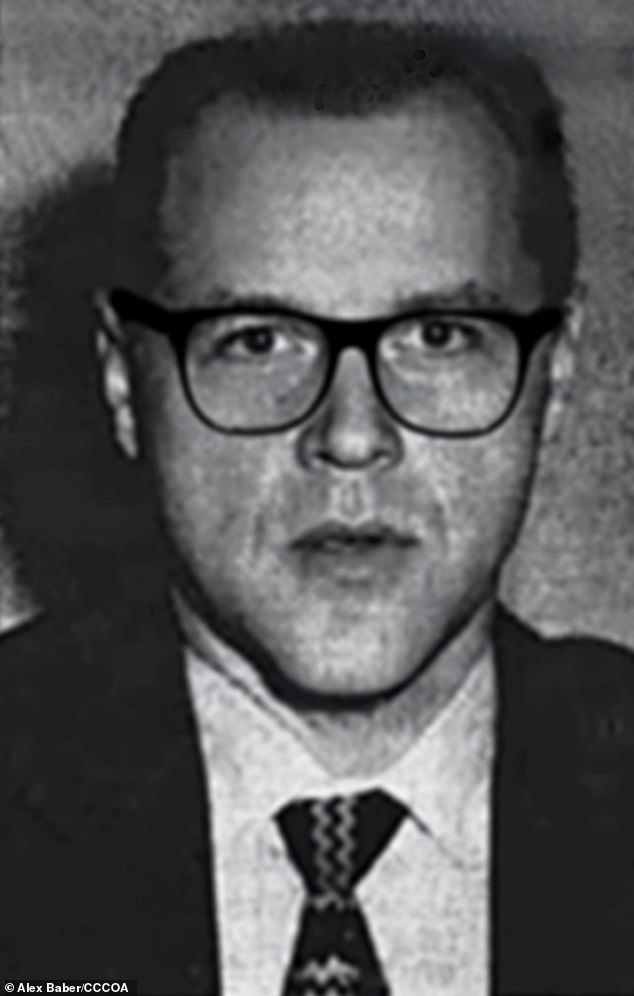
Marvin Skipton Margolis was a prime suspect in the murder of Elizabeth Short. He is seen in an enhanced image obtained by Alex Baber
McBride escorted the woman to retrieve her handbag from a nearby bar where she had seen her ex. They then parted ways. What exactly unfolded in the few hours between this sighting and the discovery of Short’s mutilated body the following morning is known only to her killer.
But that night, witnesses waiting at a bus stop in North Long Beach reported screams coming from a passing black sedan. Inside, they saw a man and woman in the front seat, and a second woman being pinned down by a fourth person in the back.
That same night, a man driving a black sedan approached at least three motels around San Pedro asking for a room with a bath.
Employees at the Harbor Moon Motel, Normandie Motel and Hillcrest Motel all recalled a nervous, jittery individual who matched Margolis’s physical description. This man said he needed a bathtub for his wife and when no suitable room was available, he left.
Because there was no blood at the spot where Short’s body was found, investigators theorised that she had been dissected and washed in a bathtub.
Roughly ten miles north of the three motels was a place called the Zodiac Motel which had opened in June 1946 in Lynwood, a suburb of LA. A 1951 auction listing for the same 22-lot property describes ‘modern facilities’ including a ‘bath’.
While the inspiration for the Zodiac killer’s moniker has long been attributed to a watch brand, Baber’s investigation suggests it may instead have referred to the motel where Short took her last breath. Social Security documents show that, following Short’s murder, Margolis began using the last name Merrill.
Police tried to track him down in Chicago for further questioning but were unable to find him, and the case went cold. No one was ever charged.
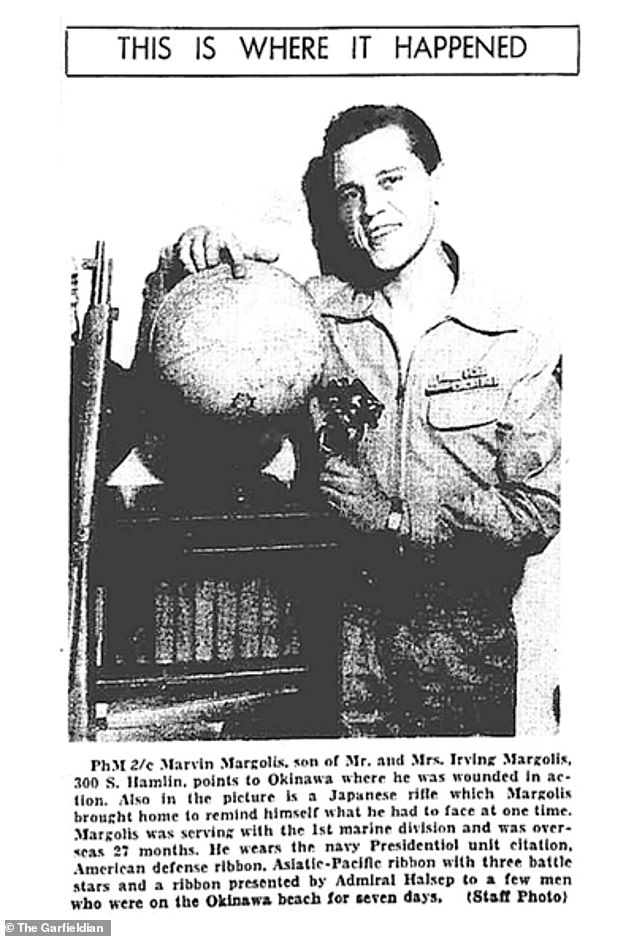
Margolis appeared in local paper The Garfieldian after he returned home from World War II. The article showed him posing with a Japanese military rifle
Merrill (as he was now known) married his first wife, had two children and worked as a used car salesman. When his first marriage ended, he remarried and had two more children.
Moving to Kansas in 1960, he reinvented himself as an artist and was the subject of a newspaper article in which he claimed to have studied under Salvador Dali.
Eventually, in the spring of 1962, Merrill returned to the West Coast and started working in property.
And it wasn’t long before terror returned to California. By the end of 1969, five victims were dead and two injured across four apparently random attacks in the region.
Quiet beauty spots in the Bay Area were stalked by a serial killer who called himself ‘the Zodiac’ and adopted a distinctive crosshair symbol.
The killer’s first confirmed attack occurred on the night of December 20, 1968.
David Faraday, 17, and Betty Lou Jensen, 16, were found murdered along a lovers’ lane on Lake Herman Road just outside Vallejo. Faraday was killed with a single shot to the back of the head with a .22-caliber semi-automatic sidearm. Jensen was hit five times as she ran for her life.
On July 4, 1969, the killer struck again three miles away, shooting Darlene Ferrin, 22, and Michael Mageau, 19, as they sat in Ferrin’s car in Blue Rock Springs Park, Vallejo.
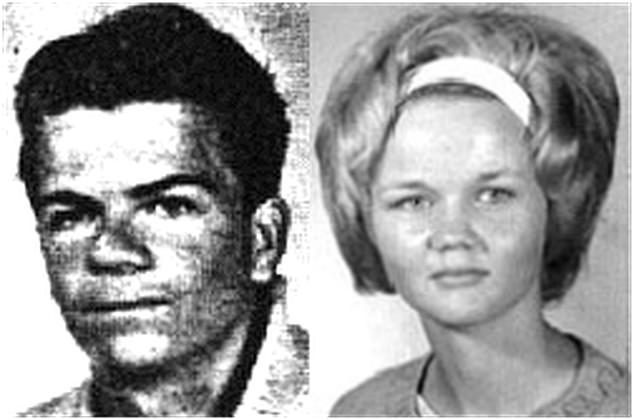
The Zodiac killer targeted Darlene Ferrin, 22, and Michael Mageau, 19, in Blue Rock Springs Park, Vallejo, on July 4, 1969
Ferrin died after being shot nine times. Mageau was hit four times and survived, later telling police that the attacker simply walked up to the car and opened fire without uttering a word.
Later that month, the Zodiac began his game with the media, sending letters to three local newspapers in which he claimed responsibility for both attacks and included his first cipher.
On August 2, 1969, the so-called ‘Z408’ cipher was published, shocking the public and setting off a race to crack the killer’s code. Within days, a couple had succeeded.
‘I like killing people because it is so much fun … man is the most dangerous animal of all to kill,’ it read in part.
In a letter to the Examiner on August 4, the killer revealed his chilling moniker for the first time, writing: ‘This is the Zodiac speaking.’
The next confirmed kill came on September 27, when a man wearing a black cloth hood emblazoned with the Zodiac’s crosshair symbol attacked Bryan Hartnell, 20, and Cecelia Shepard, 22, in Lake Berryessa, a remote beauty spot in Napa County.
After holding the couple at gunpoint, the assailant stabbed them repeatedly with a bayonet-type weapon. Shepard later died from her injuries. Hartnell survived.
According to Baber’s analysis of a 1945 photograph and accounts from Merrill’s youngest son, Merrill had returned home from the war with a Japanese Nagoya rifle mounted with a Type 30 bayonet.
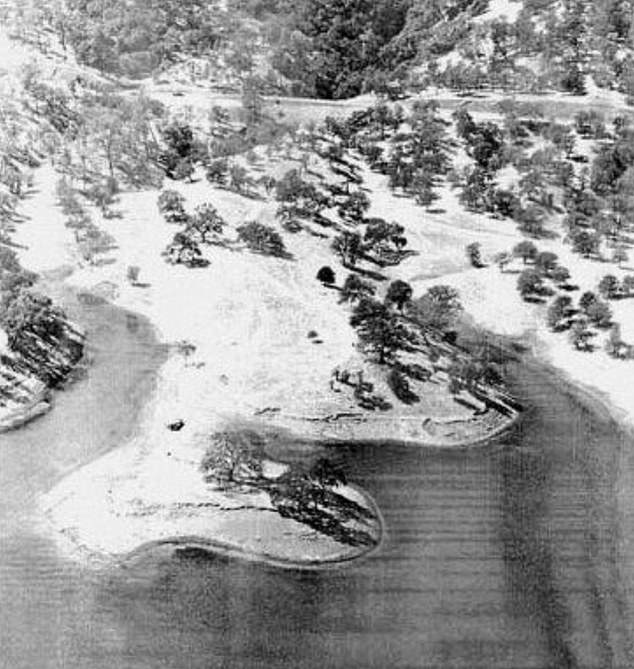
The next confirmed kill came on September 27, 1969, in the remote beauty spot of Lake Berryessa
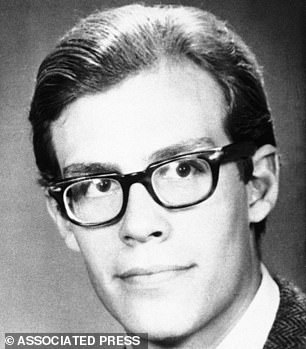
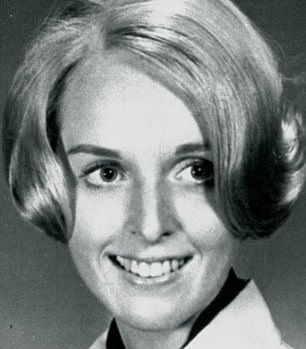
Bryan Hartnell, 20, survived but Cecilia Shepard, 22, died from her injuries after being stabbed multiple times
Days after the Lake Berryessa attack – on October 11 – 29-year-old cab driver Paul Stine was shot dead in his taxi in the upmarket Presidio Heights neighbourhood of San Francisco.
Initially, his death was treated as an unrelated robbery until the Zodiac sent a piece of Stine’s blood-stained shirt to the San Francisco Chronicle.
The Zodiac’s final letter, sent in 1974, boasted of 37 victims, and several other crimes are thought to bear the killer’s hallmarks.
The case against Margolis, although circumstantial, is compelling. In 1943, he joined the US Navy and served with the 1st Marine Division in the medical corps. It was there he learned both the surgical and marksmanship skills seen in the Zodiac and Black Dahlia crimes.
During the Second World War, he was stationed overseas for just over two years and took part in the Okinawa campaign, the last major battle between American and Japanese forces. He left the Navy citing mental problems.
When, in 1946, he moved to LA to study medicine, his first task was to dissect a human corpse.
He died in California in 1993, taking his secrets with him – or so it has long been thought.
Yet a box of evidence handed to Baber – who works with a group called Cold Case Consultants of America – by Merrill’s youngest son could now bring those secrets into the open.
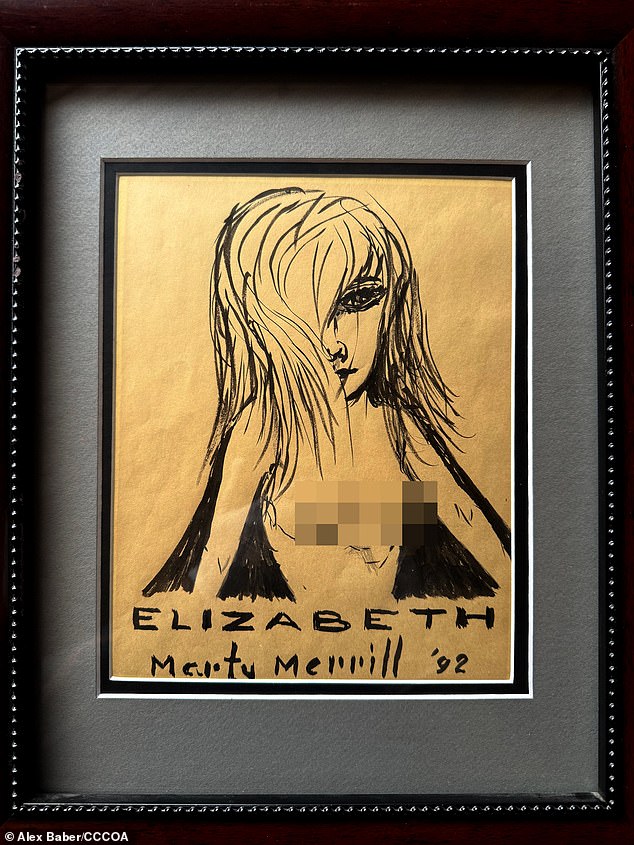
Among the most damning pieces of evidence is one of the final sketches Merrill produced, depicting a naked woman named ‘ELIZABETH’
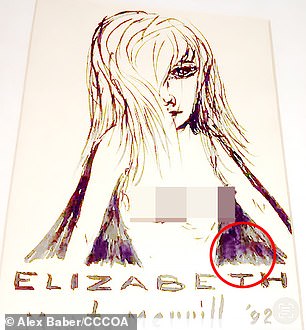
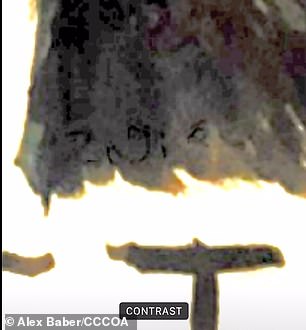
Using image-enhancement software, Baber searched for further clues. The software revealed what appears to be the word ‘ZoDiac’ hidden beneath the ink
The box contained a drawing in black ink depicting a nude woman’s body from the waist up. Distinctive markings on her body closely resemble the injuries inflicted on Short. If the sketch does depict Short, Merrill revealed details only the killer could have known.
Beneath the figure appears the name ‘ELIZABETH’, written in distinctive capital letters that look eerily similar to the handwriting in the Zodiac’s letters.
The sketch is signed ‘Marty Merrill ’92’, matching his signature on cheques and other documents provided by his son.
Using image-enhancement software, Baber searched for further clues, finding what appears to be the word ‘ZoDiac’ hidden beneath the ink.
To Baber, the sketch is Merrill’s deathbed confession – he had been diagnosed with cancer that year. Baber views it as the single piece of physical evidence in which the killer links both the Zodiac and Black Dahlia crimes.
There is more. During his campaign of terror, the Zodiac sent four ciphers: the Z408 in July 1969; the Z340 in November 1969; the Z13 in April 1970; and the final, Z32, in June 1970.
While the Z408 was solved almost immediately, it took another 51 years for the Z340 to be cracked by a team of international code-breakers in December 2020.
Its message included the chilling boast: ‘I hope you are having lots of fun in trying to catch me. I am not afraid of the gas chamber because it will send me to paradice [sic] all the sooner because I now have enough slaves to work for me.’
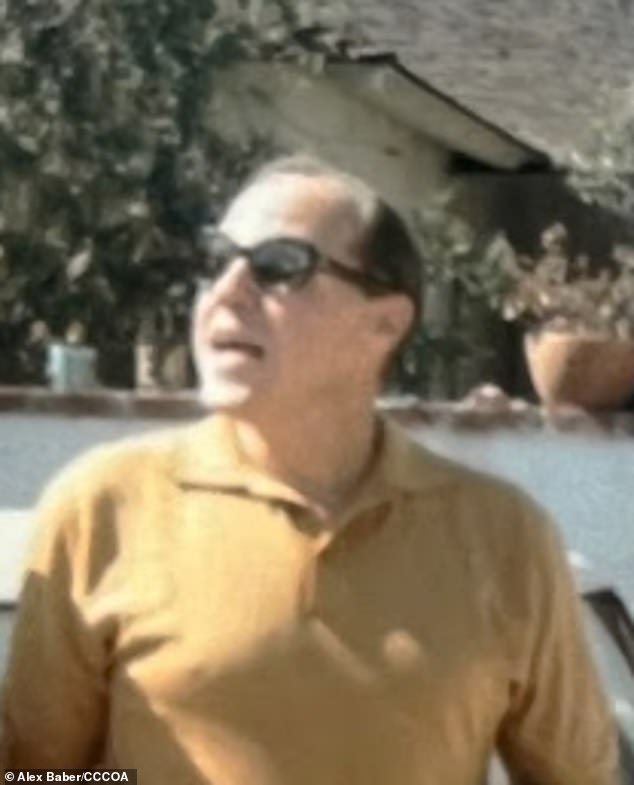
Marvin Merrill in an undated family photo. Merrill’s youngest son told the Daily Mail he does not believe his father is the perpetrator of the Black Dahlia and Zodiac crimes
The Z13 and Z32 have never been conclusively solved.
The Z13 is widely believed to conceal the Zodiac’s real name, with its 13-character code preceded by the teaser: ‘My name is -‘Baber claims he has now decrypted the Z13, using AI technology, newly released Census records from 1950 and mirroring the methodologies used to crack the Z340 cipher.
By cross-referencing them all he arrived at a single potential suspect: Marvin Merrill.
When contacted by the Daily Mail, Merrill’s youngest son, who wishes to remain anonymous, called Baber’s findings ‘a speculative cesspool’ and ‘fiction’.
Baber, though, is adamant. He managed to speak to one of Elizabeth Short’s last surviving family members before she died. ‘I told her that we’d see this to the end, and I’d do my best to get justice.’
She died before learning who was responsible for her loved one’s monstrous death. But, for others, it’s not too late to find the truth. As Baber puts it: ‘We need to give people answers before they pass.’