As the Middle East conflict intensifies with Tehran targeting oil facilities and wreaking havoc across the Gulf, speculation is mounting over which nations will be drawn into a direct confrontation.
On the 21st day of the war, Saudi Arabia threatened retaliation as it intercepted over a dozen drones in its eastern and northern regions.
Meanwhile, UAE authorities announced the arrest of five members of an Iran-linked ‘terrorist network’ involving Hezbollah.
In Bahrain, the interior ministry blamed ‘Iranian aggression’ for a warehouse fire caused by shrapnel, while drone strikes hit Kuwait’s Mina Al-Ahmadi refinery, sparking several blazes.
Amidst this volatility, Donald Trump has called for a new American front against Iran as US jets engage Iranian ships in a pitched battle to reopen the Strait of Hormuz.
As the escalating violence continues, the Daily Mail has ranked the likelihood of regional players taking up arms on a scale of 1 to 10.
Click on the map below to see the rankings for each country.
Hezbollah (Lebanon) – Probability: 10
Hezbollah is already fully engaged in the war and shows every sign of sustained involvement.
Within two days of the initial February 28 strikes, the group resumed rocket and drone attacks on Israel and formally declared it was joining the fight to eliminate US presence in the region.
Since then, Hezbollah has launched hundreds of rockets and drones in coordination with Iran‘s IRGC, often firing simultaneously with Iranian ballistic missile salvos to overwhelm Israeli air defences.
Israeli forces have responded by entering southern Lebanon, killing hundreds of Hezbollah fighters.
Iran-aligned Iraqi Militias – Probability: 10
Iran-backed militias in Iraq are already deeply involved and are highly likely to continue.
The ‘Islamic Resistance in Iraq,’ a coalition of Iran-aligned groups, has launched hundreds of missile and drone attacks targeting US and strategic infrastructure.
Targets have included the US Embassy in Baghdad, Baghdad International Airport, airports in Iraqi Kurdistan, and key oil and gas sites.
These attacks began within days of US-Israeli strikes on Iran, with Tehran and its Iraqi allies quickly moving to hit US positions.
Efforts by Washington to pressure Baghdad to disarm these groups have largely failed, as they retain strong support among segments of Iraq’s Shia population.
Their continued refusal to disarm has effectively drawn Iraq further into the current conflict.
Houthis (Yemen) – Probability: 8
The Houthis have signalled a strong willingness to escalate, though they have not yet fully committed militarily.
Large demonstrations in Sanaa have shown public support for Iran, while the group’s leadership has made clear it is ready to act.
‘Our fingers are on the trigger, ready to respond at any moment should developments warrant it,’ leader Abdul Malik al-Houthi said.
Despite this, the group has so far stopped short of launching the kind of large-scale missile campaigns seen in previous years.
Analysts say this is a deliberate strategic pause rather than restraint.
Michael Hanna of the International Crisis Group told The National: ‘There are some theories, of course, and some of them are plausible, including one that says the Iranians are holding off Houthi attacks on Red Sea shipping in reserve, as part of strategic patience. It’s a potentially major escalation that could be used by Iran at some point in the future.’
Salma Hassan added: ‘The idea that the Houthis are showing restraint out of humanitarian concern does not hold water. They had never prioritised the welfare of civilians. What we are seeing is a strategic pause.’
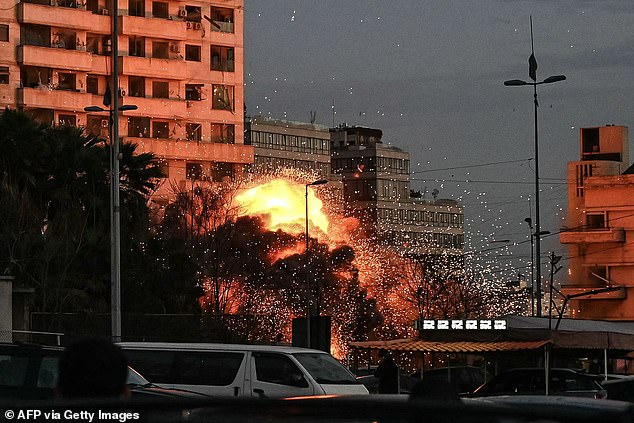
A fireball rises from the site of an Israeli airstrike that targeted a building in Beirut’s Bashoura neighbourhood
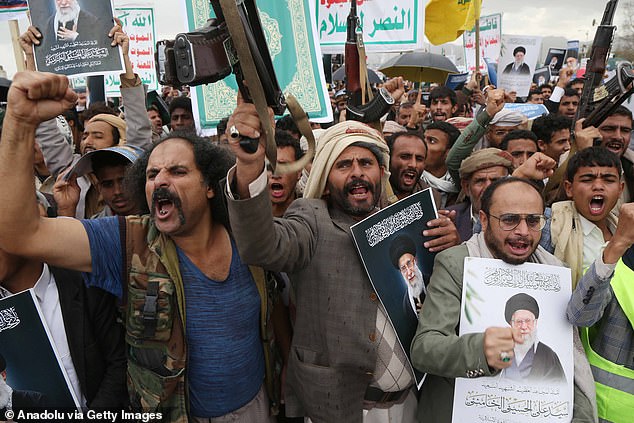
Thousands of people gather at Sabeen Square, under the control of the Iran-backed Houthis in Yemen, to protest the killing of Iran’s leader Ali Khamenei
Kurdish Forces (Western Iran) – Probability: 8
Kurdish groups in western Iran are mobilised and eager to join the fight, but their involvement appears to be contingent on US support.
Babasheikh Hosseini, general secretary of the Khabat Organisation, told The Telegraph: ‘If we are not on this battlefield, the end of the regime will either not occur, or be delayed by a lot.’
Kurdish factions believe the current moment presents a rare opportunity to topple the Iranian regime and advance their long-standing ambitions for autonomy or independence.
However, mixed signals from Washington have created uncertainty for them.
‘We want to understand America’s policy,’ Hosseini said. ‘We don’t understand their position at the moment. We can still launch an invasion alone, but with their help it will be much better.’
Despite this, Kurdish forces remain ready to act, with leadership insisting that ‘the conditions are great for us to go into Iran.’
Saudi Arabia – Probability: 7
Saudi Arabia has adopted an increasingly assertive stance as Iranian strikes continue across the region. Riyadh has warned that its patience is ‘not unlimited’ and has explicitly reserved the right to respond militarily.
Foreign Minister Prince Faisal bin Farhan said: ‘This pressure from Iran will backfire politically and morally and certainly we reserve the right to take military actions if deemed necessary.’
He added: ‘The patience that is being exhibited is not unlimited.’
Saudi Arabia has already been targeted by hundreds of Iranian missiles and drones, most of which have been intercepted.
In the latest escalation, Iran accused Israel of striking its facilities in the huge South Pars gas field on Wednesday.
It retaliated by firing missiles at Qatar and Saudi Arabia as it vowed attacks on oil and gas targets throughout the Gulf, sending already elevated oil prices shooting higher.
‘The level of accuracy in some of this targeting – you can see it in our neighbours as well as the kingdom – indicates that this is something that was premeditated, preplanned, preorganised and well thought out,’ Prince Faisal said.
Bahrain – Probability: 6
Bahrain has moved quickly away from neutrality, citing its right to respond to Iranian attacks. As host of the US Navy’s Fifth Fleet, it is deeply integrated into the American military response in the region and has already been targeted by Iranian strikes.
The Kingdom’s Council of Representatives stressed the ‘legal right’ to take ‘all necessary measures’ in response to what it described as ‘heinous’ attacks.
Bahrain has also taken a leading diplomatic role, circulating a UN Security Council resolution condemning Iran’s missile and drone strikes and demanding their immediate cessation.
Direct attacks on its oil infrastructure, including a refinery strike near Manama that caused injuries, further increase the likelihood of their involvement.
On Friday, Bahrain announced that it intercepted and destroyed 242 drones and 141 missiles since the start of Iranian attacks on its territory.
Qatar – Probability: 6
Qatar’s position has hardened significantly following direct strikes on its energy infrastructure, particularly the Ras Laffan facility.
Iran retaliated by striking Qatar’s Ras Laffan site on Wednesday and early on Thursday after Israel’s attack on the South Pars site, which is located offshore between Iran and Qatar.
The government described the attack as ‘brazen’ and a ‘direct threat to its national security,’ warning that Iran’s actions are ‘pushing the region toward the abyss.’
It has also made clear it ‘reserves its right to respond.’
Two Iranian diplomats and their staff were ordered to leave Qatar within 24 hours after the strike.
At the same time, Doha continues to call for de-escalation. Prime Minister Sheikh Mohammed bin Abdulrahman al-Thani said: ‘This war needs to stop immediately. The aggression needs to stop immediately.’
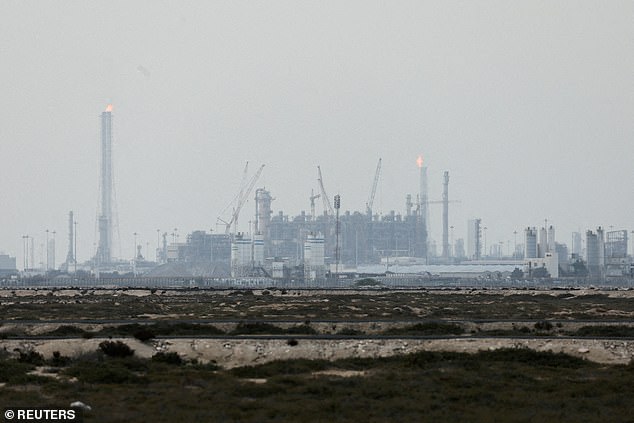
QatarEnergy’s liquefied natural gas (LNG) production facilities in Ras Laffan Industrial City
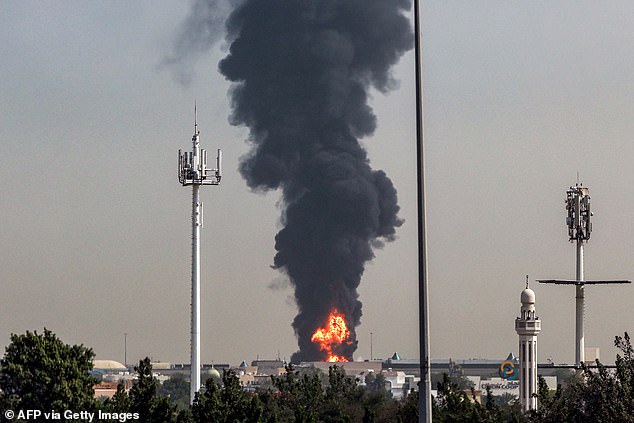
A smoke plume rises from a fire at Dubai International Airport in Dubai on March 16
United Arab Emirates – Probability: 5
The UAE has shifted to a defensive position after suffering significant Iranian strikes, including attacks on Dubai International Airport and the Habshan gas facility.
Abu Dhabi has reaffirmed its ‘full right to take all necessary measures’ and declared itself in a ‘state of defence’ in response to what it called ‘brutal and unprovoked Iranian aggression.’
At the same time, A senior UAE official said his country had chosen restraint, after Iran said the US military had used the UAE to strike Kharg Island, home to Iran’s main oil export terminal.
President Sheikh Mohamed in high-level talks in Abu Dhabi this week emphasised the importance of bringing the military escalation in the region to an immediate halt
Since the start of Iran’s attacks, UAE air defences have dealt with 327 ballistic missiles, 15 cruise missiles, and 1,699 drones.
Kuwait – Probability: 5
Kuwait has been directly targeted by Iranian missile and drone strikes, including attacks on the Mina Al-Ahmadi refinery on Friday.
The Emir stated: ‘Our country has been subjected to a brutal attack by a neighbouring Muslim country… even though we have not permitted the use of our land, airspace, or coasts for any military action against it.’
He also emphasised Kuwait’s ‘full and inherent right to self-defence.’
While Kuwait insists it will not be used as a launchpad for offensive operations, repeated attacks on its territory increase the likelihood it may be forced to respond.
On Friday it was reported that its Mina Al-Ahmadi refinery was hit again by an Iranian drone attack, causing a huge fire.
The official Kuwait News Agency, citing the national oil company, said ‘several hostile drone attacks’ hit the Mina Al-Ahmadi refinery, causing fires but no casualties.
It said firefighters were working to contain the blazes while ‘several refinery units were shut down’.
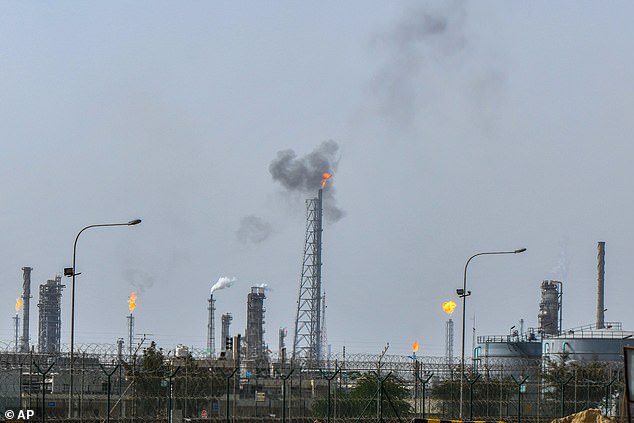
On Friday it was reported that its Mina Al-Ahmadi refinery was hit again by an Iranian attack
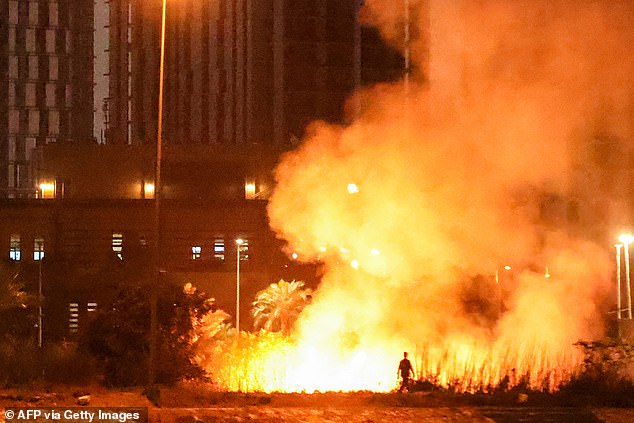
A fire burns on the grounds of the US Embassy in Baghdad’s fortified ‘Green Zone’ on March 17
Iraq (Government) – Probability: 5
The Iraqi government is attempting to maintain a diplomatic position, even as Iran-aligned militias operate from within its borders.
Prime Minister Mohammed Shia’ al-Sudani condemned the ‘unjust war’ targeting Iran and reiterated Iraq’s commitment to ‘security and stability’ and to resolving the conflict through dialogue.
During a call with Iranian President Masoud Pezeshkian last week Shia’ al-Sudani said that while Iraq respects Iran’s security and sovereignty and will not allow any party or individuals to use its territory to launch attacks against Iran, the attacks targeting Iraqi territory constitute a violation of Iraq’s sovereignty and security.
He said these attacks were ‘unacceptable and undermine Iraq’s efforts to end the war and restore dialogue.’
Baghdad’s ability to remain fully neutral, however, is limited, as the presence and actions of pro-Iran militias make complete neutrality difficult to sustain.
Jordan – Probability: 2
Jordan remains focused on defending its own territory while actively pushing for de-escalation.
During the conflict’s first week, Jordan intercepted more than 100 missiles and drones entering or approaching its airspace.
In a joint declaration with Egypt last week, the government stated: ‘We wish for the preservation of regional stability through the wisdom of non-alignment.’
Amman has made clear it will not allow its territory to be used for offensive operations and is prioritising sovereignty and stability.
Turkey – Probability: 2
Turkey has emphasised preparedness without direct military involvement, with President Recep Tayyip Erdogan saying the country will not be ‘dragged into’ the war.
‘Our main priority is to keep our country away from this pit of fire,’ he said, adding that Turkey is proceeding with ‘great caution in the face of plots, traps and provocations aimed at dragging our country into war.’
On March 18, NATO said that it will deploy an additional Patriot system in southern Turkey after several missiles were intercepted.
On March 9 after a ballistic missile was intercepted over Gaziantep, the Turkish defense ministry released a firm statement, reiterating that Turkey will ‘decisively’ respond to any threat against its soil.
Turkish officials had previously asserted their ‘right to retaliate’ following a ballistic missile interception on March 4.
Oman – Probability: 2
Oman remains neutral and continues to advocate for diplomacy, with Foreign Minister Badr bin Hamad al-Busaidi describing the conflict as a ‘catastrophe’ and a ‘grave miscalculation,’ urging an end to hostilities.
He argued that continued escalation serves neither US nor Iranian interests and called for a return to negotiations. Oman has been one of the most vocal countries pushing for de-escalation.
At the same time, Al Busaidi described the Islamic Republic’s attacks on Gulf states as an ‘inevitable’ reaction to the joint US-Israeli assault.
‘Iran’s retaliation against what it claims are American targets on the territory of its neighbours was an inevitable, if deeply regrettable and completely unacceptable, result,’ he wrote in The Economist.
‘Faced with what both Israel and America described as a war designed to terminate the Islamic Republic, this was probably the only rational option available to the Iranian leadership.’
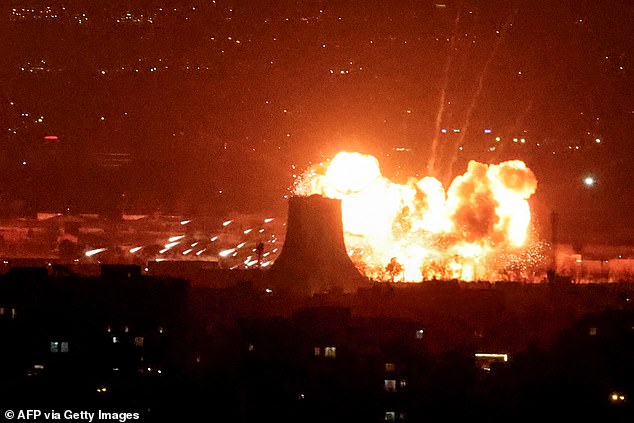
An explosion erupts following strikes near Azadi Tower close to Mehrabad International Airport in Tehran
Egypt – Probability: 2
Egypt has consistently pushed for diplomacy and regional stability. In coordination with Jordan, it has refused to allow its territory to be used for military operations.
Officials have stressed the importance of bringing the military escalation in the region to an immediate stop and prioritising political solutions.
President Abdel Fattah El Sisi reaffirmed Egypt’s full support for all ‘brotherly Gulf states in the face of the treacherous and condemned attacks on their territory.’
Cairo has also engaged in active diplomatic efforts to persuade all parties, including Iran, to de-escalate.
Syria – Probability: 2
Syria has stressed it is on good terms with all countries in the region, with President Ahmad Al Shara saying it is being careful to avoid being drawn into the conflict.
‘What is happening now is a major and rare event in history that we haven’t witnessed since World War II. We are carefully calculating our steps and working to keep Syria away from any conflict, so that it can maintain its path of development and reconstruction,’ he said in a speech on Friday.
‘It is important to remember that Syria has always been an arena of conflict and strife during the past 15 years and before that, but today it is in harmony with all neighbouring countries regionally and internationally,’ he added.