The Zodiac killer.
The Black Dahlia Avenger.
For decades, two depraved killers have hidden their true identities behind these self-proclaimed criminal monikers.
Now, according to an investigation by cold case consultant Alex Baber and exclusively revealed by the Daily Mail, the perpetrators can be unmasked as one and the same man: Marvin Margolis.
Rather than a mythical phantom, Margolis, who also used the alias Marvin Merrill, was on the surface far from an extraordinary figure.
He was married twice and a father to two sons, two daughters and one stepdaughter. He served overseas during the Second World War and was later convicted for a fraud scheme at his car repair firm.
Throughout life, he dabbled in various business and professional endeavors, training to be a surgeon before turning to art, car sales, real estate, construction, insurance and even working as a senior engineer at the global tech giant Intel.
But, according to Baber’s findings, he was also living a double life as the man responsible for two of the most disturbing unsolved criminal cases in American history.
On January 15, 1947, aspiring Hollywood starlet Elizabeth Short, known as the Black Dahlia, was found mutilated and dumped along a lovers’ lane in Los Angeles. Her body had been cleanly severed in two just above the waist, chunks of flesh removed and a macabre smile carved into her cheeks.
The sheer brutality of the murder instantly guaranteed it as media fodder and captivated the public’s attention – something her killer reveled in. He posted some of Short’s belongings to the local press. Other letters, from the Black Dahlia Avenger, goaded investigators.

Marvin Margolis in a high school yearbook photo (left) and a later photo obtained and enhanced by Baber. His solution to the Z13 cipher reveals the name Marvin Merrill, an alias used by Marvin Margolis, a man who was a prime suspect in the Black Dahlia murder
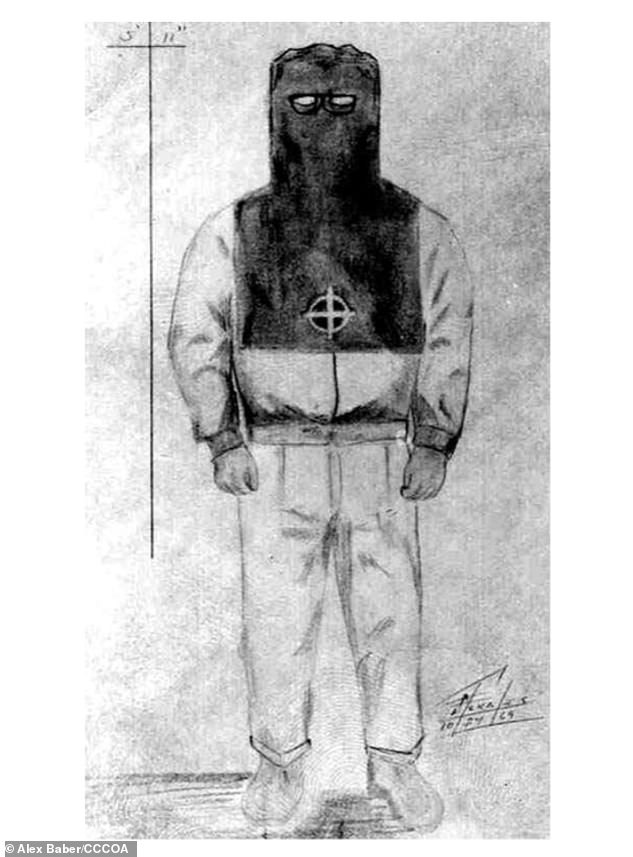
A police photofit of the Zodiac who terrorized California in the late 1960s, killing at least five victims and wounding two more
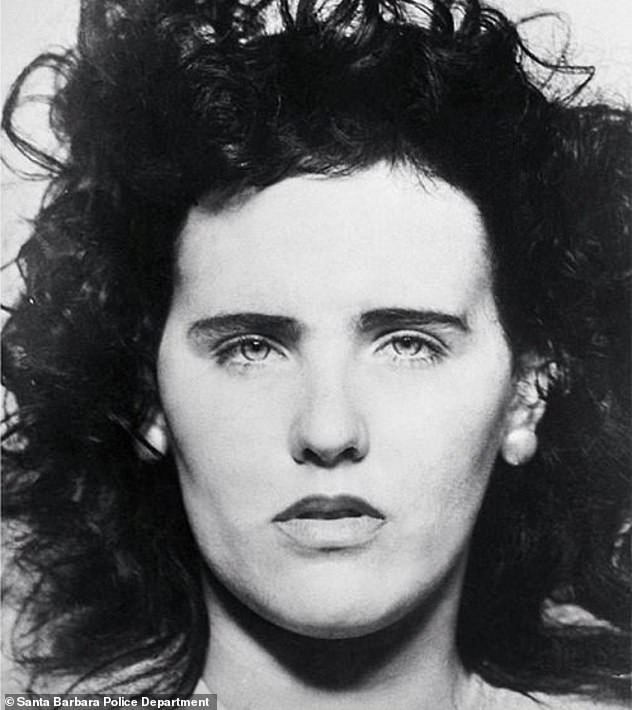
Two decades earlier in 1947, aspiring Hollywood actress Elizabeth Short, known as the Black Dahlia, was found dead and her body mutilated in Los Angeles
Two decades later, the Zodiac murdered at least five confirmed victims and wounded two others in northern California between 1968 and 1969. Most were young couples who were shot or stabbed while in remote beauty spots and lovers’ lanes.
The Zodiac killer also relished attention. He played games with the public, media and police through complex ciphers and letters raving about his unhinged violence.
So who was the man allegedly behind the masks?
The troubled child
Marvin Skipton Margolis was born in Chicago, Illinois, on March 25, 1925, the eldest of three sons to Isador and Lillian Margolis. Both parents had emigrated to the US – Isador from Russia and Lillian from Poland – in the early 1900s, with records showing that he had filed a petition to become a US citizen and to formally change the family name from Margolins to Margolis in 1940.
Little is known about Margolis’s early years but a military psychiatrist later documented some troubles in his Veterans Affairs records.
Until the age of 14, he was afraid of dark closets, had nightmares and sleepwalked. He would also threaten to run away from home if he didn’t get his own way, records showed.
Though described as shy, introverted and irritable, a high school yearbook reveals that, as a teen, he didn’t necessarily keep a low profile.
Instead, he took part in various extra-curricular activities, including intramural sports, being a hall guard captain and co-chairman of the dance committee.
He briefly attended the University of Illinois pre-medical school before enlisting in the Navy in March 1943, aged 18.
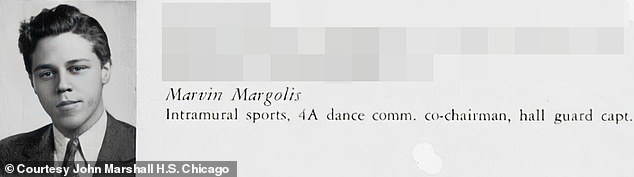
A high school yearbook photo of Marvin Margolis, who was in a doomed relationship with Short before her death
The aggressive and resentful Second World War military veteran
By his own admission, Margolis was in search of a more ‘gung-ho’ experience than he felt the Navy offered.
He started serving with the 1st Marine Division in the medical corps, learning both the surgical and marksmanship skills akin to those seen in the Zodiac and Black Dahlia crimes.
It was a role in which he treated thousands of soldiers and handled hundreds of dead bodies – but also saw some fighting action and received weapons training.
In all, he spent 27 months overseas, including at Pearl Harbor, Guam and Okinawa – the site of one of the last battles between US and Japanese troops, according to an interview he gave to a local paper at the end of the war.
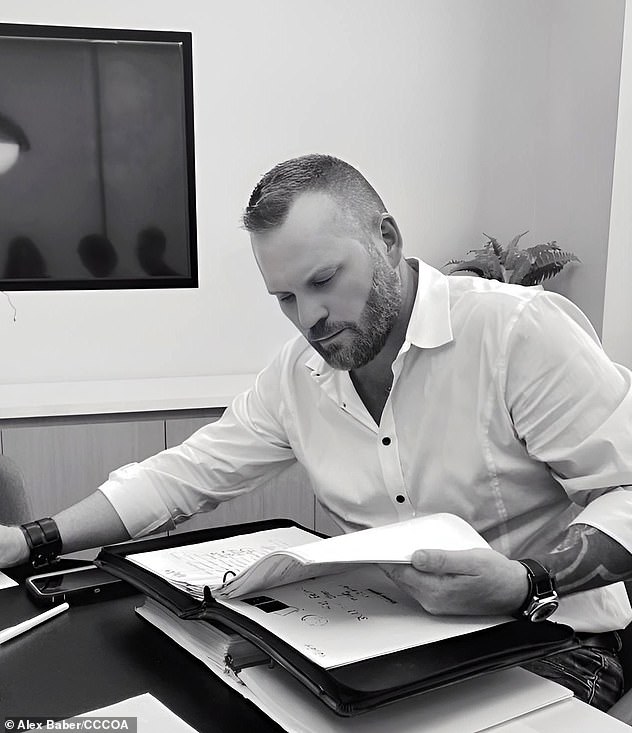
Alex Baber believes he has solved the Z13 cipher using classic cryptography methodologies, newly released Census data and AI
The extent to which this experience shaped him – or stirred something deep within – depends on whose version of events is to be believed.
Margolis’s personal tale when the war ended is glaringly at odds with the concerning account on file in his VA records.
The way he told it, in what appears to be his first taste of media attention, his time at Okinawa ‘wasn’t too bad.’
It was August 1945 and a baby-faced Margolis posed with a huge grin for an article in the local Chicago newspaper, The Garfieldian.
The article, titled Marine Celebrated Jap Surrender With Family, gives a somewhat glowing account of his time overseas and his wartime heroism.
‘Okinawa is a nice little place… The fighting on Okinawa wasn’t too bad,’ Margolis is quoted as telling the paper.
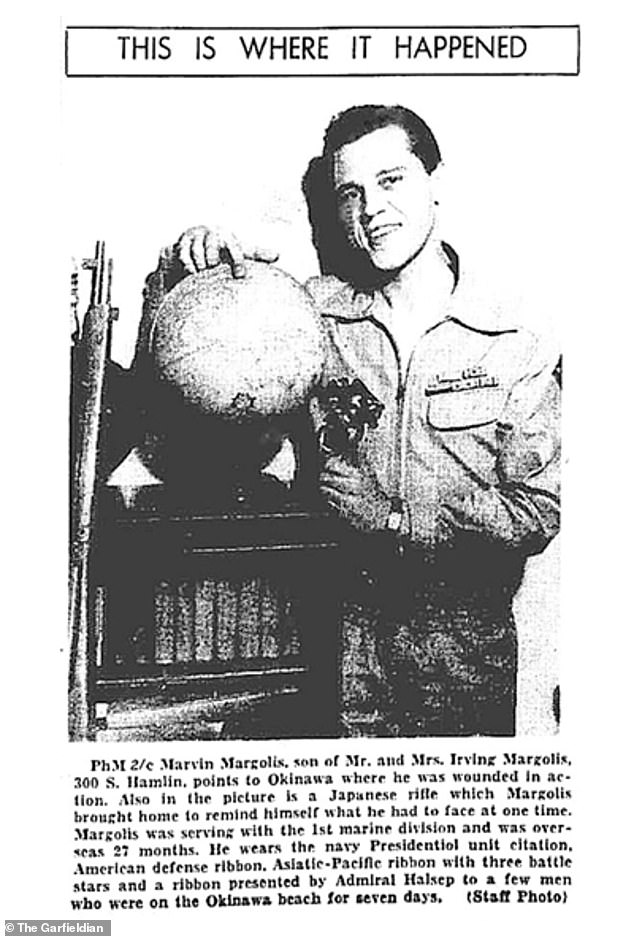
Margolis appeared in local paper The Garfieldian after he returned home from the Second World War. The article showed him posing with a Japanese military rifle propped against a wall
Margolis claimed that as well as working as a pharmacist’s mate he had also found time to write a 360-page novel and photograph the battle scenes.
He also claimed he wore a Purple Heart after suffering injuries from shrapnel and concussion on Okinawa. The beaming photo shows the young veteran wearing the military medal as well as a navy presidential unit citation, American defense ribbon, Asiatic-Pacific ribbon with three battle stars and a ribbon presented by Admiral William Halsey to a few men who were on the Okinawa beach for seven days.
In the left of the image leaning against a wall is a Japanese Nagoya rifle that he brought home from the war – a weapon believed to have been fitted with a distinctive bayonet similar to the long blade used in one of the Zodiac’s attacks.
Margolis spoke of his plans to become a surgeon and of how he celebrated the Japanese surrender ‘with a good meal at home’ with his family. ‘The thing I will remember most out of this war will be the friends I have made – the ones who are alive and those who are dead,’ he said.
But, Veterans Affairs records paint a far darker picture of his experience – and the toll it took on him.
What the military saw, based on documents cited in the LA grand jury inquest into Short’s murder, was a young man who had an irritable temperament prior to the war and who emerged with depression, mental health issues and aggressive tendencies.
Rather than being ‘not too bad’, Okinawa had been a traumatic experience.
Margolis faced 29 days of bombing, frequent air raids, little sleep and long hours on duty while caring for 1,600 patients within the first few days alone.
The optimistic article had also made no mention of a near-death experience where he had almost been buried alive.
VA records reveal that Margolis had set up a makeshift hospital inside a small cave to treat American troops. The cave collapsed, leaving him completely buried with only his head above the rubble.
The next day, he somehow managed to dig himself out to safety.
The same month that The Garfieldian article ran, Margolis underwent an examination at the US Naval Hospital in Illinois, which concluded he was a ‘calm, quiet and a resentful individual who shows ample evidence of open aggression.’
He also suffered from recurring battle dreams, mental health issues, depression, instability and a moderately severe state of fatigue.
In one note, a neuropsychiatrist documented a foreboding comment made by Margolis: ‘The next time there is a war, two of us are not going – the one who comes after me and myself.’
His resentment was said to stem largely from his ‘persistent demand and desire’ to be part of the surgical unit – something repeatedly denied him for reasons that remain unclear – and so he left the Navy on 50 percent mental disability grounds, the records state.
The serial entrepreneur
Throughout his life, Margolis flitted between various jobs, professions and entrepreneurial endeavors as he moved around the country.
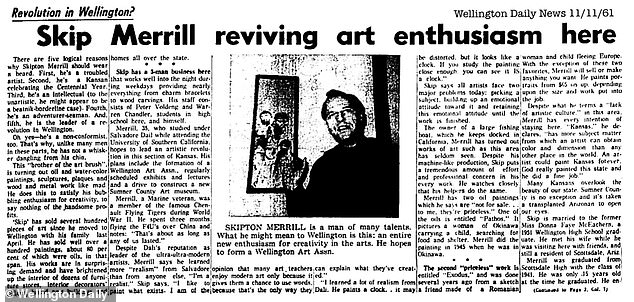
After moving to Kansas in 1960, Marvin Merrill reinvented himself as an artist and was the subject of a newspaper article in which he embellished his military record

As with the Zodiac killer and the Black Dahlia Avenger, Merrill also corresponded with the press. He sent this cryptic letter to the editor of The San Diego Union in September 1964
First, he had ambitions of becoming a surgeon. He briefly attended pre-medical school in Illinois before his military service and then, following his return, moved to Los Angeles and enrolled as a medical student at USC in 1946, records show.
If his marksmanship experience during the war gave him the skills required for the Zodiac’s shootings, it was his medical know-how that would have allowed for the morbid mutilation of Short’s body; after all, his first task at USC was to dissect a human corpse.
But Margolis’s aspirations of becoming a surgeon fell by the wayside after Short’s murder.
Instead – perhaps fearing the net closing in as an ex-boyfriend and suspect in her murder – he left LA, moving around several states and trying his hand at several ventures and professions under the new alias of Marvin Merrill.
In the early-1950s, he worked as a used car salesman in Chicago then, after moving to Atlanta, he worked as the manager of the Guarantee Reserve Life Insurance Company – an insurance company specializing in annuities, hospital and accident and doctor bill insurance.
In Georgia, he also planned to launch a teenage drag racing club with NASCAR champion Tim Flock, according to media reports from the time.
By 1961, Merrill had moved to Arizona briefly before reinventing himself as a ‘troubled artist’ living in Wellington, Kansas, where he had sold several hundred paintings, sculptures, wood and metal work, according to an article in the Wellington Daily News.
As ‘a non-conformist’ spearheading an art revolution in Kansas and with plans to create an art association and art museum, Merrill claimed to have studied under Salvador Dali at USC. ‘I’m a realist. I like to paint what exists,’ he told the paper.
They are comments that now take on more meaning after Merrill’s son shared a chilling sketch drawn by his father a year before he died. The black ink drawing is of a topless woman named Elizabeth, the word ‘ZoDiac’ found by Baber beneath layers of ink. Other sketches, shared with the team by Merrill’s youngest son, also depict naked women in odd poses, Baber told the Daily Mail.
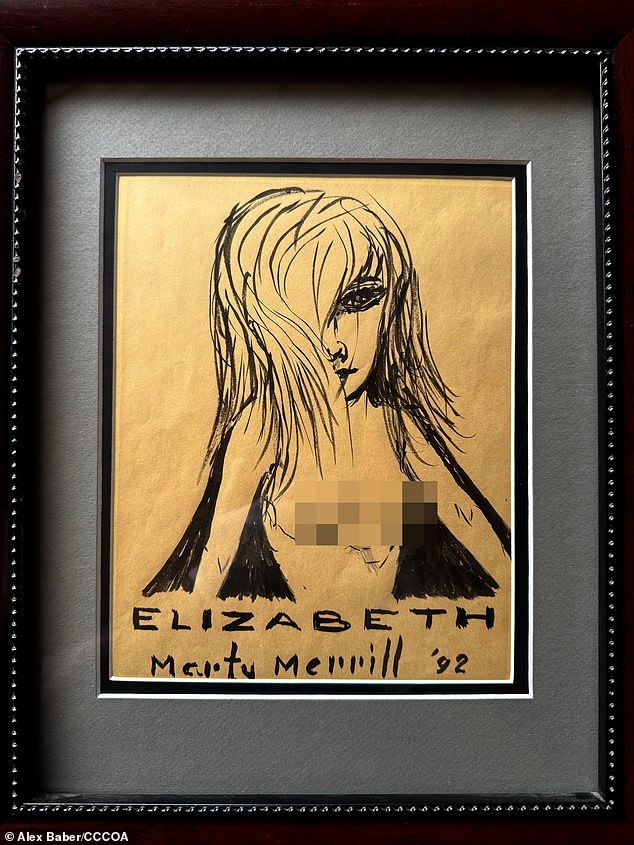
Among the most damning pieces of evidence is one of the final sketches that Merrill produced, depicting a naked woman named ‘ELIZABETH’
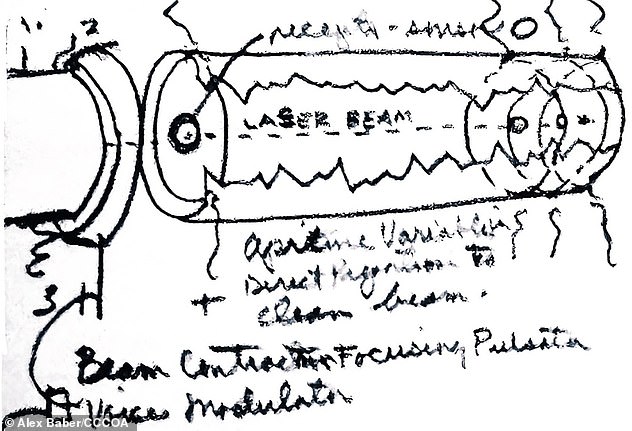
Another of Merrill’s drawings depicts a voice-modulation device – appearing to mirror some of the Zodiac’s technical, schematic diagrams of bombs. It was shared with Baber by Merrill’s youngest son
In the 1961 article – which is peppered with false claims – Merrill is also described as an ‘adventurer-seaman’, ‘a philosopher, a former newspaper correspondent’ and novelist.
In 1962, after he founded the Wellington Art Association, there was a split within the group and Merrill ended up having to relinquish control.
He moved back to California not long before the Zodiac killings began in the Bay Area and turned to real estate and construction. According to a local report from 1964, he planned to build an 11-story, $2 million hotel in Oceanside – the biggest by far in the area at the time – through his engineering and development company Pacific Project Consultants.
He also launched a car repair company in Oceanside, something that Baber believes gave him access to multiple vehicles to allegedly carry out the Zodiac’s crimes.
After the Zodiac killings ended, Merrill ended up back in Atlanta, where he launched his own insurance firm, The Marvin Merrill Agency.
Business cards and his son’s recollections also reveal that he worked as a senior engineer at Intel during the technology company’s infancy.
The convicted fraudster
If Baber’s investigation is correct, Merrill was one of the most notorious, depraved criminals in American history – a prolific killer who placed little value on human life.
Yet, though questioned at the time of Short’s murder and named as a suspect in the grand jury investigation, he was never charged with the violent crime.
But he did have a criminal record for various fraudulent endeavors.
In September 1953, Margolis was arrested on charges of conspiracy to commit a confidence game. At the time, he was 28 and working as a used car salesman for Liberal Motors in Chicago.
According to prosecutors, Margolis and the business owner Irwin Davis tried to con a buyer out of more money by offering a car for sale for one price and then putting an inflated price on the bill of sale.
When one victim reported the incident, several more came forward with similar stories.
The two men were fined $100 and ordered to pay a total of $4,500 to 17 victims they had conned.
Two decades later, Margolis landed in trouble with the law again – this time over his own car repair business Bucksavers Automotive Repair and Parts Supply in Oceanside.
VID
In December 1971, the 46-year-old was arrested and charged with grand theft, petty theft and false advertising following complaints from two customers.
He pleaded guilty on the two lesser charges and was sentenced to 30 days in jail followed by three years’ probation, and was ordered to pay $3,000 in restitution, media reports show.
His probation ended early – around January 1974 – Baber said his son told him. It was a three-year legal turmoil that curiously aligned with the Zodiac killer’s nearly three-year silence in media correspondence.
The fantasist who craved media attention
While he changed his name on social security records after Short’s death, Merrill did not seek a quiet life.
Based on the string of newspaper articles featuring interviews about his military service, art endeavors, business ventures and family events, it appears he relished public attention.
As with the Zodiac killer and the Black Dahlia Avenger, Merrill also corresponded with the press.
In one cryptic letter to the editor of The San Diego Union under his alias in September 1964, he bizarrely wrote: ‘If we look at the past, as the liberal members of our society suggest, perhaps we should look at this situation: Violent demonstrations were, in the past, considered crimes, it seems that, now violent crimes are considered “demonstrations.”’
But it was this compulsive need for attention that also betrayed his fabulism.
His interviews are peppered with false claims about his accomplishments – many of them borrowed from people whose paths had crossed with his own.
In the interview about his artistic pursuits, he claimed to have been a member of the prolific Flying Tigers during the Second World War.
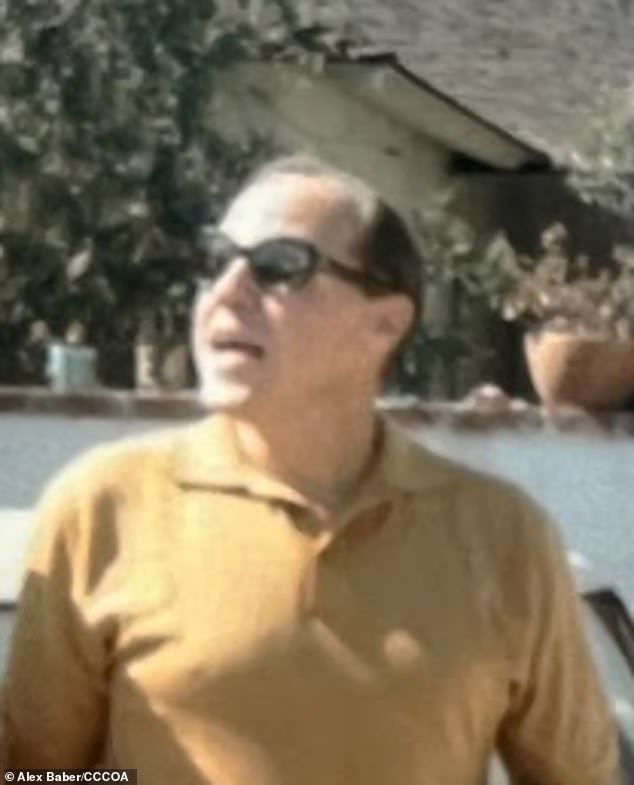
Marvin Merrill in an undated family photo. Merrill’s youngest son told the Daily Mail that he does not believe his father is the perpetrator of the Black Dahlia and Zodiac crimes
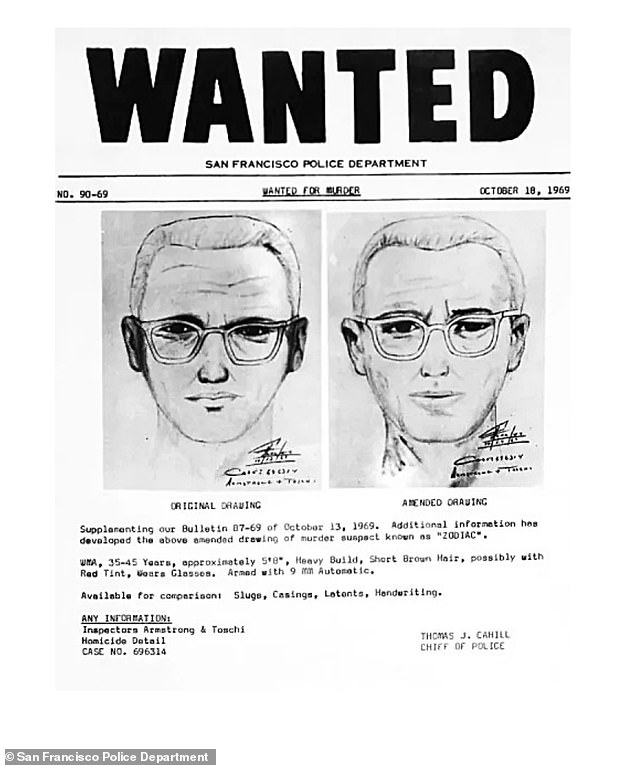
A composite sketch and description circulated by San Francisco Police as they tried – in vain – to catch the Zodiac killer
It is a tale that Baber theorizes could have been stolen from newspaper reports about Short’s former lover Maj Matt Gordon.
The articles described Gordon as a former Flying Tiger who died in a plane crash in India in August 1945, days before Japanese troops surrendered. Short’s mother described Gordon as ‘the only man that I know she loved’; there are conflicting reports as to whether or not the wartime romance had developed into an engagement.
Margolis’s claims of studying under Dali at USC also cannot be verified, though seem unlikely given that there is no record of the Spanish surrealist artist ever having taught at the university and the suspect had been part of the medical school.
The family man – with a propensity for violence
While allegedly committing some of the most notorious murders in American history, Merrill was also playing the family man.
He married his first wife in 1946 and they had two children, a son in 1948 and daughter in 1950.
After they divorced, he remarried and had another son and daughter, in 1962 and 1963, with his second wife, also raising a stepdaughter from her previous relationship.
Several local newspaper reports signpost joyful Merrill family occasions such as the births of his children, his daughter’s third birthday party, and a May 1965 visit to his wife’s parents in Kansas.
However, the family man image was somewhat shattered when he allegedly threatened to kill his stepdaughter in 1978.
Merrill’s youngest son recounted the violent incident to Baber’s team, revealing that his mother ended up grabbing a knife and holding it to his father in a desperate attempt to defend her daughter. Merrill was arrested and his wife filed for divorce. Merrill’s son also confirmed the incident to the Daily Mail.
Merrill later returned to California.
In 1992, one year before his death, he painted the chilling sketch of a woman named Elizabeth.
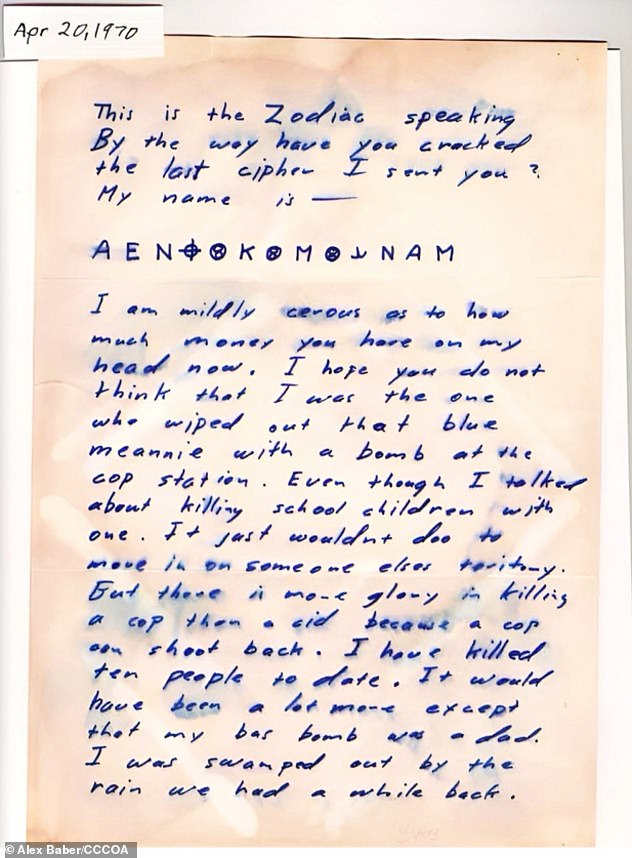
The Z13 cipher is widely believed to conceal the Zodiac’s real name, with its 13-character code preceded by the teaser: ‘My name is -‘. Alex Baber believes he has solved it
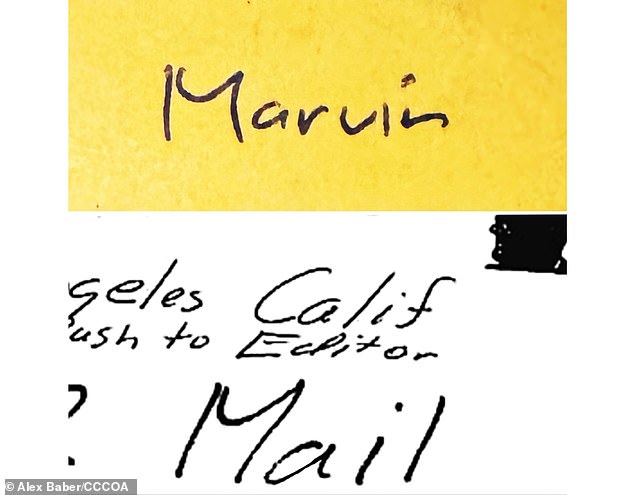
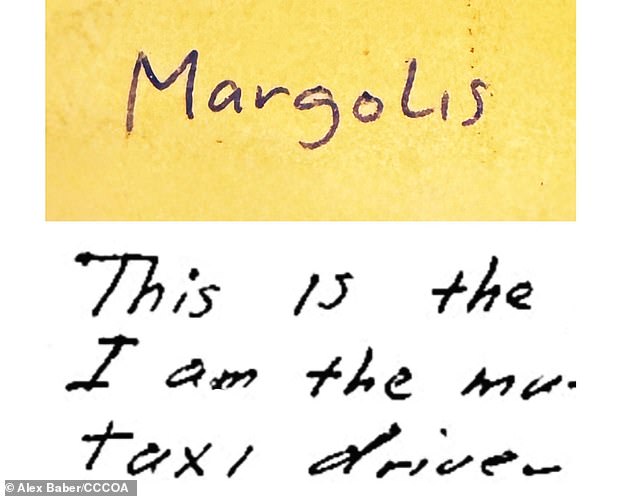
Handwriting samples of Marvin Merrill/Margolis that were shared with Alex Baber for forensic analysis juxtaposed with correspondence sent by the Zodiac killer
In an interview with the Daily Mail, Merrill’s youngest son – who wished to remain anonymous – suggested it could depict another woman, saying his father had a girlfriend named Elizabeth around that time. The son said he did not know the girlfriend’s last name and revealed that he and his father ‘weren’t close’ back then.
The son said he does not believe the explosive theory that his father could be responsible for two of the biggest unsolved criminal cases in history, calling the findings ‘a speculative cesspool’ and ‘fiction’.
‘[The Black Dahlia murder] was 20 years before I was born. I would love for the families to have peace in the Zodiac killings. But there’s just no way it was my dad,’ he said.
‘There’s no way – just no way my dad killed kids.’
The son, who was around seven years old at the time of the Zodiac murders, questioned his father’s ability to have committed the crimes, telling the Daily Mail that the family was living far away in Vista, Southern California, that he didn’t have the financial means to travel because the family was ‘broke’ and that he never traveled far from their home.
But Merrill is also believed to have had access to other properties across the Bay Area – as well as multiple vehicles – through his construction, real estate and car repair businesses, allowing him potential proximity to the Zodiac killings.
The son has shared some of his father’s belongings with Baber’s team, including the ‘ELIZABETH’ sketch. Baber said he was sending it to a forensic analyst for review.
‘I’m not forming any conclusions. I’m going to let the evidence speak for itself. Until I see the police say: “Oh, my gosh, this is right”, and then I’ll have a reality to work with,’ the son told the Daily Mail, adding that he would still be skeptical even if law enforcement confirmed Baber’s findings.
His son said he fell out of contact with his father some time in the 1980s and was not in his life around the time of his death. He did not reveal what caused the estrangement.
Merrill died aged 68 from terminal cancer in 1993.
The man suspected of being both the murderer of the Black Dahlia and the Zodiac killer took his secrets to the grave. Now, finally, perhaps those secrets are being dug up.
The investigation is also being developed as a premium documentary series by Emmy Award winning producers Melanie Capacia Johnson and Jonathan Reynaga, in collaboration with Baber, through TH Studios