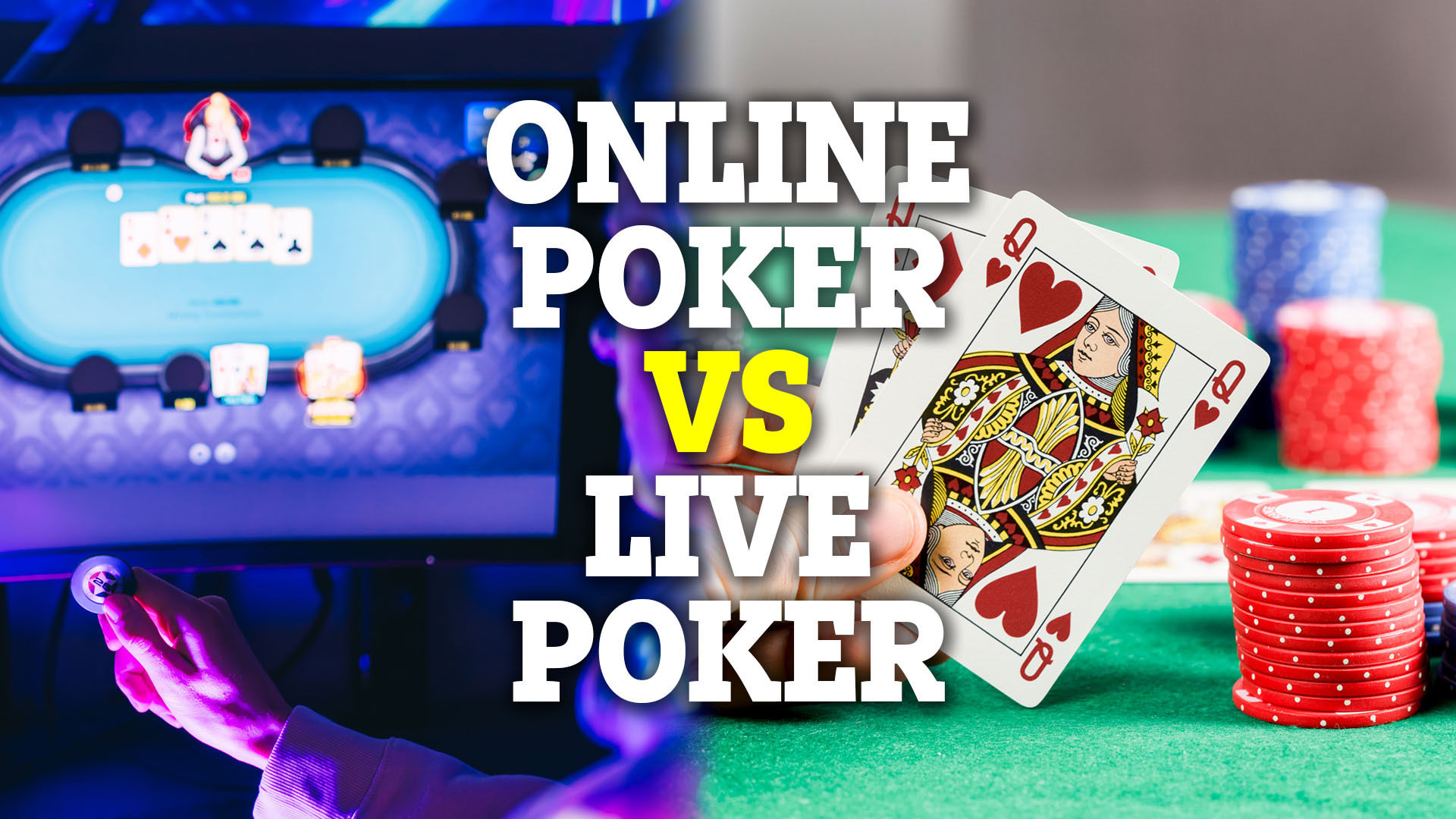
POKER is one game that inhabits two very different worlds. Players experienced in the live poker domain may wonder if they can increase their bankroll by playing online poker, and vice versa.
While the rules of the game itself remain the same, the different paces of these environments require different strategies.
Part of the fun of poker as a hobby involves mastering the different techniques that apply to online poker vs live poker and seeing which approach suits you the best. The first thing you’ll need to understand is how pace affects play.
⏱️ Pace of play: Efficiency vs patience
One thing to acknowledge before we go any further: the pace of play varies enormously between online poker and live play.
The physical shuffling and dealing of real cards in a live cash game is going to limit the number of hands per hour to around 25-30 (and that’s before you take into account all the hollywooding, tanking and slow-rolling). Online, you can expect to be dealt 100+ hands per hour. And there are two ways to increase this number.
- Multi-tabling: In online poker, you can be seated at more than one table at a time. Most poker mobile apps cater for players who wish to play up to four tables simultaneously. More elaborate set-ups can be configured using multiple screens. The SNG world record currently stands at 62 tables. (To beat this, a challenger must play for one hour and finish in profit).
- Fast fold poker: This variant (sometimes called “zoom poker” or “fast forward poker”) transports the player to a new table following a fold. So you don’t have to wait for the action to unfold in a hand you are no longer part of.
The different paces of the live and online scenes attract players of different temperaments. This leads to a disparity in technical skill and stake value that can be exploited.
🎯 Technical skill and stakes disparity
Stakes are not equal across poker formats. A $1/$2 live game is significantly “softer” (easier to turn a profit) than a $1/$2 online game. The reason for this is that there are more recreational players at a live event. These players play a wide range of hands, chase down unlikely outcomes, and don’t calculate the value of a prize pot.
An online poker table at the same stakes will be full of “grinders” – experienced players who wait for high-value opening cards and then play them extremely aggressively so that the play can’t be exploited for value.
Online players may supplement this strategy with specialist poker solver software that helps them achieve optimal play.
To achieve success in both fields, you will need to make sure you understand how to gather information and develop your intuition skills as a poker player.
🧠 Information vs intuition
Information is gathered in different ways in the online and live poker spheres.
Online success relies on pattern recognition – noticing when and how much an opponent is raising and how they respond to your plays – and data driven strategy. You’ll need to familiarise yourself with the concept of “expected value” to profit in the long term, even when some short-term decisions don’t go your way.
You can bring this knowledge to the live table environment, but you may not need it. Live success relies on observation, physical tells, body language, and your gut feeling as a player.
Moving from one arena to the other requires a mindset switch from intimidating via button-clicks while listening to your favourite playlist to the cut-and-thrust of genuine player interaction and looking for physical tells while concealing your own.
Another factor of the loose play on show in live poker rooms is the tendency to find yourself in multiway pots. These have the potential for large profits, but also increase the odds of an opponent “sucking out” (winning the hand by catching an unlikely card late in the deal) against your dominant hand.
♟️ Strategic adjustments: Multiway pots and bet sizing
The most profitable online players discard all but the very best hands pre-flop. Pots will only get really big when two premium hands that both have a bite of the flop face off against each other.
If a player who folds 95% of hands makes a move, you’d be wise not to call or reraise with anything less than top pair and a draw to fall back on. With all this folding going on, you’ll see a lot of heads-up play post-flop online.
By contrast, live games often result in multiway pots (where many people stay in to see whether their hand “hits” when the flop is dealt). Betting sizes can be much larger and more “exploitative” in live play.
Recreational opponents are less price-sensitive than online opponents, so a large bet that would significantly narrow the field online may get multiple callers, as “recs” look to the turn and river cards to improve their hands (hopefully, when you’ve already hit the nuts on the flop).
However, as we shall see, getting a seat at a table full of recreational fish at a live casino cash game is not as straightforward as joining a table online.
⚡ Online speed vs the live waitlist
Once you have joined the poker room at any of the UK’s best online casinos, you can scroll through the lobby and join or open a cash game at your preferred stakes. If you are the first seated at a table, you won’t typically have to wait long to be joined by other players. Online poker players enjoy instant access to games at all but the highest blind denominations (high stakes games attract fewer casual players).
One tactic you may want to try online is “table hopping”. If a cash game is painfully slow, or what was a full ring game suddenly has multiple players sitting out, there are no rules against moving to a new table in search of better action.
In a brick and mortar poker room, you may face an altogether different experience. Casinos operate a “wait list” where you will have to occupy yourself with another activity until a seat becomes available. If a game is “hot” and no one wants to leave, it could be hours before a seat opens up.
Due to these waiting times, there’s little opportunity for table hopping at a live casino. In fact, a “cop and hop” – winning a large pot early and cashing in your chips – is considered the height of discourtesy. A more profitable approach is “table management”, using your social skills to keep a genial atmosphere at the table so the fish stick around.


🔒 Security and fair play
Whether you are playing online or live poker, you’ll want to be certain that the cards are being dealt fairly.
- Live fairness: Provided you are playing live poker in a legitimate casino, not some backroom gambling den, you can be certain that fairness is maintained by physical security, professional dealers, and the fact that you can see the cards aren’t marked and chips are being counted in front of you.
- Online fairness: Online poker sites use a Random Number Generator (RNG) to ensure every shuffle is 100% random. Poker sites have specialist teams using the latest software to analyse games. They can detect collusion (players secretly working together) or the use of bots, and ban accounts that engage in activity contrary to the terms and conditions.
Online poker rooms and in-person poker games prioritise fair gaming so that players can trust that every hand is dealt and played fairly.
❓ FAQ
1. Are the winning odds different in online and live poker?
No. In terms of the cards, the odds of particular outcomes are identical in online and live poker games. The variation in the two formats comes from the behaviour of the players.
2. Which format is better for beginners, online or live poker?
For absolute beginners, the better format is online poker. Most online poker rooms will have a “play money” option where you can learn the basics without risking your bankroll.
Once you understand the rules and a bit of poker strategy, you can play a low-stakes table online. When you are ready to explore how body language and physical tells affect the game in a social atmosphere, head to a casino to test your skills in the live environment.
3. Is online poker rigged or not?
Online poker games are not rigged. Each hand dealt at an online poker site is from a deck order selected by a Random Number Generator. UK-licensed online casinos are independently inspected to ensure they have structures in place to be compliant.
About the author

James Anderson
James Anderson is a Betting & Gaming Writer at The Sun. He is an expert in sports betting and online casinos, and joined the company in November 2020 to work closely with leading bookmakers, casinos, and online gaming companies to curate content in all areas of iGaming and sports betting. He previously worked as a Digital Sports Reporter and Head of Live Blogs/Events at the Daily Express and Daily Star, covering football, cricket, snooker, F1 and horse racing.
Remember to gamble responsibly
A responsible gambler is someone who:
- Establishes time and monetary limits before playing
- Only gambles with money they can afford to lose
- Never chase their losses
- Doesn’t gamble if they’re upset, angry or depressed
- Gamcare – gamcare.org.uk
- GambleAware – GambleAware.org
Read our guide on responsible gambling practices.
For help with a gambling problem, call the National Gambling Helpline on 0808 8020 133 or go to gamstop.co.uk to be excluded from all UK-regulated gambling websites.