In a special episode of the Queens, Kings and Dastardly Things podcast, historians Kate Williams and Robert Hardman detail how royalty has helped shape some of our favourite festive traditions, from carols to Christmas trees.
Carols in particular are steeped in royal history and intrigue, from the tale of the real King Wenceslas to the scandalous festive tunes penned by a lusty Henry VIII.
In the podcast, Williams reveals how the 18th century carol O Come All Ye Faithful is now believed by some historians to contain a coded message calling for Catholic rebels to violently restore the Stuart monarchy.
The song was written around 1743 by English Catholic John Francis Wade, who would later flee to France following the crushing of the Jacobite rebellion in 1745.
Supporters of the exiled Stuarts, the Jacobites plotted to restore the dynasty to the throne and return the country to Catholicism.
Williams explains the rebellious reading of O Come All Ye Faithful, which was first proposed by a professor of music at Durham University in 1996.
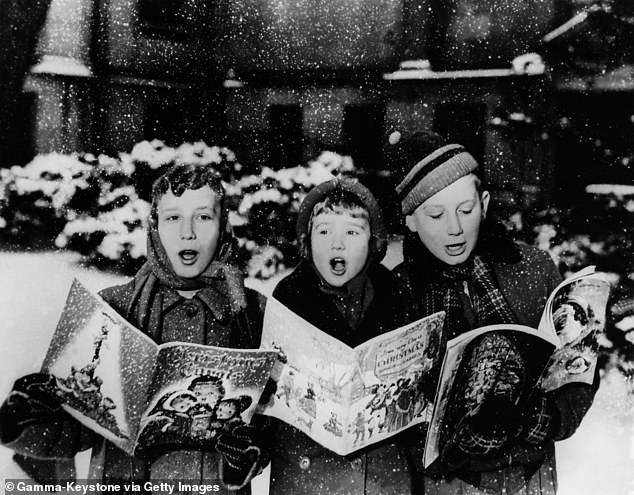
Williams reveals how the carol O Come All Ye Faithful is now believed by some historians to contain a coded message calling for Catholic rebels to violently restore the Stuart monarchy

The song was written around 1743 by English Catholic John Francis Wade, who would later flee to Francefollowing the crushing of the Jacobite rebellion in 1745
O Come All Ye Rebels?
John Francis Wade made his living as a music teacher at a Catholic college and as a fine copier of music.
A skilled artisan, he hand-copied beautiful music manuscripts to sell to wealthy families for use in their private chapels. Wade’s books were often decorated with Jacobite symbols including roses and oak leaves.
The carol was originally sung in Latin, the language of the Catholic Church.
The song’s main refrain, ‘Come and behold Him, born the King of Angels’, translates in Latin to ‘Regem Angelorum’.
Some believe this is a deliberate pun, with Angelorum sounding similar to the Latin word for English, Anglorum.
Therefore, historians argue that Wade was calling for the return of the true King of the English, the Stuart exile Bonnie Prince Charlie.
They also claim that ‘O come all ye faithful’ does not mean all Christians, but exclusively faithful Jacobites.
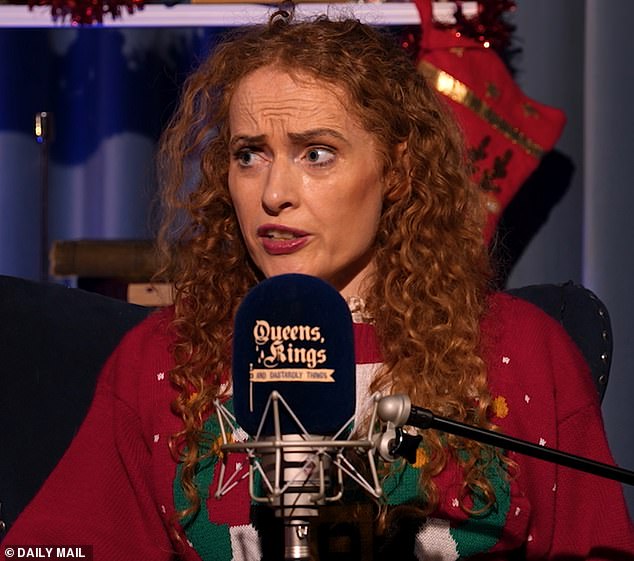
Williams explains the rebellious reading of O Come All Ye Faithful, which was first proposed by a professor of music at Durham University in 1996
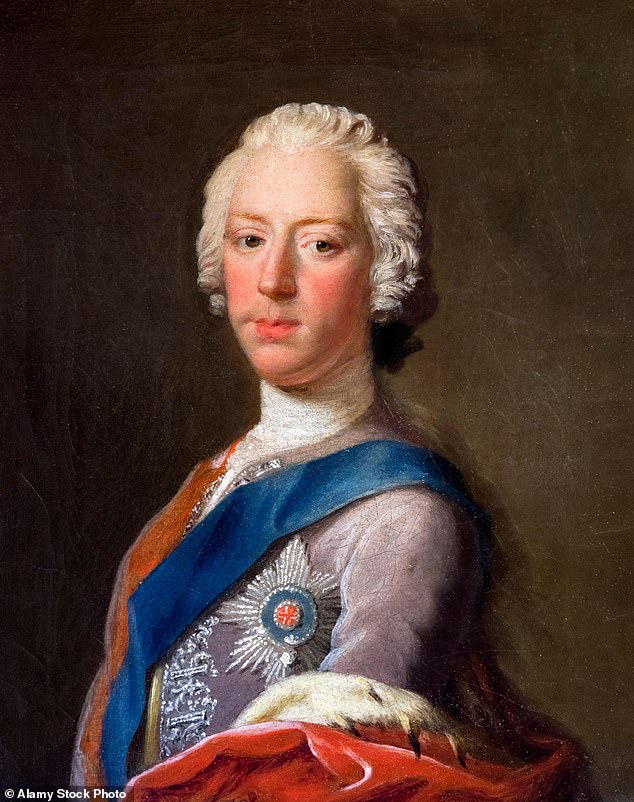
Historians argue that Wade was calling for the return of the true King of the English, the Stuart exile Bonnie Prince Charlie
‘Effectively, Wade is saying – keep your iron chaps, we’ll get those Stuarts back on the throne’, Williams explained.
‘Funnily enough, the Jacobites will get their wish this century. Prince William is partly Stuart through Princess Diana – who was distantly related to Charles II. So, we will have a Stuart King again.
‘Every time you sing that carol, just think you might actually be singing a Jacobite call to arms.’
There are a number of problems with the Jacobite theory though, most problematic being that no one really knows who the original author of the carol was.
Also, if the tune really was a Jacobite call to arms, members of the movement seem to have been totally unaware. There is no evidence any Jacobite recognised the song as referring to them.
The date of composition also presents a problem – does it make sense to create a call to rebellion years before the Jacobites went to war?
Whether rebel anthem or Christmas hymn, O Come All Ye Faithful remains one of Britain’s most beloved carols – its true meaning, like so much of history, lost to time.
To hear the festive episode in full, search for Queens, Kings and Dastardly Things now, wherever you get your podcasts – or on YouTube.