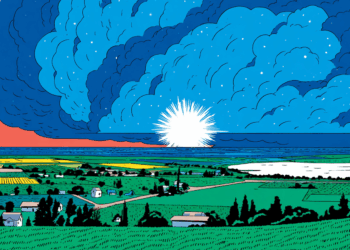
A bright morning in May, 2014. Dr Lucy Hone’s family are packing for a long weekend: her husband Trevor, their teenage sons and 12-year-old daughter Abi.
They’re staying with family friends at a remote rural lodge on New Zealand‘s South Island. Before they leave, the phone rings. Abi’s best friend Ella wonders if Abi can travel with her, in one of the other cars? ‘We said yes, of course,’ says Lucy.
So they drop off Abi on the way out of town. She scampers away shouting, ‘See you later!’
After making their journey, Lucy hears there has been a road accident. Innocently, she imagines this has delayed her daughter and her friends. But, then, a policeman calls – and says he’s on his way to see her and Trevor.
Twenty agonising minutes pass before he arrives.
The policeman asks what clothes Abi was wearing, and after Lucy describes the little Converse trainers and grey dress, he delivers shocking news: a stationwagon sped through a stop sign, ploughing into the car carrying Abi, Ella and Ella’s mother, Sally. All three were killed instantly.
‘Our bubbly, ebullient Abi, gone forever,’ says Lucy. ‘Our gorgeous girl, taken in a moment of madness.’
She remembers feeling thirsty, shaking and falling to the floor.
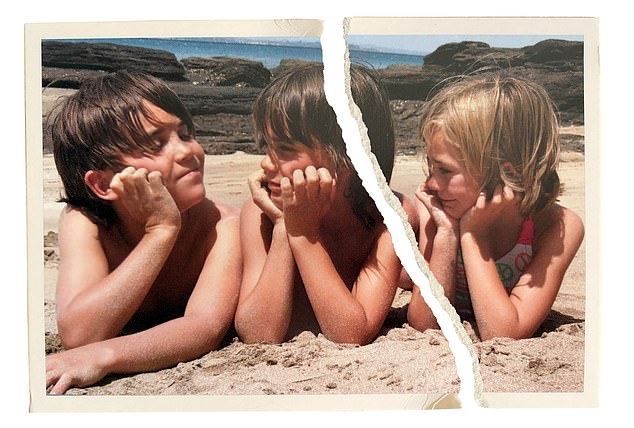
Abi (right) with her brothers Paddy and Ed in 2009
Lucy, now 58, is a globally respected expert in resilience psychology. For two decades she has focused on why some people cope better than others with stress, uncertainty and change. British born, she lives in Christchurch, New Zealand, where she worked with disaster response teams after the 2011 earthquake.
She brought Abi’s body home for five days before the funeral. ‘As her mum, I’m so glad I did. I had all that time with her.’
After a traumatic bereavement, she says, the mind doesn’t believe what has happened. Abi’s presence during those days helped make it clear that she really had died.
The white coffin, covered with bright polka dots, was placed on Abi’s bed. At night, Lucy would sit with her alone. ‘I read to her, added special things to her coffin, plaited her hair and put her favourite body lotion on her legs.’
Abi’s friends visited, lying beside her, stroking her hair, holding her hand. They drew pictures and wrote poems to place in the coffin, played guitar, sang songs, lit candles. The funeral, at a local school, was attended by 2,000 people.
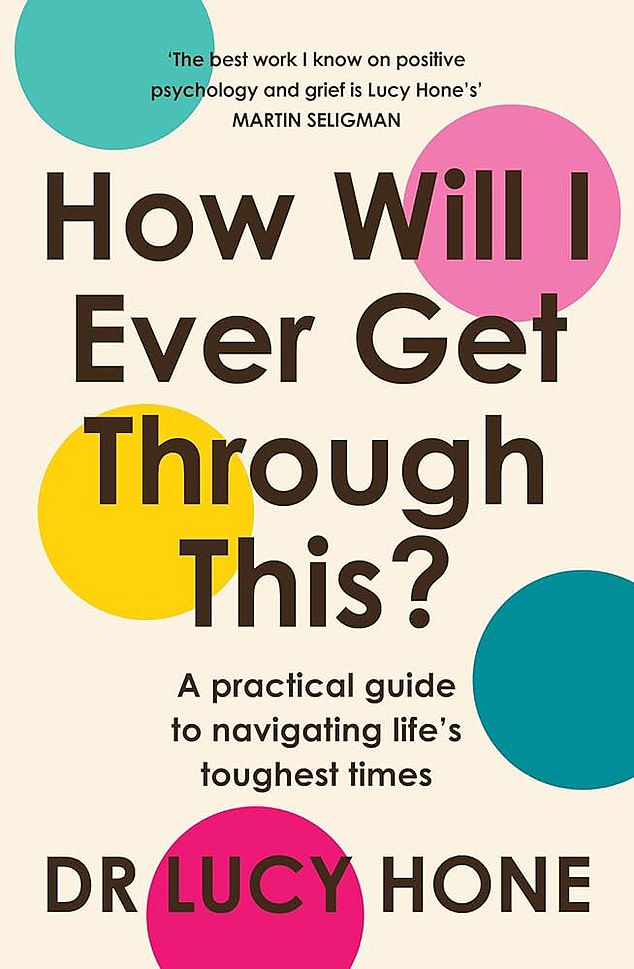
Lucy has published a new book examining grief from various events such as divorce, family estrangement, dementia, job loss and infertility
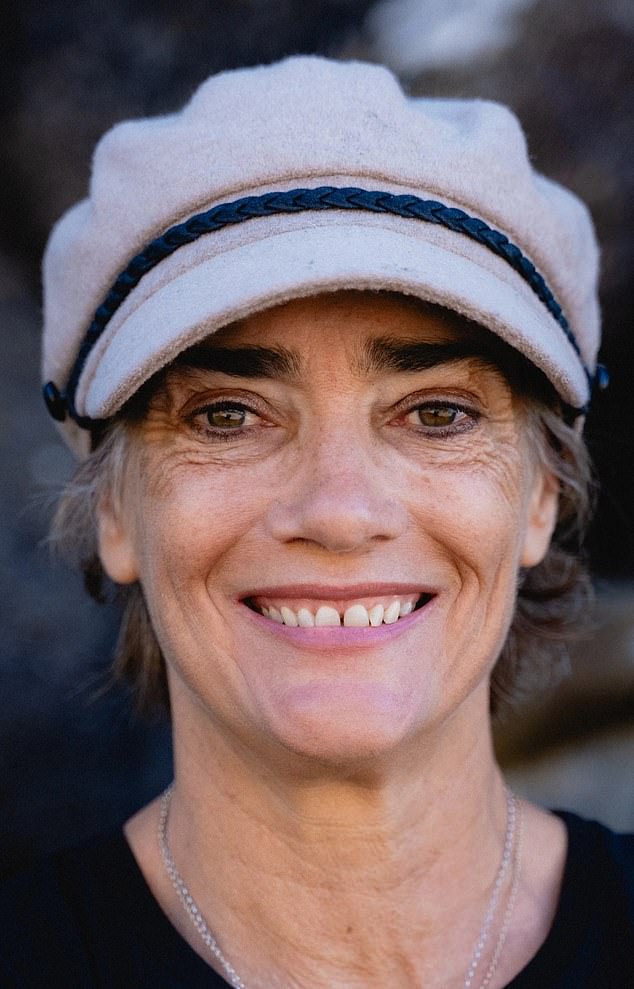
Lucy, pictured, published another book on grief in 2018 and and delivered a TED Talk on the subject the following year
Lucy doesn’t remember everything about that time, such as how they told the boys that Abi had died. But some time in the first hours, an image came to her: a fork in the road. ‘I remember thinking: this is your life now.’
Sometimes she didn’t want to go on. ‘Standing in our bedroom one day I thought, ‘I don’t want to do this. I don’t like my life any longer.’
But an idea crystallised, which she has carried ever since: ‘Choose life, not death. Don’t lose what you have, to what you have lost.’ Her boys Paddy and Ed were 14 and 16. She was not going to let grief swallow their childhoods, their futures.
In 2018 she published a book, Resilient Grieving, to help others suffering devastating losses. Her 2019 TEDx talk, Three Secrets Of Resilient People, has been viewed more than nine million times and was ranked 29 on TEDx’s official list of the top 100 must-watch talks of all time.
She begins like this: ‘If you’ve ever lost someone you truly love, if you’ve ever had your heart broken, struggled through an acrimonious divorce or been the victim of infidelity, please stand up.’
She continues: ‘If you’ve ever had a miscarriage or abortion, or struggled with infertility, please stand up. If you or someone you love has suffered from mental illness, had a life-changing diagnosis, dealt with suicide or endured physical impairment, stand up…’
By now the room is on its feet.
Testing moments like these are so common, and yet people talk so little about them. To address that, Lucy has published a new book, How Will I Ever Get Through This? examining these ‘living losses’. Real grief accompanies divorce, family estrangement, dementia, job loss, infertility – losses that, she says, society often doesn’t recognise as grief-worthy.
At the heart of the book is a deceptively simple idea: ‘Grief is the difference between where you are and where you thought your life would be.’
I tell her about some of my own recent losses (bereavement, the end of a job I loved, my child leaving home) and add that these feel minor compared with what she has endured.
‘Grief is subjective,’ she tells me. ‘Nobody has a right to tell you what you can and can’t grieve. If I can use my awful experience to help things feel a little easier for you then I’ll take that.’
This is Abi’s legacy, she says.
Whether it’s the end of a relationship, dashed hopes or an unwanted diagnosis, ‘living losses’ can feel like the ground has fallen away beneath you. To get through such things, Lucy says, they must be acknowledged.
‘Accepting Abi’s loss was a conscious choice,’ she says. Ruminating makes acceptance difficult. ‘What if Abi hadn’t gone in Sally’s car that day? What if I hadn’t suggested the trip? What if I’d done something, anything, to delay them, even by a millisecond…’
To heal means accepting that you may never fully understand why something happened. ‘I’m not diminishing the awfulness, but being stuck in it makes it harder to move forward.’
But what if you can’t stop going over things? Move your body, Lucy says. Physical activity creates a reset. ‘Get off the couch, off the floor, out of bed, and take one action to put that ‘interrupt’ in place.’
She recommends simple daily rituals: making coffee, dog-walking, swimming, reading good books, lighting a fire, catching up with friends. She calls these ‘islands of certainty’ that can rebuild a feeling of stability.
Most people gain new insight and strength from trauma, but it takes effort. When something good happens, resist the urge to move past it. Let it linger. Above all, remember humans make mistakes, we all mess up.
In her TEDx talk, Lucy says resilient people ask themselves, ‘Is what I’m doing helping or harming me?’ ‘This question gives you a pause to reflect and assess,’ she says.
‘You can apply it to almost any situation, big or small.’ For a while, if she looked at photos of Abi and found her mood darkening, she would put them away. And she avoided the trial of the driver who killed her daughter.
It’s a myth that people move directly through five stages of grief: denial, bargaining, anger, depression and acceptance. Grief is personal, and emotions ebb and flow unpredictably.
It’s been 12 years since Abi’s death, but grief can still ambush Lucy: ‘When the house is full of men, I miss her madly and try to conjure a picture of how different the moment would look had she lived.’
She notes that, of course, there’s no going back. ‘Even if you recover your health, rebuild your relationship, get your job back, have the baby you longed for… you are not going back to the previous you.’ Instead, she says, with each knock ‘you take your hard-won wisdom forward, each time constructing a sturdier world view.’
From other self-help experts, this might sound less convincing. But Lucy’s professional expertise, combined with her experience of devastating loss, give her authority.
‘The point of life isn’t to live without pain, misery or anguish, or avoid grief,’ she says, ‘because to do that would mean living without love, meaning and connection. A life without those things isn’t a life worth living.’
How Will I Ever Get Through This? by Dr Lucy Hone is published by Atlantic Books, £14.99. To order a copy for £12.74 until 19 April, go to mailshop.co.uk/books or call 020 3176 2937. Free UK delivery on orders over £25