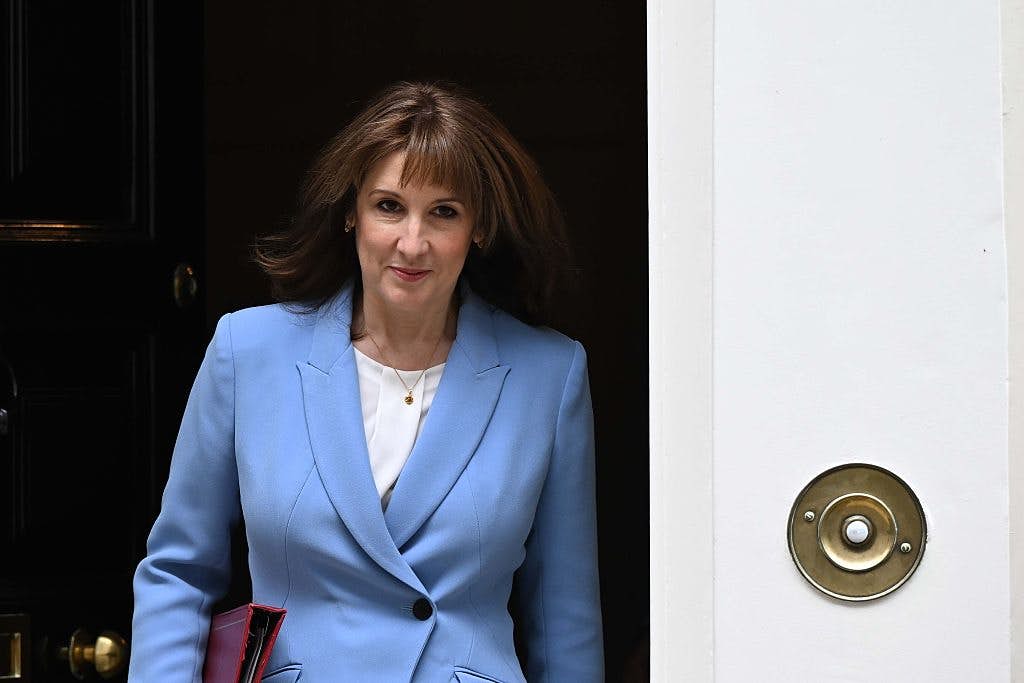

“This government has the right economic plan for our country,” Rachel Reeves announced. Disappointingly, she failed to add “and if you don’t like it, we’ve got others”.
The Spring Statement was a low-key affair, a series of forecasts already rendered meaningless by America’s decision to go to war with Iran. The chancellor used the numbers to argue that her strategy (the current one, not any of the previous ones) was working, and to spray abuse at opposition parties. The Tories shouted back, the Lib Dems looked sad and the Greens looked outraged. In Reform an exciting split is emerging, between Richard Tice who is delighted to get a mention, and new boy Robert Jenrick, who looks peeved whenever anyone dares mock him. He should stick to this approach, because it will definitely make people stop.
On days like this, it’s striking that the House of Commons is a special kind of theatre where the audience are also participants. As Reeves announced that growth would be “slightly slower in 2026”, the opposition benches cried “Ah!” — her tax-raising chickens were coming home to roost — but when she continued that it would be faster in subsequent years, the Labour benches yelled “AHH!” in triumphant, mocking reply.
The goal is to support your person and knock the other side’s champion off their stride. “An economy cannot be working,” Reeves said, “if it is delivering for only a few people, in a few places.” At this, Graham Stuart, a Conservative, delivered a perfectly-timed “There they are!” while pointing at the government. Though you could almost hear Labour MPs wishing that if only this was true.
As Reeves went on, our eyes were caught by her Tory opposite number, Mel Stride, who was going through his speech notes. Where Reeves had gone with a traditional typescript that she followed with her finger, Stride’s approach is more impressionistic. He scrawls ideas and lines in thick black pen, and then goes over them with multi-coloured highlighters. Sometimes he draws round words, sometimes he writes things out in large letters and then colours them in. It looked, from afar, like they had been produced by a ten-year-old, as if Stride might ask Kemi Badenoch to pass Vicky Atkins a note asking if she liked him during Home Office Questions.
The chancellor’s message was that things are working well, and election-winning growth is coming our way. “Every pound that we have secured in this forecast today can be wiped out by a change of course,” she said. Not by the changes of course she’s already executed, you understand, but by other changes of course yet to come.
Then it was Stride’s turn, and we got to see how his beautiful scribblings translated into rhetoric. They certainly don’t hurt his fluency. The shadow chancellor stood back from the despatch box, jabbing his finger at Reeves, roaring that she had given up on the British people. It was meant to be impressive, but the effect was a little histrionic, like being savaged by a teddy bear. Labour responded with laughter, the Business Secretary Peter Kyle pink with delight.
Lindsay Hoyle attempted to restore order. “We need to hear this!” he roared, and unfortunately that just made everyone laugh even harder. With no advance sight of Reeves’s numbers, Stride had come armed with a generic denunciation of the government. It was far from clear that anyone needed to hear it.
Stride turned to the third page of his notes, where we could clearly see a huge “US” written, the first letter coloured in green and the second pink. On the Reform benches, Jenrick and Tice now had copies of the forecasts, and were performatively flicking through them. Jenrick had put on glasses, to show that he’s clever and can add up.
In the Gallery, all we could think about was Stride’s paperwork. There was a huge pink “UP!” and round it in a circle were all the bad things that are rising under Labour, each one highlighted in a different colour. He claimed, with some justice, that government backbenchers are now calling the shots, and Richard Burgon chortled with delight.
Stride turned to the final page. Taking up the bottom third were three words, each letter a different colour: “W” (blue), “E” (green), “S” (pink), “A” (blue), “Y” (yellow), “G” (green), “O” (yellow). It was a work of art, and frankly it belongs in a museum.
Responding, Reeves was rather spicier than she had been when delivering her statement. Although much of what she said was clearly written in advance, her off-the-cuff jokes were better. Not that we should get carried away with the idea that this was high-flown wit. “I don’t know what’s more pathetic,” the chancellor said, preparing to wind up. Badenoch jabbed a finger at her: “YOU!” It was as fitting to a primary school playground as her shadow chancellor’s notes.